Discover HKBU
AI in mental health: A means to an end
30 Oct 2026
In recent years, when people face stress, anxiety, or feel helpless, their immediate response is often to open a chat window with a conversational AI chatbot rather than contact someone in real life.
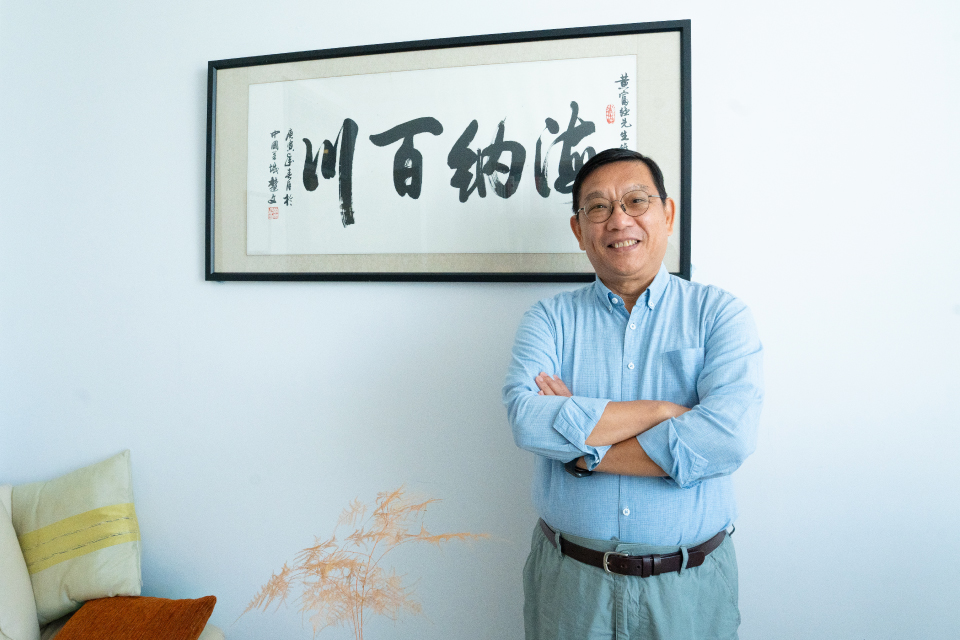
Professor Daniel Wong Fu-keung, Chair Professor of Mental Health and Counselling, Academy of Wellness and Human Development, points out that AI is changing how people sort out their problems, express their feelings and seek support. AI can serve as a first step for emotional support and information gathering. However, when a situation requires deeper exploration or involves a potential crisis, professional judgment and clinical follow-up remain indispensable.
An always available listener
Professor Wong and his research team interviewed 16 adults who had used ChatGPT for psychological support while also undergoing psychotherapy. The study, published in the journal BMC Psychiatry, explored the distinct types of support provided by AI chatbots versus human therapists.
The study revealed that for some participants, talking to AI felt less intimidating than talking to a human therapist. AI’s immediacy, privacy, and low barrier to access make it easier for individuals to voice their difficulties. Professor Wong highlights that AI’s instant availability is particularly appealing. Traditional therapy requires appointments and waiting periods, and often repeating one’s experiences to different staff. In contrast, AI acts as an always available listener, allowing users to unpack their chaotic emotions right away.
When people feel stressed late at night with no one around to talk to, chatting with AI provides a degree of immediate comfort. Additionally, AI can help users organise their concerns, provide mental health resources, and offer referral information to prepare them for professional help.
A comforting message cannot replace genuine interaction
Yet, receiving comfort and support through text responses does not mean the root cause of distress has been identified.
Professor Wong illustrates this with an example of parent-child conflict. Parents, for instance, may get angry when their children refuse to study. While anger is the surface reaction, a therapist might uncover underlying feelings of disappointment or a sense of loss that the child has not met their expectations. If the parents have not recognised these deeper emotions or cannot clearly articulate them in words, an AI chatbot cannot identify or address them.
Another limitation is that AI’s responses may be overly accommodating. Professor Wong notes that AI usually responds with a positive and encouraging tone that makes users feel understood and supported. However, human counselling goes beyond simple reassurance. Therapists know when to introduce different perspectives and gently challenge a client’s thoughts or behaviours to help them identify blind spots they might have overlooked. While these conversations may not always feel comfortable, they are often crucial steps towards self-understanding and personal growth.
This reflects the “paradox of agency” explored in the study. Given that AI lacks its own emotions and consciousness, users feel safe from judgement and find it easier to open up. Yet, empathy, professional judgment and timely intervention delivered by human therapists in face-to-face interactions are precisely what AI currently cannot replace.
Limitations of AI in offering effective support
This gap becomes more critical in a crisis. Professor Wong emphasises that even if AI can prompt users to seek help and provide emergency helpline details during a conversation, it cannot guarantee that they actually receive support. In a face-to-face setting, if a professional therapist notices that a client is at risk of self-harm, they can immediately carry out a risk assessment, arrange support and ensure ongoing follow-up. In the end, whether AI can truly make a difference depends not on what it says, but on whether it can guide users to seek real-world support.
Human-AI synergy to enhance support
Over the next three to five years, Professor Wong believes AI will continue to play a supporting role, such as providing mental health information, offering emotional support before or between therapy sessions, or assisting with initial assessments.
He proposes a model where the same service provider pairs users with both an AI tool and a human therapist to foster seamless collaboration. Users can interact with the AI within the system, and with the user’s consent, the therapist can review relevant conversation logs to gain deeper insights and follow up effectively. Professor Wong believes that this human-AI synergy approach can enhance counselling efficiency, reduce service costs and enable professionals to support more people in need.
For students and the public who use AI for emotional support, Professor Wong offers practical advice: “AI can be useful, but you must seek advice from professionals when facing real distress. And above all, do not trust it blindly.” He adds that if anyone experiences persistent insomnia, frequent unexplainable crying spells, or severe stress that make them afraid to attend school or work, they should seek professional evaluation immediately.