University Review
Shaping the future through transdisciplinarity

.
Leading the way in transdisciplinary education
HKBU took an important step to foster a transdisciplinary environment by establishing the Faculty of Arts and Social Sciences on 1 July 2024. Combining the academic excellence of the then Faculty of Arts and Faculty of Social Sciences, the establishment of the new Faculty is a strategic move that underscores HKBU's commitment to leading the way in transdisciplinary education and research. Besides enhancing students’ knowledge and competitive edge, the new Faculty enables scholars to find increasing opportunities to engage in innovative, transdisciplinary collaborative research that extends the frontiers of knowledge.
Launching the art tech incubation hub CHRYSALIS
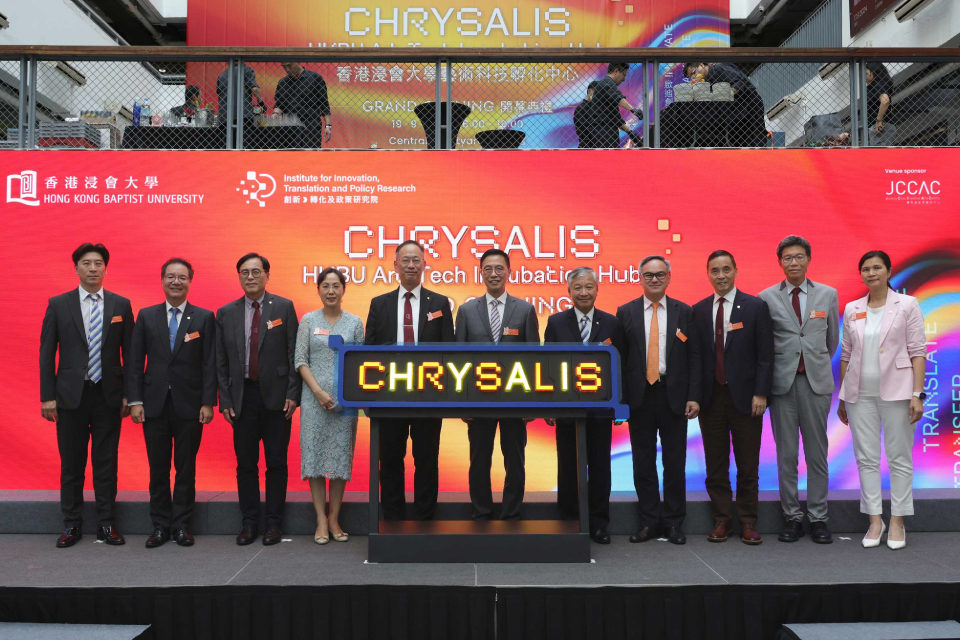
The University launched the HKBU Art Tech Incubation Hub CHRYSALIS on 19 September 2024 to foster the incubation of cutting-edge art tech translational projects and entrepreneurial ventures. CHRYSALIS is a unique platform that supports the transformation and application of HKBU's art technology outputs, nurturing artistic innovation and creativity, and contributing to the sustainable development of the creative industries. It also offers a collaborative environment for innovators and artists to explore new frontiers in art and technology.
Understanding neuroscience through the lens of music
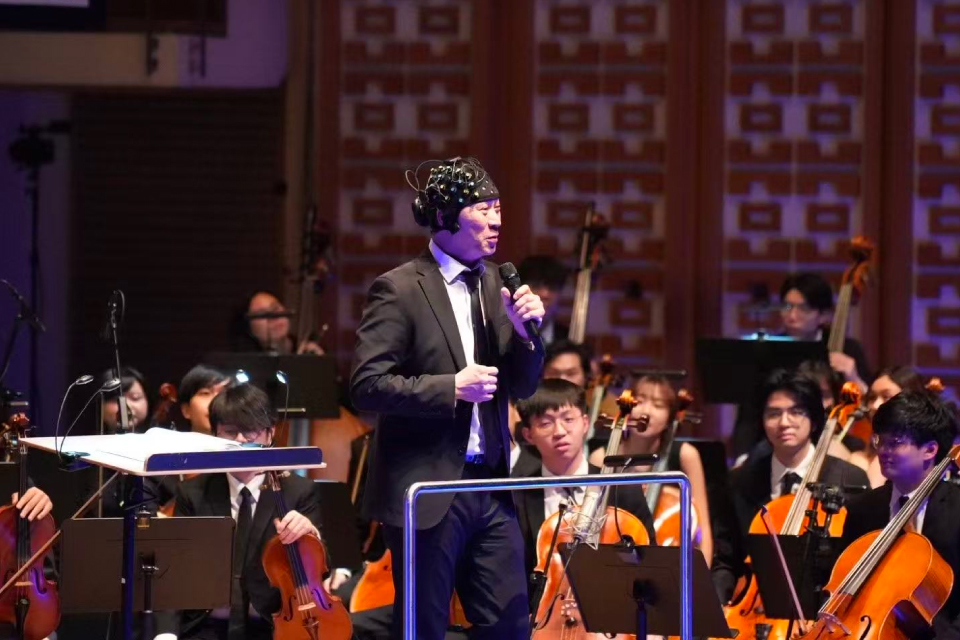
Held on 1 April 2025 at the Hong Kong Cultural Centre Concert Hall, the HKBU Symphony Orchestra Annual Gala Concert lavished nearly 1,200 people in the audience with its splendid display of captivating images, lush orchestral sound and technological innovation.
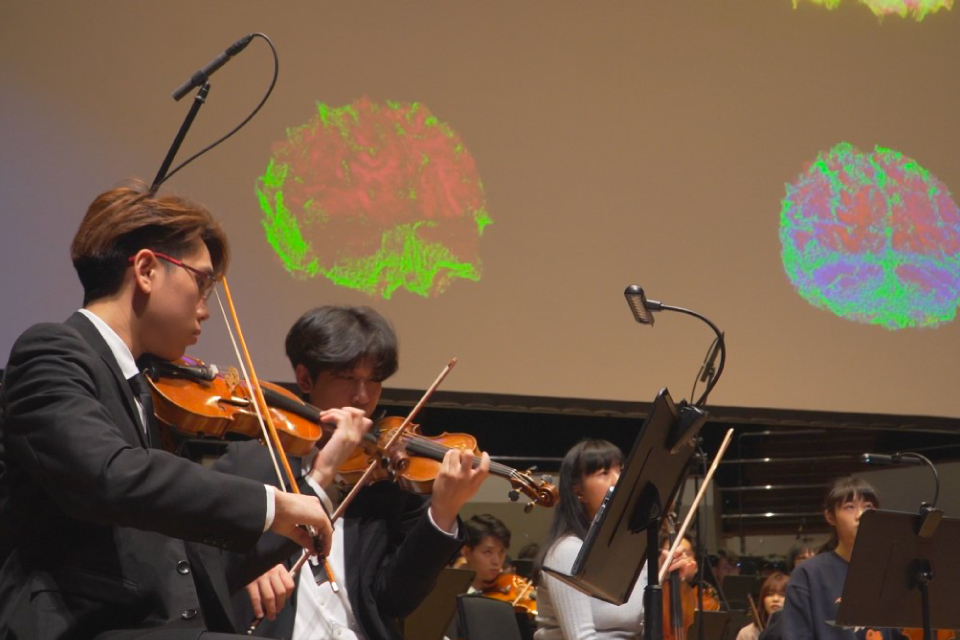
As a pioneer in the transdisciplinary study of musical creativity, HKBU brought the laboratory to the concert hall and blended music and brainwave technology. Utilising portable functional Near-Infrared Spectroscopy (fNIRS) devices, the brain activities of selected members of the orchestra were measured in real time by near-infrared light, which detected the levels of blood oxygenation in the brain. The devices transmitted the data via Bluetooth to a computer system for analysis. The data provides important insights into the brain activity and cognitive effort of different performers within an orchestra in a real concert, which enables the researchers to gain a more in-depth understanding of the brain.
To enable the audience to visualise the changes in the musicians' brainwave patterns, the orchestra collaborated with a renowned Hong Kong digital artist, Thomas Lo, who employed AI tools to transform brainwave patterns and music data into dynamic visual art in real time, creating a striking visual extravaganza alongside the live orchestra.