Campus Digest
HKBU signs strategic collaboration agreement with mainland-listed Smartgiant Technology to advance the industrialisation of microfluidic flow cytometer
Wednesday, 28 October 2026
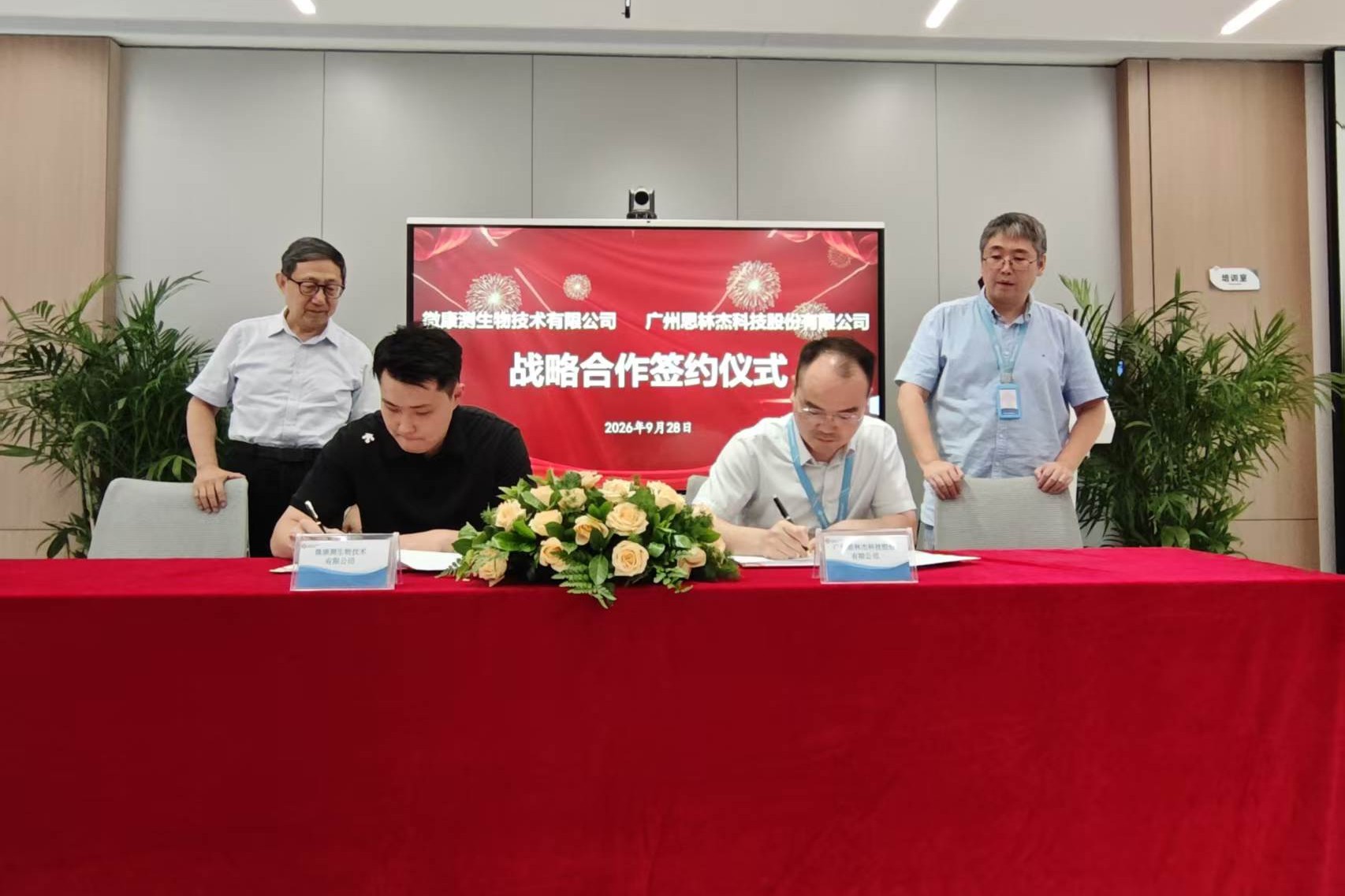
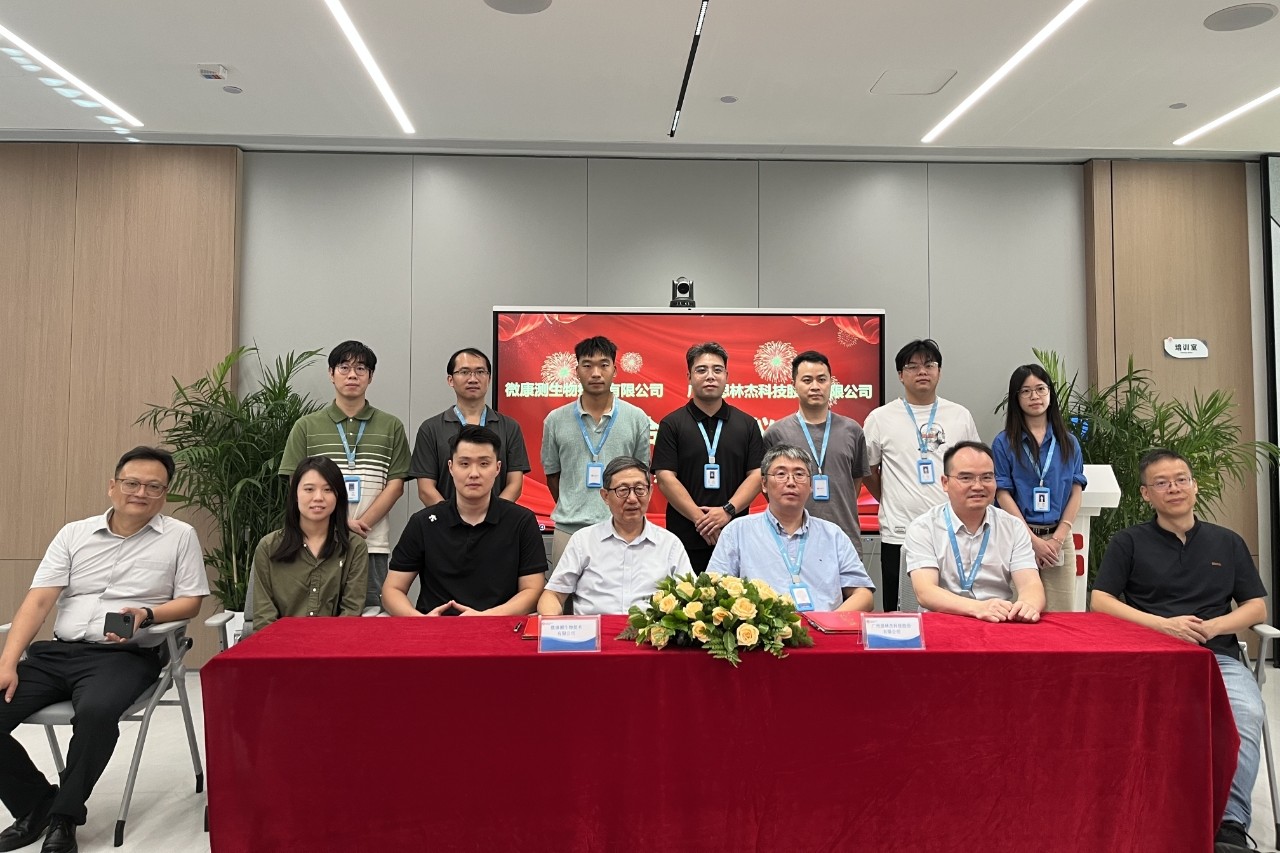
Availcommons Biotech Co. Limited (Availcommons), a company founded by the research team of Professor Lei Bo of the Department of Chemistry at HKBU, signed a strategic collaboration agreement on 28 September with Guangzhou Smartgiant Technology Co., Ltd. (Smartgiant), a mainland-listed company. Under the agreement, Smartgiant will provide Availcommons with funding and technological support to jointly advance the industrialisation of microfluidic flow cytometer. The HKBU team was awarded the Research, Academic and Industry Sectors One-plus Scheme (RAISe+) of the Innovation and Technology Commission of the Government of the Hong Kong Special Administrative Region in 2025, and subsequently established Availcommons to drive the independent research and development, as well as translation of the related technologies.
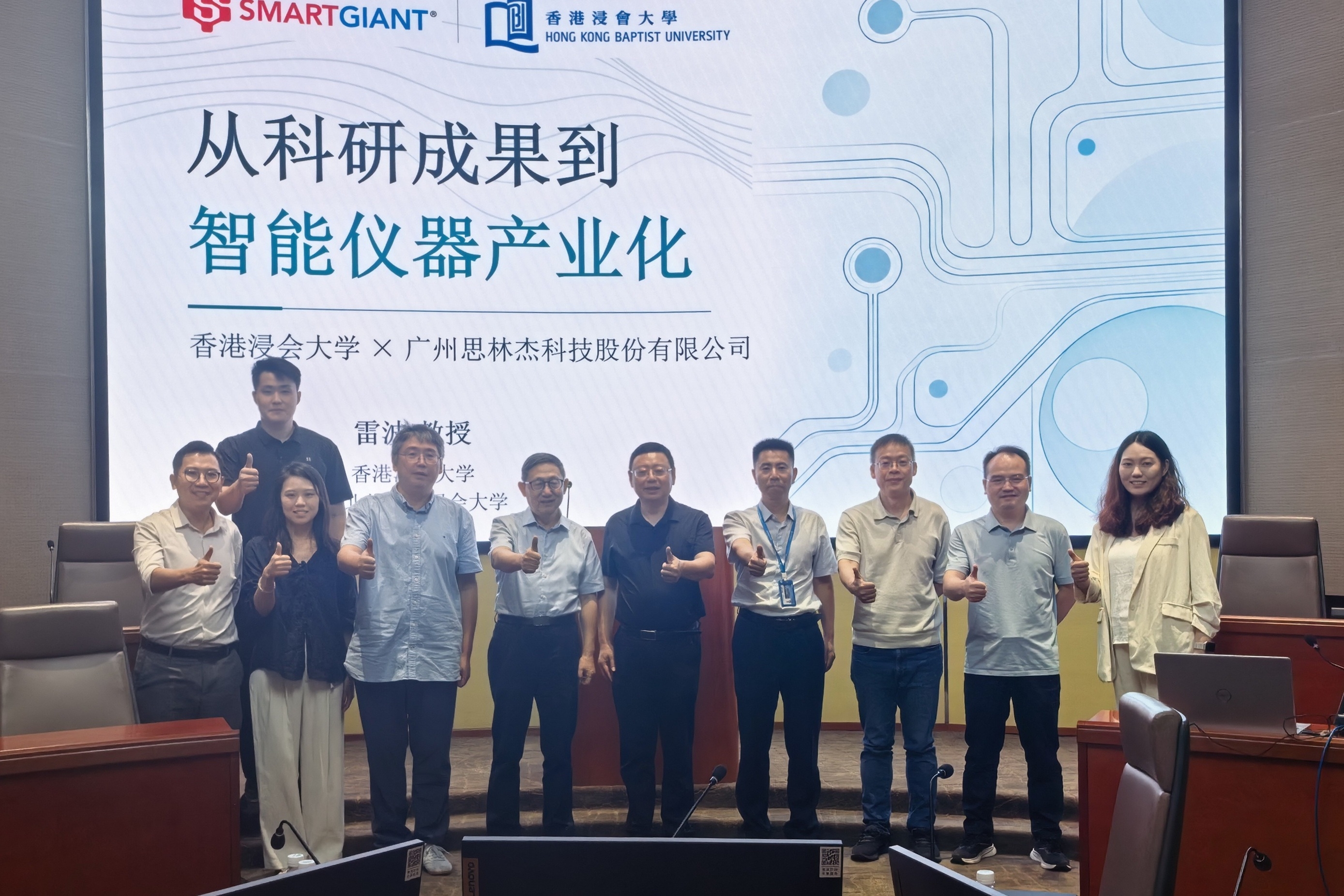
The strategic collaboration agreement was signed by Mr Huang Kaiyuan, a PhD student at HKBU and General Manager of Availcommons, and Mr Huang Hailang, General Manager of Test and Measurement Division at Smartgiant, and witnessed by Professor Lei Bo and Mr Liu Yang, General Manager of Smartgiant. Mr Zhou Maolin, Chairman of Smartgiant, later led a delegation visit to HKBU on 13 October to discuss the concrete arrangements for implementing the agreement, including the funding and technological support to be provided to Availcommons.
Professor Lei Bo said: “Flow cytometry analysis has long been constrained by high equipment costs and steep operational requirements, making it difficult to extend to primary care. With the support of RAISe+, our team has integrated microfluidics with artificial intelligence (AI) to substantially reduce the cost and operational barriers of the technology. We look forward to a long-term partnership with Smartgiant, and we hope that this collaboration will serve as a model of synergy for the University’s ‘One University, Two Campuses’ framework, opening up a pathway for the industrialisation of the University’s research outcomes.”
Mr Zhou Maolin, Chairman of Smartgiant, said: “This strategic collaboration with the HKBU team represents a key move in Smartgiant’s strategy to extend its engineering and manufacturing capabilities into the biomedical field. We look forward to providing long-term support for the translation of Availcommons’s research outcomes and to jointly developing the market for domestically produced high-end testing instruments.”
The HKBU Qianhai Institute for Technology, Innovation and Entrepreneurship (the Institute) endeavours to align with the National 15th Five-Year Plan and the development strategy of the Guangdong-Hong Kong-Macao Greater Bay Area. It seeks to strengthen the connections between Shenzhen and Hong Kong in science and technology, talent and capital, while fostering industry collaboration.
To advance the industrialisation of microfluidic flow cytometer, the Institute will help Availcommons engage with Qianhai’s relevant industrial policies and address its talent and financing needs. It will also support the company’s accelerated development under a cross-border model of “Research in Hong Kong, Translation in the Greater Bay Area”, helping bring HKBU’s research outcomes to fruition in Qianhai.
Flow cytometry is regarded as the optimal technology for blood disease and cancer testing. Conventional systems, however, are expensive, require dedicated laboratory space and must be operated by specially trained professionals, which places them beyond the reach of most primary healthcare institutions on the Mainland. Research teams from HKBU and Beijing Normal-Hong Kong Baptist University (BNBU) have combined microfluidic chip technology with AI algorithms to substantially lower the cost and operational barriers of flow cytometry analysis, with the aim of translating the technology into equipment suitable for primary care laboratories and medical institutions, thereby filling a long-standing service gap in primary healthcare. Under the strategic collaboration agreement, Smartgiant will support Availcommons’ industry-academia-research translation project in terms of both funding and technology.