Campus Digest
Symposium for Guangdong and Hong Kong Universities "1+1+1" Joint Research Collaboration Scheme showcases significant achievements
Wednesday, 13 May 2026
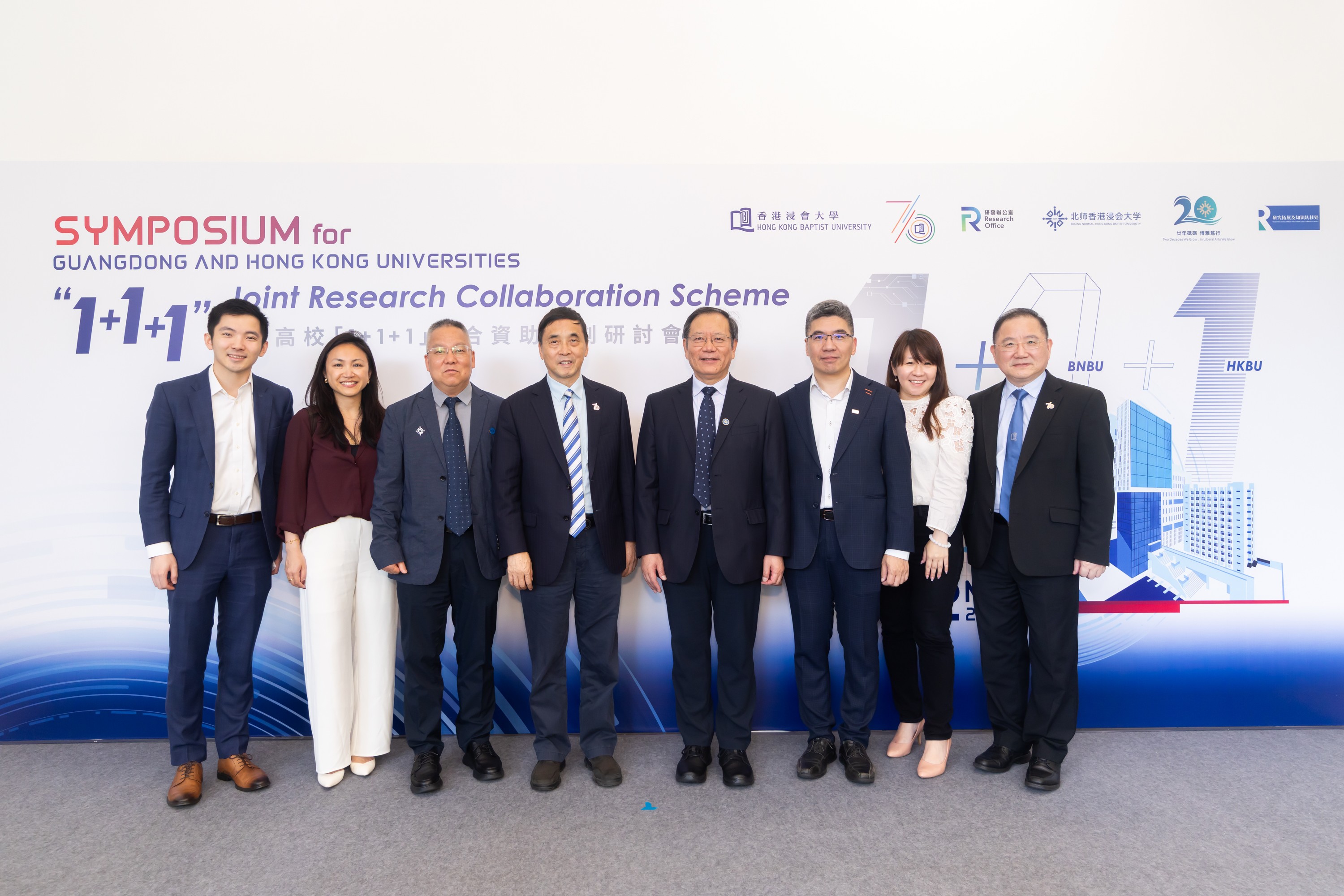
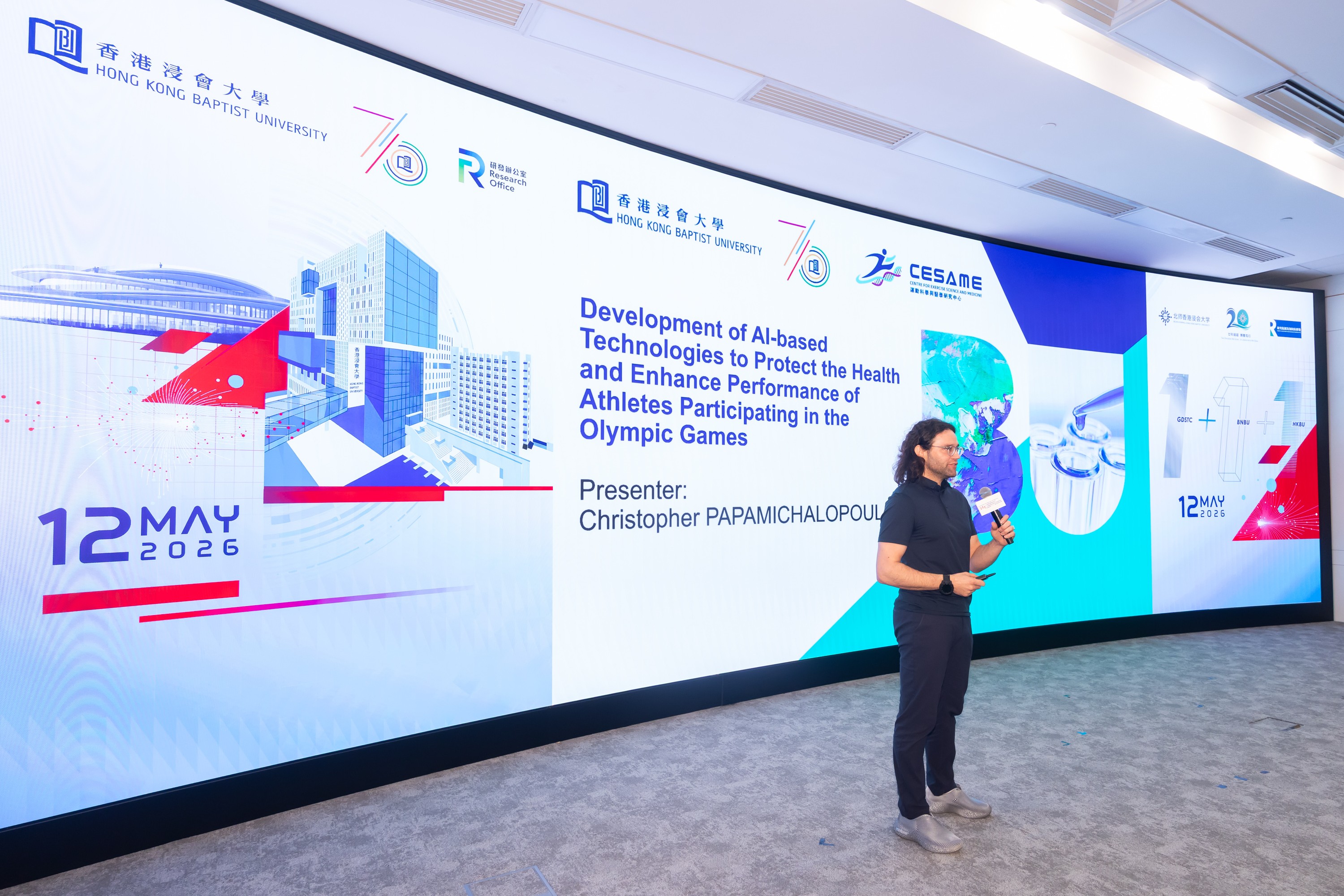
HKBU’s Research Office hosted the "Symposium for Guangdong and Hong Kong Universities ‘1+1+1’ Joint Research Collaboration Scheme" on 12 May. The event comprehensively showcased the scheme's milestone achievements in data science and artificial intelligence (AI), while also delving into how HKBU leverages its unique "One University, Two Campuses" model to align its research with the national development plans.
The scheme, jointly initiated by the Department of Science and Technology of Guangdong Province, HKBU, and Beijing Normal-Hong Kong Baptist University (BNBU), has attracted a total investment of approximately RMB90 million since its launch in 2024, with the first batch funding 15 projects focused on data science and AI, and their cross-disciplinary applications.
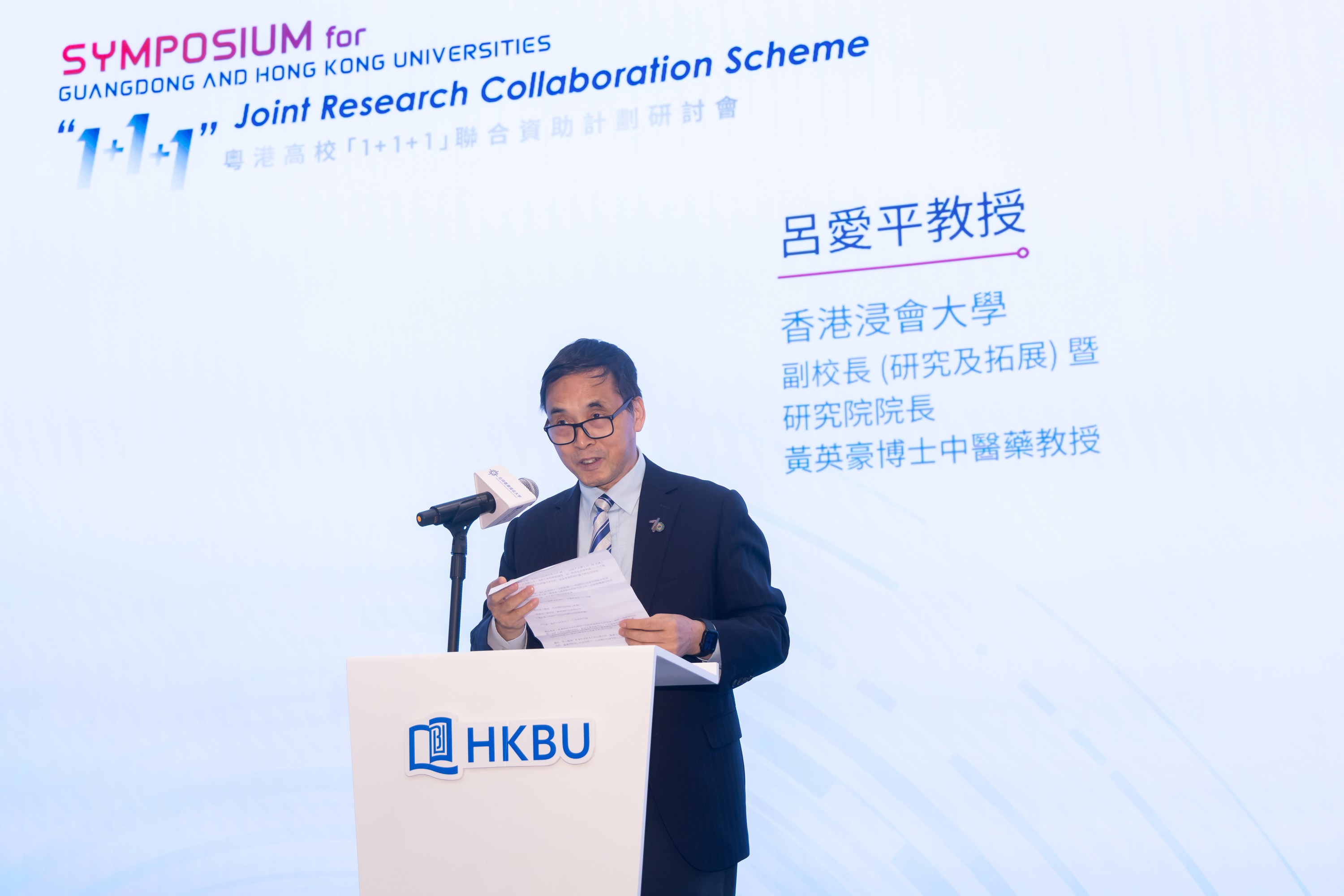
In his remarks, Professor Lyu Aiping, Vice-President (Research and Development) and Dean of Graduate School of HKBU, said, "Against the backdrop of the 15th Five-Year Plan and the development of the GBA, HKBU looks forward to further deepening our collaboration with BNBU. While expanding the scale of our research projects, we will place greater emphasis on knowledge transfer, talent cultivation, and international outreach. Our goal is to transform the synergistic advantages of our ‘One University, Two Campuses’ model into a replicable and scalable framework for cross-border innovation, contributing a more exemplary ‘HKBU Solution’ to the development of the GBA as an international hub for science and technology."
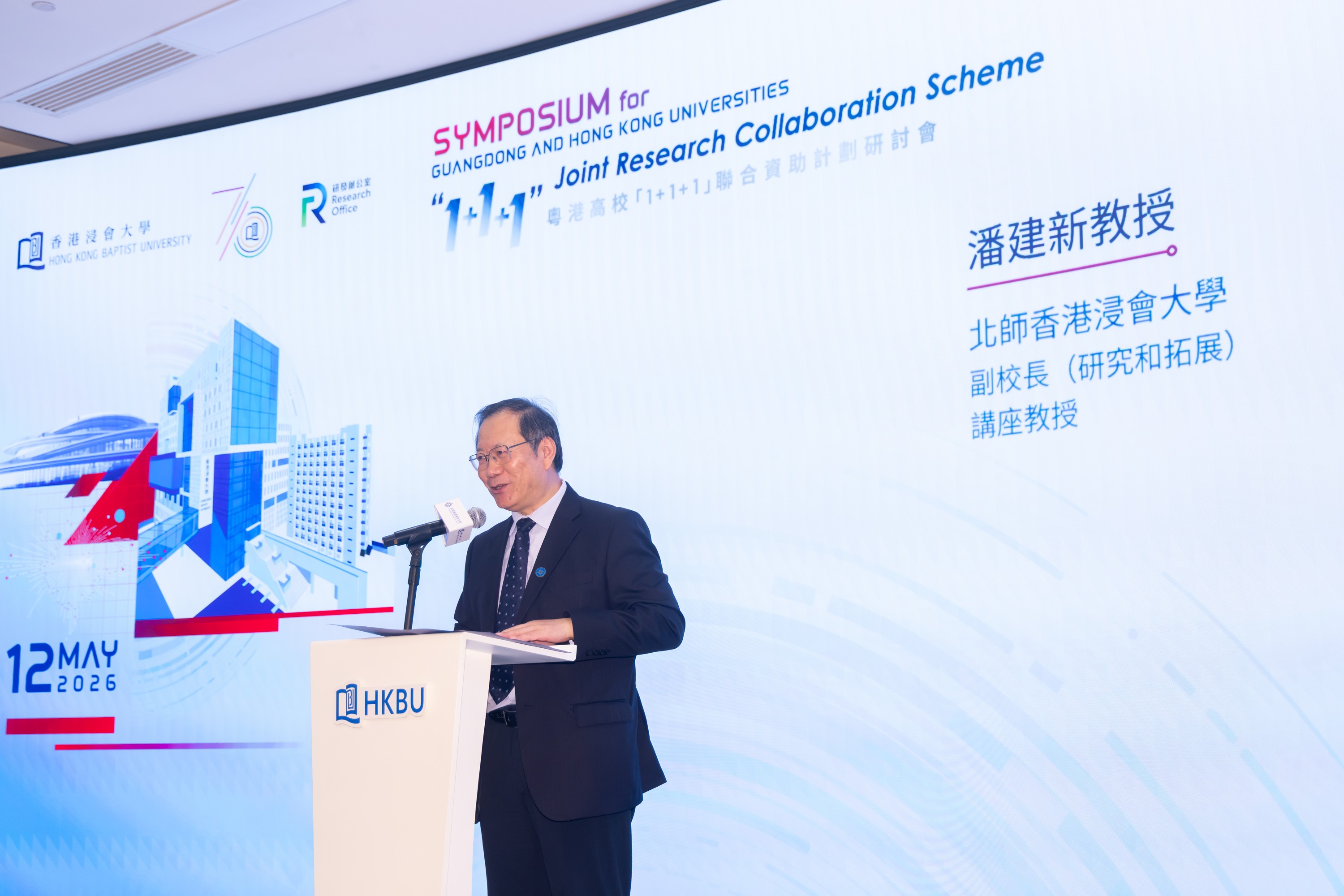
Professor Pan Jianxin, Vice-President (Research and Development) of BNBU and Director of the Guangdong Provincial Key Laboratory of Data Science and Technology with Interdisciplinary Applications, stated, "Leveraging the complementary strengths of both universities in disciplines, platforms, talent, and industrial connectivity, the projects have formed cross-regional, multi-disciplinary research teams to conduct scientific research. Meanwhile, the selection for the second cohort of 21 proposed projects has been completed and was submitted to the Department of Science and Technology of Guangdong Province for approval in March this year. The call for proposals for the third cohort is also set to launch soon."
As the nation enters the "15th Five-Year Plan" period, the strategic significance of the “1+1+1" Scheme has become even more prominent. The symposium featured a keynote speech by Professor Vivian Yam Wing-wah, a Member of the 14th National Committee of the CPPCC, Academician of the Chinese Academy of Sciences, Vice-President and Pro-Vice-Chancellor (Global Innovation Centre), Philip Wong Wilson Wong Professor in Chemistry and Energy and Chair Professor in the Department of Chemistry at the University of Hong Kong, who shared her insights on the importance of regional research for the nation's "15th Five-Year Plan".
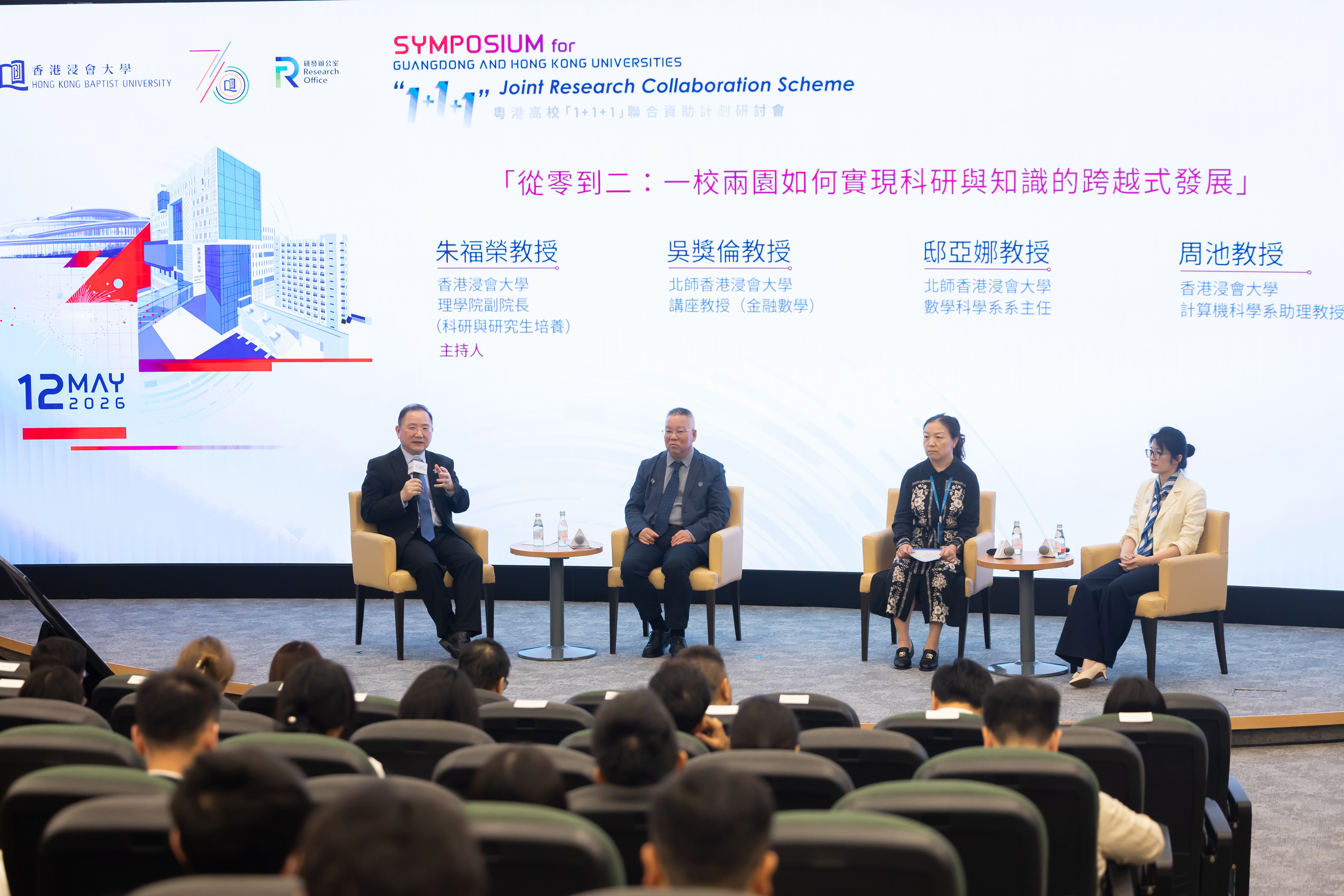
A panel discussion, themed "From Zero to Two: How 'One School, Two Campuses' Achieves Leapfrog Development in Research and Knowledge", provided an in-depth analysis of HKBU's unique model. Thanks to the strong synergy between the Hong Kong and Zhuhai campuses, research teams have successfully leveraged their complementary resources and cross-boundary talent mobility, enhancing the collaborative innovation between Guangdong and Hong Kong universities in emerging strategic disciplines.
Researchers from the funded projects also presented their findings and application potential through project presentations and poster sessions. These projects span fields such as smart healthcare, data science, digital cultural preservation, smart transportation and social care.
The "1+1+1" Scheme has become a crucial vehicle for the deep integration of government, industry, academia, and research, closely linking academic inquiry with industrial commercialisation under policy guidance. HKBU will continue to deepen its Guangdong-Hong Kong research collaboration, leveraging its distinctive emphasis on both academic excellence and knowledge transfer to actively contribute to establishing the Greater Bay Area's global leadership in innovation.