Discover HKBU
HKBU serves as the Global Health Innovation Partner of THE Global Sustainable Development Congress for the second consecutive year
30 Jun 2026
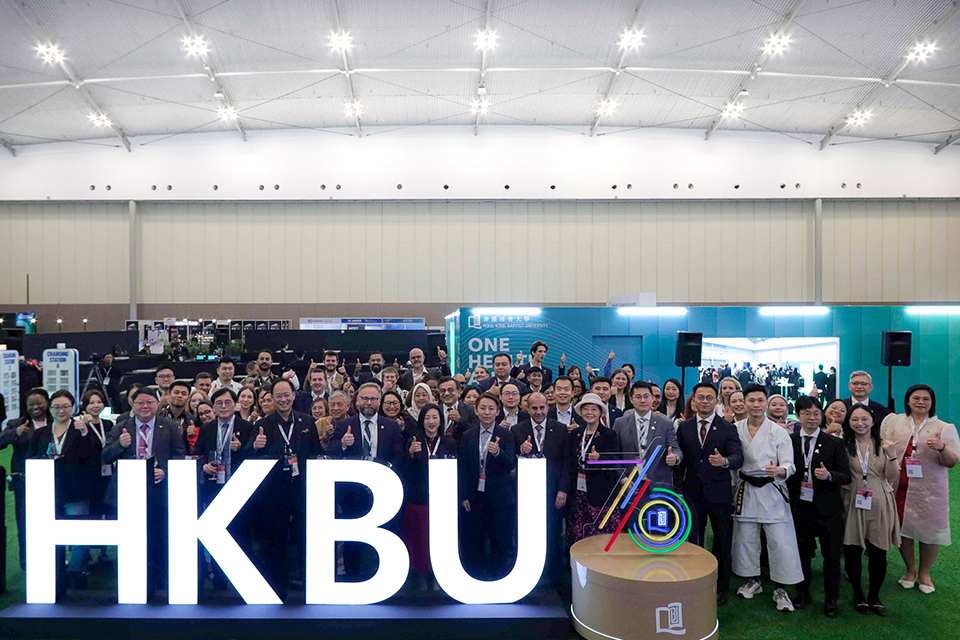
As heatwaves sweep across continents, climate change stands as an undeniable and severe global challenge. The urgency for collective action to address the climate crisis and accelerate sustainable transformation was highlighted at the Times Higher Education (THE) Global Sustainable Development Congress 2026 held from 22 to 25 June in Jakarta, Indonesia.
This year’s Congress welcomed more than 5,000 leaders, policymakers, academics and industry representatives to drive collaboration and create positive action for sustainable development. For the second consecutive year, HKBU served as the Global Health Innovation Partner of the Congress and established a large-scale dedicated zone, spearheading innovation at the forefront of sustainable health and well-being. This initiative was also one of the University’s significant overseas undertakings in celebration of its 70th anniversary.
A transdisciplinary approach to health and well-being
HKBU curated the “One Health & Well-being Zone”, a space designed to promote health research with practical wellness solutions. The opening ceremony of the Zone and the University’s 70th anniversary celebration was officiated by Professor Alex Wai, President and Vice-Chancellor; Professor Martin Wong, Provost; Professor Li Min, Dean of the School of Chinese Medicine; and Dr Mu Jingwen, Director of Institutional Research and Strategic Planning of HKBU, alongside Mr Phil Baty, Chief Global Affairs Officer, and Ms Lim Mei Mei, President, APAC of Times Higher Education.
Professor Alex Wai said: “We are now facing challenges worldwide. From climate change to biodiversity loss, emerging diseases, mental health pressures, and urban sustainability, we recognise that health cannot be built in isolation. Human, environmental, and societal well-being are one and connected. This dedicated ‘One Health and Well-being Zone’ brings that philosophy to life through transdisciplinary exhibitions, interactive experiences, research showcases, innovation demonstrations, and meaningful dialogues that bridge Chinese and Western medical wisdom, science, technology, and holistic care.”
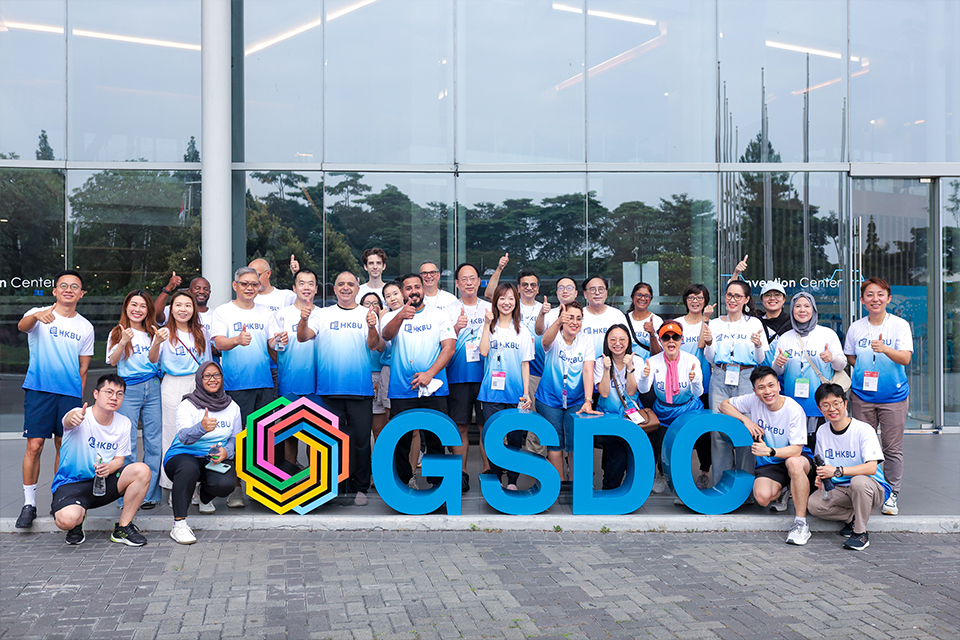
The Zone provided the participants with interactive experiences ranging from morning guided walks, Tai Chi, Baduanjin exercise, traditional Chinese medicine manual therapy, mindfulness karate, and the acupoint body hack challenge. It also included well-being talks on topics such as artificial intelligence, sustainable energy, and Chinese medicine.
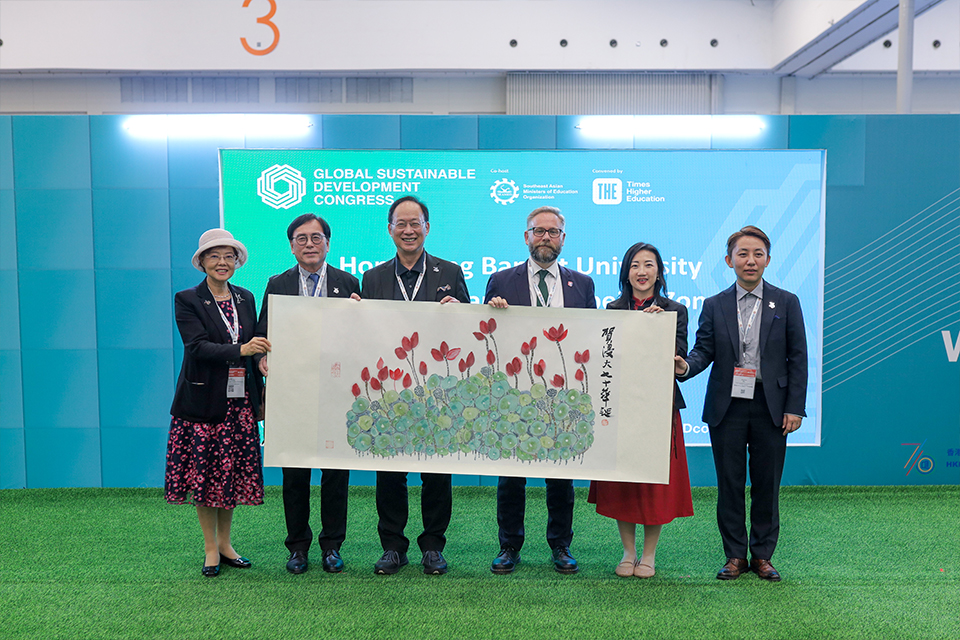
Promoting health science and sustainability
During the Congress, HKBU scholars and experts shared the University’s vision and achievements in sustainable development, while exploring the intersections of health, well-being and sustainability.
Professor Alex Wai delivered a keynote speech titled “From Discovery to Delivery: Translating Innovation into Global Health Impact” on 23 June. He outlined HKBU’s advances in translational research in health science and drug discovery; initiatives that integrate exercise science, data and medicine for better health; and its community-based social health interventions with an impact that extends beyond the laboratory.
In the United Nations Sustainable Development Goals (SDG) showcase on the same day, Professor Joydeep Bhattacharya, Professor of Cognitive Neuroscience of the Academy of Music, presented his research outcomes on “The creativity prescription: Neuroscience shows creativity is essential, not optional”.
In addition, Professor Li Min, Dean of the School of Chinese Medicine, hosted a panel discussion titled “Modern health science meets ancient wisdom: Cultivating sustainable well-being”. Dr Mu Jingwen, Director of Institutional Research and Planning, participated in a session on turning data into strategies, alongside global thought leaders.
HKBU rises to 68th in THE Sustainability Impact Ratings 2026
The Congress also unveiled the latest THE Sustainability Impact Ratings, a global performance table that assesses universities against the SDGs. HKBU was ranked 68th globally, and placed among the global top 100 in seven out of the 17 SDGs.
The University has also marked its best-ever results with four SDGs ranked within the global top 50, namely SDG 4 (Quality Education), SDG 10 (Reduced Inequalities), SDG 14 (Life Below Water), and SDG 15 (Life on Land).
These achievements demonstrate HKBU’s efforts to leverage its unique strengths in transdisciplinary teaching, learning and research, as well as the University’s commitment to nurturing outstanding talents and driving innovative research and the translation of outputs. Beyond a shadow of a doubt, through its robust campus management and corporate governance practices, the University has contributed to creating a positive impact on society.