Press Release
HKBU shines at International Exhibition of Inventions Geneva with seven awards
AI-Powered Fact-Checking project honoured with the International Press Prize
Sunday, 15 March 2026
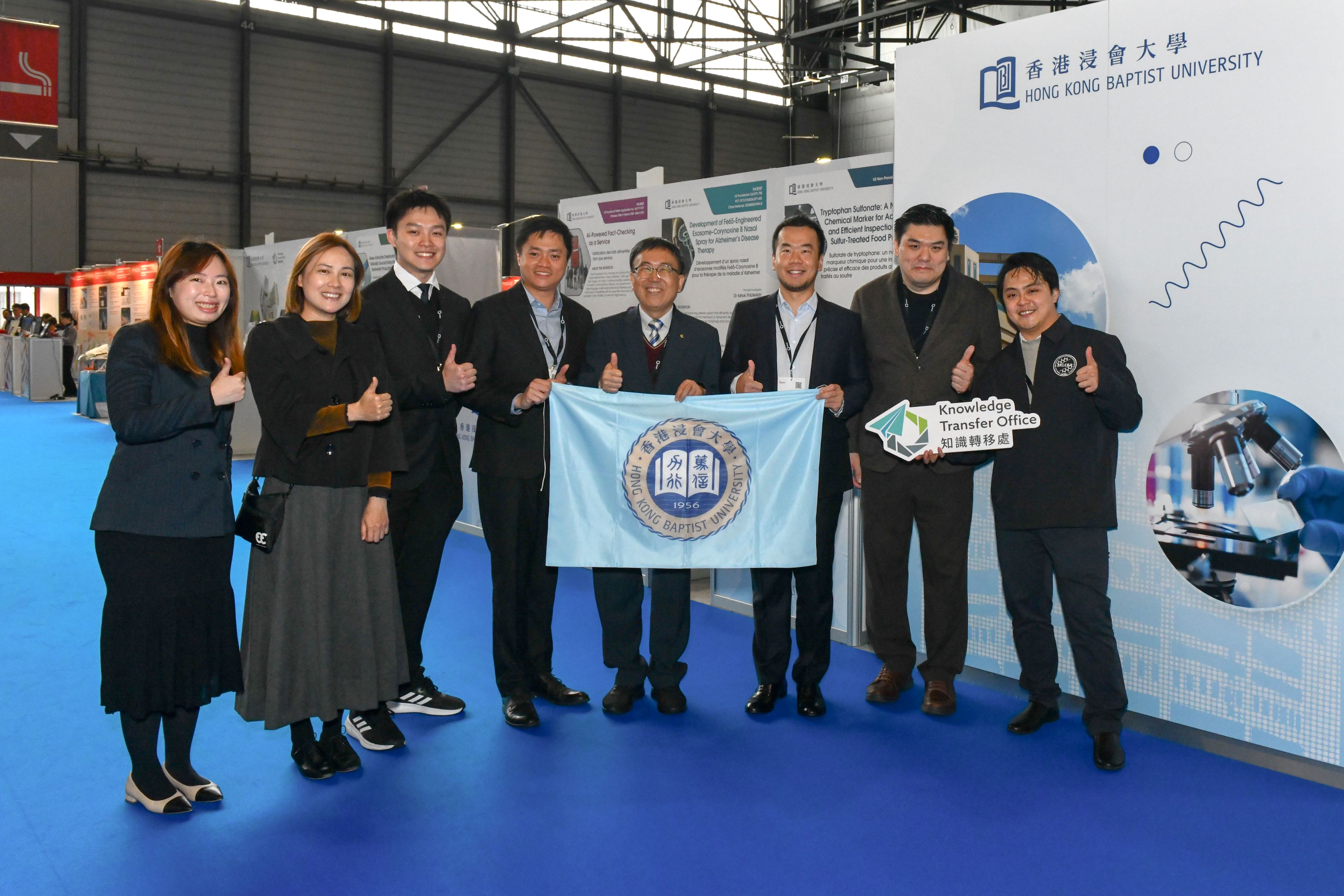
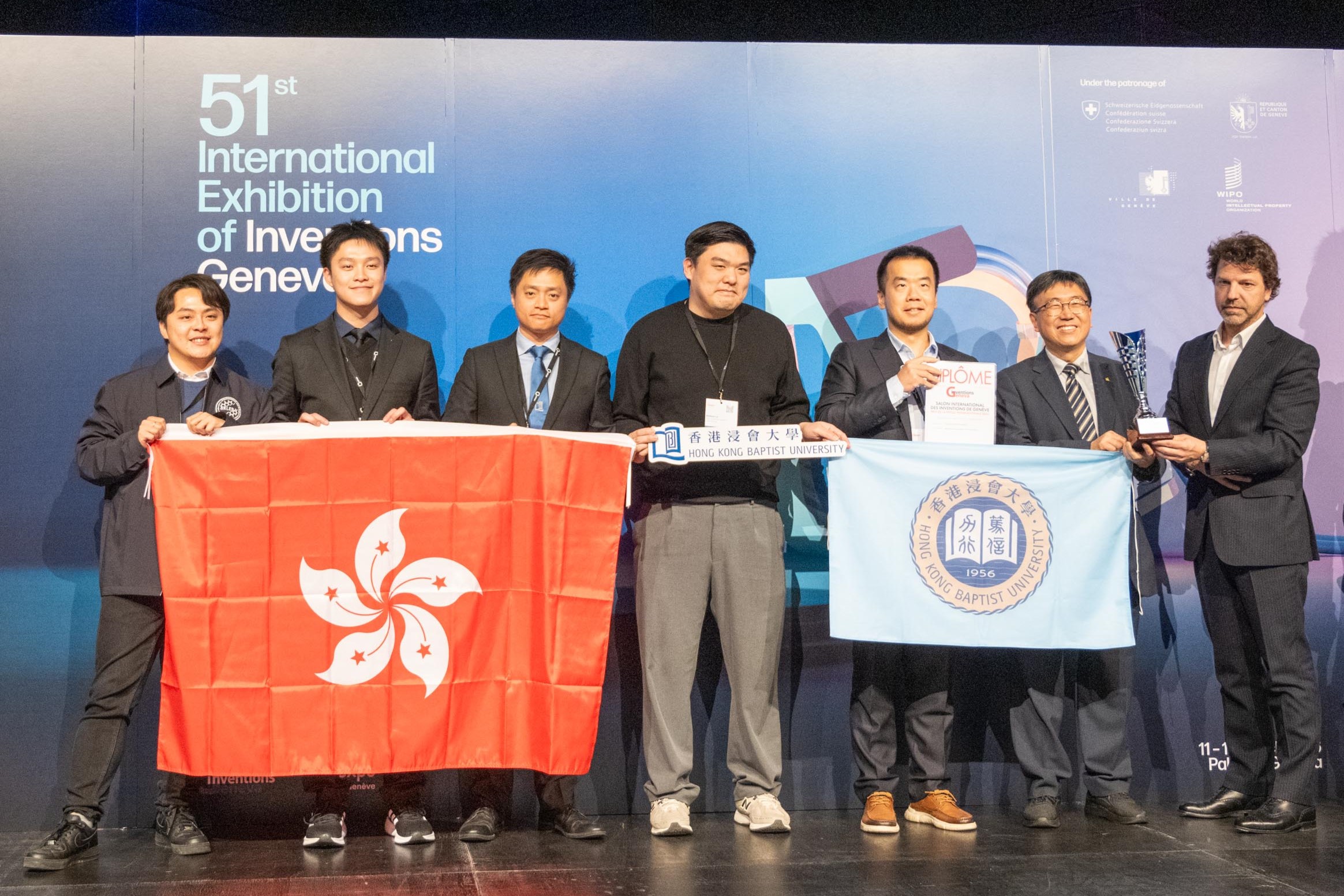
Hong Kong Baptist University (HKBU) has won seven awards at the 51st International Exhibition of Inventions Geneva last night, including the International Press Prize, two Gold Medals, three Silver Medals, and one Bronze Medal. The award-winning projects span breakthroughs in health, artificial intelligence (AI), sustainability, and advanced analytical sciences. This achievement underscores HKBU’s commitment to advancing transdisciplinary innovation and translating research outcomes into practical applications that create tangible societal benefits.
The award-winning HKBU research projects are:
International Press Prize and Silver Medal
- AI-Powered Fact-Checking as a Service by Professor Li Yupeng, Assistant Professor of the Department of Interactive Media and Director of the AI and Social Good Lab of the AI Media Centre
The rapid proliferation of misinformation in the digital age, whether originating from humans or generated by AI, has far outpaced existing verification capabilities. The team has introduced an AI-Powered Fact-Checking technology that leverages multiple AI agents to deliver trustworthy, scalable, and transparent automated verification of information. This technology enhances the trustworthiness of decision-making by media outlets, social platforms, financial institutions, and governments, ensuring the credibility of information transformation. It also creates economic value by mitigating the erosion of public trust and financial stability caused by misinformation.
Gold Medal
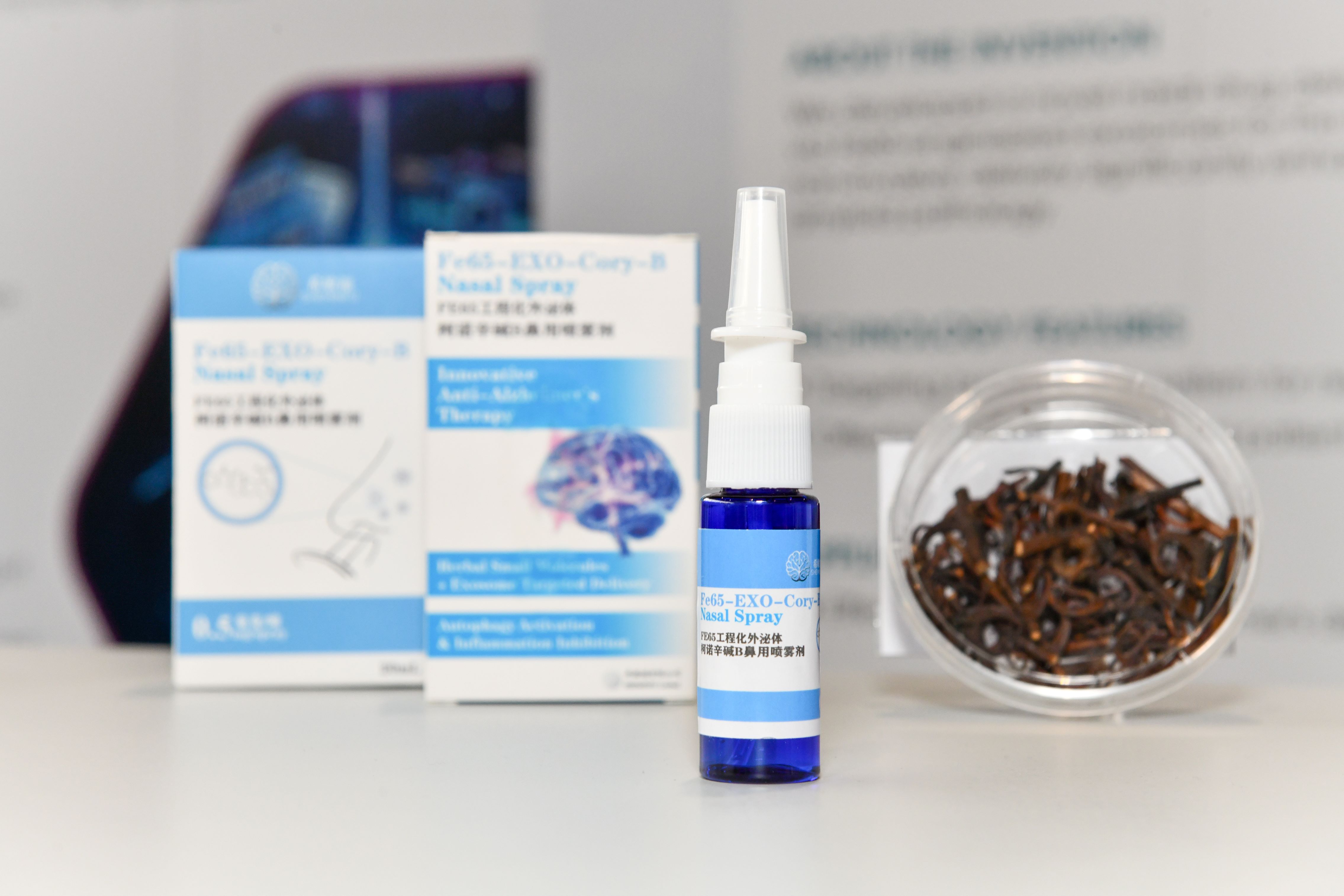
- Development of Fe65-Engineered Exosome–Corynoxine B Nasal Spray for Alzheimer’s Disease Therapy by Dr Ashok Iyaswamy, Visiting Assistant Professor of the Teaching and Research Division of the School of Chinese Medicine
This invention pioneers a novel intranasal drug delivery platform. Researchers have engineered exosomes, extracellular vesicles released by cells, to serve as carriers for the drug. Specifically, the exosomes loaded with Corynoxine-B, bioactive compounds extracted from the Chinese herbal medicine, deliver the drug directly to the brain via the nasal cavity. This approach promotes autophagy, a process that sustains the health of cells, thereby enhancing one’s cognitive function and motor abilities. It offers a non-invasive, potential therapeutic strategy for patients with Alzheimer’s disease.
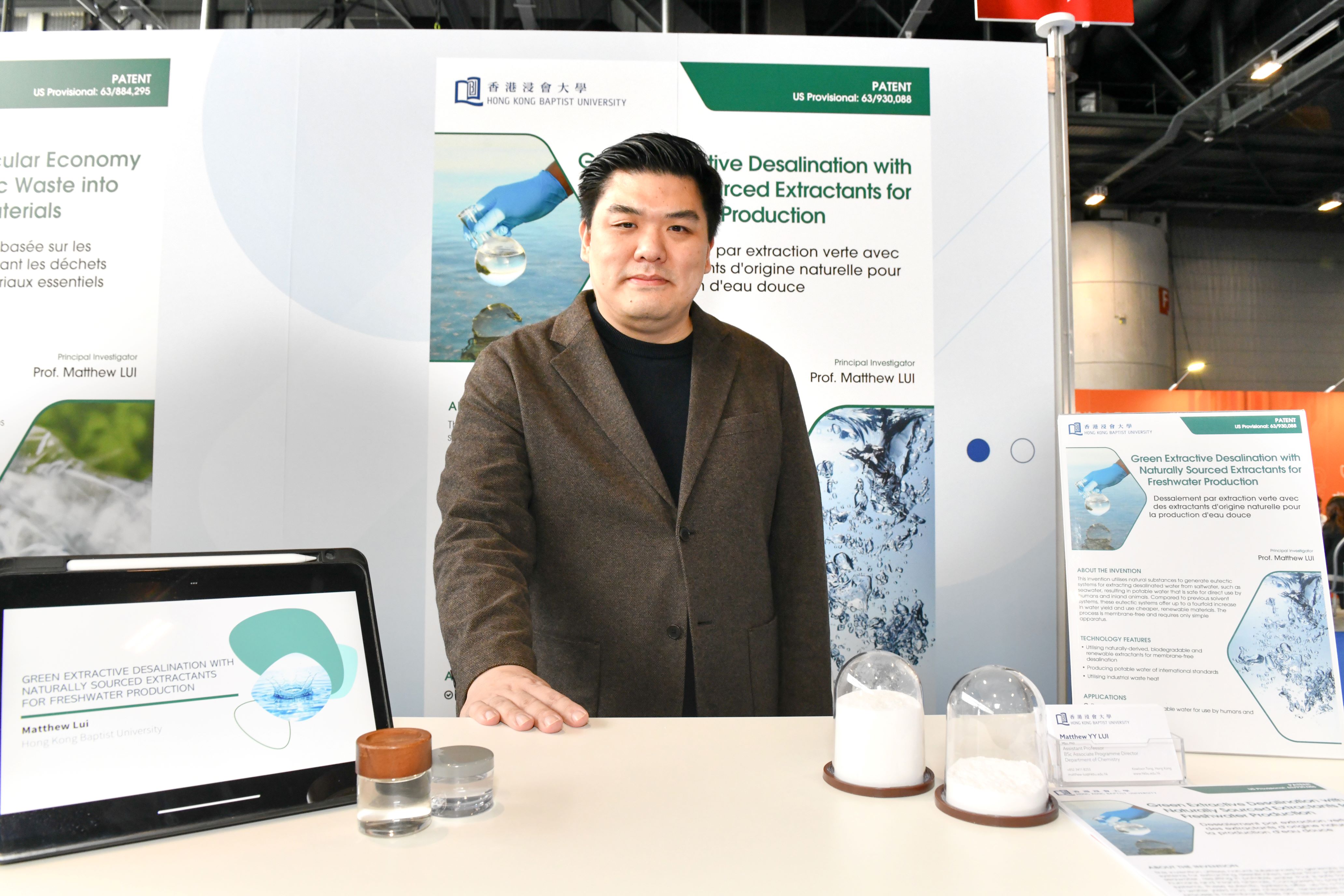
- Green Extractive Desalination with Naturally Sourced Extractants for Freshwater Production by Professor Matthew Lui, Assistant Professor of Department of Chemistry
This invention utilises naturally sourced extractants to extract desalinated water from saltwater, such as seawater, producing potable water that is safe for drinking. The process does not require a membrane to separate salt and requires only a simple apparatus, reducing both energy use and the impact to the environment.
Silver Medal
- Leaf Cryosection Method for Mass Spectrometry Imaging Professor Xia Yiji, Chair Professor of the Department of Biology
This invention utilises a special water-soluble polymer and membrane material to embed and support plant tissues. These tissues are then cryosectioned into thin slices while controlling the humidity to preserve the intact cellular structure and in situ molecules, thereby enabling high-quality mass spectrometry imaging and spatial omics analysis.
- Insect-based Circular Economy by Turning Plastic Waste into Essential Biomaterials by Professor Matthew Lui, Assistant Professor of Department of Chemistry
This biorefining technology employs specially designed additives to enhance the efficiency of selected insect larvae in consuming and degrading plastics and food waste. It also utilises AI technology to optimise the biodegradation process, during which valuable by-products can be converted into biodegradable materials, thereby promoting the development of a sustainable circular economy.
Bronze Medal
- Tryptophan sulfonate: a new chemical marker for accurate and efficient inspection of sulfur-treated food products by Professor Xu Jun, Assistant Professor of the Teaching and Research Division of the School of Chinese Medicine
The research team developed a new approach for the inspection of sulfur-treated food and Chinese herbal medicinal products through a new chemical marker called tryptophan sulfonate. This approach is more accurate, rapid and efficient for large sample quantities, helping to enhance food safety and strengthen quality assurance.
The 51st International Exhibition of Inventions Geneva, held from 11 to 15 March in Switzerland, is an annual global event devoted exclusively to inventions. This year, more than 1,000 inventions from over 40 countries and regions were evaluated by a panel of professional judges.