Press Release
Two HKBU scholars honoured as RGC Senior Research Fellow and Research Fellow for research on heat island effect in GBA and AI safety
Tuesday, 21 July 2026
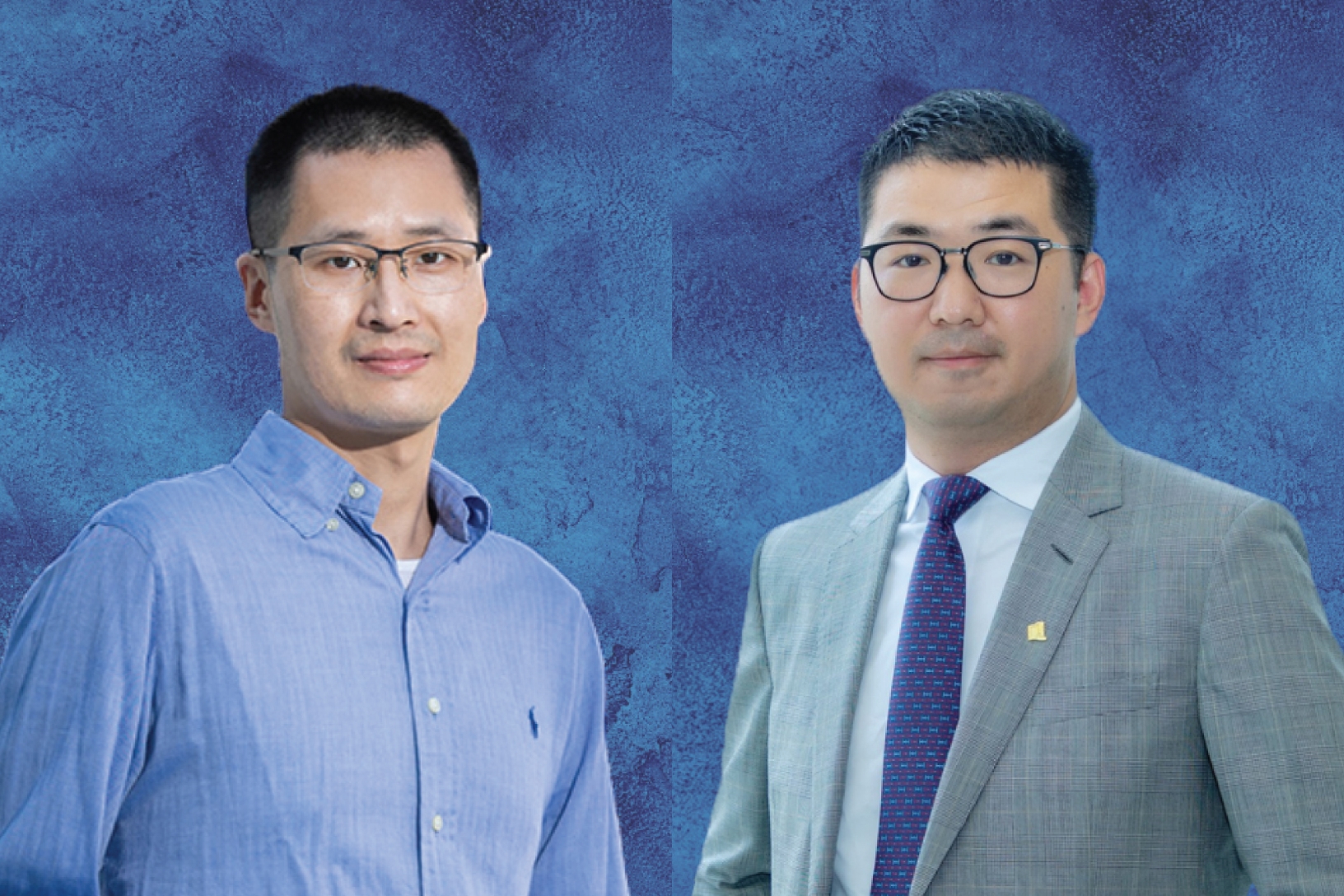
Two scholars from Hong Kong Baptist University (HKBU), Professor Gao Meng, Professor of the Department of Geography, and Professor Han Bo, Associate Professor of the Department of Computer Science, have achieved recognition in the Research Grants Council’s (RGC) 2026/27 Senior Research Fellow Scheme (SRFS) and Research Fellow Scheme (RFS) respectively.
They have secured funding of over HK$14 million to undertake trailblazing research focused on alleviating the heat island effect in the Guangdong-Hong Kong-Macao Greater Bay Area (GBA) and advancing the safety of artificial intelligence (AI). This recognition highlights HKBU’s excellence in research and its commitment to generating positive impact on society and the world through innovative research.
Professor Lyu Aiping, Vice-President (Research and Development) cum Dean of Graduate School of HKBU, congratulated the two awardees. He said: “This double accolade not only recognises Professor Gao and Professor Han’s exceptional scholarly contributions but also attests to HKBU’s research excellence in environmental sustainability and frontier AI. These two distinguished projects, one dedicated to GBA climate governance and the other establishing a trustworthy defence line for AI safety, underscore HKBU’s commitment to delivering innovative solutions for pressing global challenges.”
Professor Lyu added that the HKBU research community had already excelled in the University Grants Committee’s General Research Fund, Early Career Scheme, and Humanities and Social Sciences Prestigious Fellowship Scheme, registering a record-high of 95 awarded research projects across the three schemes. This milestone reflects a significant leap in the HKBU research community’s capabilities, global competitiveness, and social influence.
The RGC’s Senior Research Fellow and Research Fellow schemes aim to provide outstanding professors and associate professors with sustained research support and relief from teaching and administrative duties. This allows them to devote their efforts to research and development, while nurturing and training the next generation of research talent for Hong Kong. Each awardee receives funding from the RGC to undertake a five-year research project.
Professor Gao Meng, Professor of the Department of Geography, has been named an “RGC Senior Research Fellow”, receiving funding of around HK$8.5 million. His research addresses the urban heat island effect (a phenomenon where temperatures in urban areas are significantly higher than in surrounding rural and natural areas) and air pollution in GBA through integrating machine learning and ecological engineering.
Rapid urban development in recent years has exacerbated the dual threats of urban heat islands and localised air pollution across the GBA’s subtropical megacities. Professor Gao’s research project, “Integrating machine learning, nature-based solutions and engineered solutions for co-mitigation of urban heat and air pollution in the Greater Bay Area”, addresses these challenges by combining coupled atmospheric chemistry, urban climate modelling and advanced optimisation techniques. The research team will evaluate and recommend the optimal combinations of eco-solutions (such as green roofs and parks) and engineered solutions (such as reflective materials) to establish a unified mitigation framework aimed at safeguarding the health of over 86 million residents across the GBA.
“By combining advanced machine learning with ecological engineering, we are building a practical, data-driven blueprint for healthier, more resilient subtropical cities. The RGC’s long-term support through this fellowship enables our team to conduct innovative research whose impact will be felt directly across the Hong Kong Special Administrative Region, the GBA, and rapidly urbanising subtropical regions worldwide,” Professor Gao said.
Professor Han Bo, Associate Professor of the Department of Computer Science, has been conferred the title of “RGC Research Fellow”, with funding of over HK$5.6 million. His project focuses on developing a trustworthy and highly efficient reasoning framework for next-generation autonomous AI agents.
While standard foundational AI models function passively, transforming them into fully autonomous reasoning agents can lead to weird “hallucinations”, unreliable tool use, and physical safety risks in dynamic environments. Professor Han’s research project, “Towards Building Trustworthy and Efficient Reasoning Agents with Foundation Models”, introduces TERA (Trustworthy and Efficient Reasoning Agents), a unified framework that addresses four key bottlenecks in reasoning capability, environmental robustness, interaction safety, and long reasoning chain efficiency.
Professor Han said: “As AI transitions from interactive chat systems to autonomous agents capable of making decisions on our behalf, safety and trust must be built directly into the design phase rather than added as an afterthought. The RGC fellowship provides the resources and stability to help us build a more trustworthy and efficient foundation for next-generation AI systems in safety-critical industries such as healthcare and automated programming.”
Professor Gao Meng is ranked among the World’s Top 2% Scientists by Stanford University, named in the Forbes China 30 Under 30 List (Science and Medical Health) in 2020, and elected Fellow of the Royal Meteorological Society. His honours include the Excellent Young Scientists Fund (Hong Kong and Macao) 2023 awarded by the National Natural Science Foundation of China, and the Atmospheric Sciences Division Outstanding Early Career Scientists Award 2020 presented by the European Geosciences Union. This year, he has also secured RGC’s support through the Overseas Research Fellowship Scheme and the General Research Fund.
Also ranked among the World’s Top 2% Scientists by Stanford University, Professor Han Bo is a Distinguished Speaker of the Association for Computing Machinery and a Senior Member of the Institute of Electrical and Electronics Engineers (IEEE). His accolades include the IEEE AI’s 10 to Watch Award, the IEEE Computing’s Top 30 Early Career Professionals Award, the Early Career Spotlight from the International Joint Conferences on Artificial Intelligence, and the Aharon Katzir Young Investigator Award from the International Neural Network Society. This year, he also received support from RGC’s General Research Fund.