Press Release
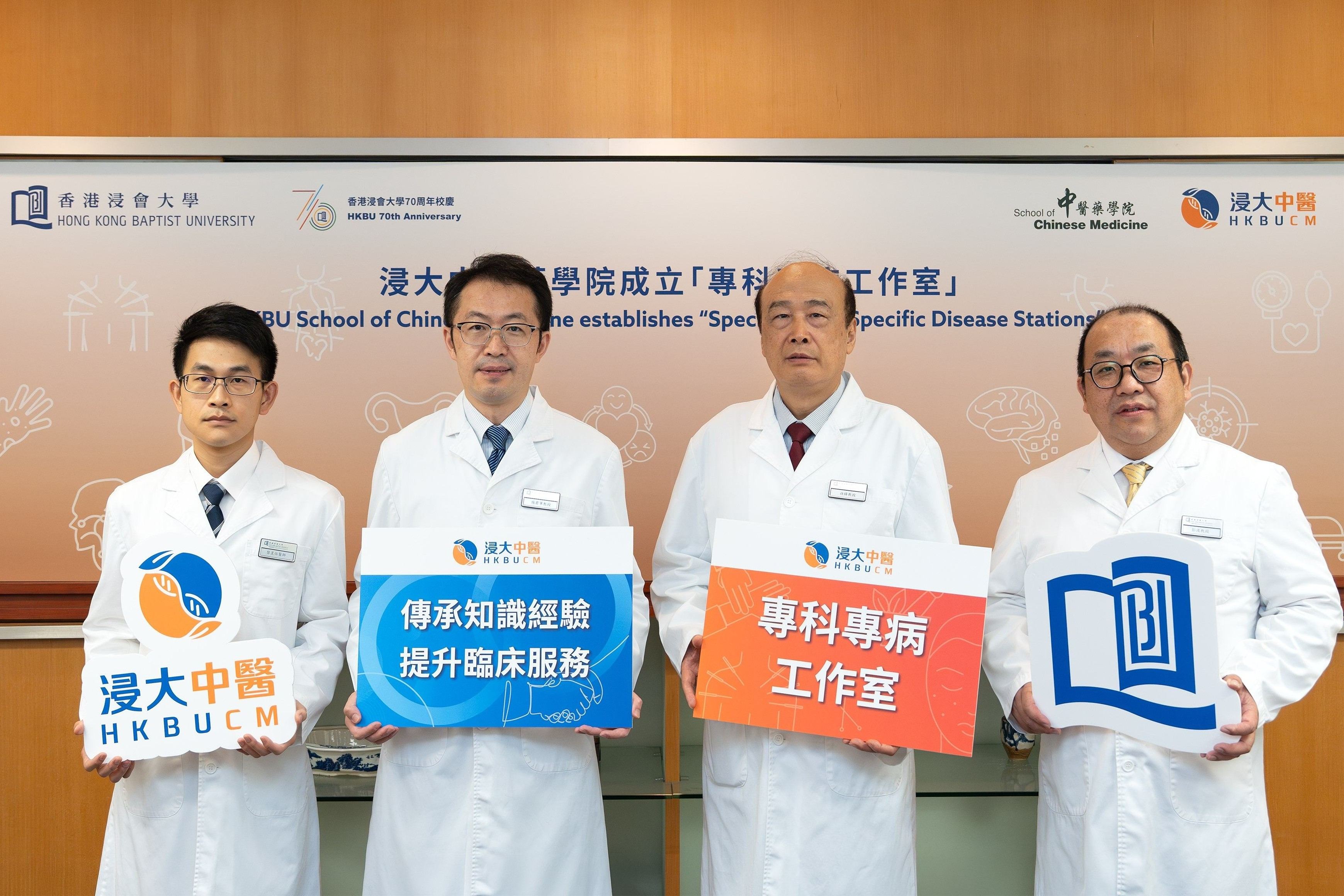
HKBU Chinese medicine clinics establish “Specialty and Specific Disease Stations” to enhance Chinese medicine clinical services through inheritance of knowledge and experience
Thursday, 27 August 2026
To promote the development of Chinese medicine specialties and disease-specific treatments in Hong Kong, and provide training for professionals to further enhance the standards of Chinese medicine clinical services and research in Hong Kong, the School of Chinese Medicine (SCM) at Hong Kong Baptist University (HKBU) has announced the establishment of “Specialty and Specific Disease Stations” at eight clinics it operates, covering 18 specialist areas and specific diseases such as neurodegenerative diseases, rheumatology and osteoarthritis, gynecology, oncology, cardiology, and stroke. HKBU hopes to cultivate echelons of Chinese medicine practitioners with expertise and experience in specific areas for Hong Kong in the long run.
The Stations comprise clinical, teaching and research teams led by senior professors from SCM with extensive clinical experience in specific disease areas. Using an approach which integrates clinical practice, education and research, the Stations foster the exchange and inheritance of clinical experience in disease diagnosis and treatment, which supports the training of Chinese medicine talent on specialist areas and specific diseases to further enhance the quality and standard of clinical services. Chinese medicine practitioners at the Stations will conduct holistic assessment of patients according to the syndrome differentiation and treatment approach of Chinese medicine. They will then integrate clinical experience in various specialist areas and specific diseases to formulate evidence-based, personalised, and effective treatment protocols.
The clinical specialties categories and specific diseases covered by the Stations include acupuncture and moxibustion therapy, adolescent scoliosis, cardiology, chronic disease management, dermatology, gastroenterology and hepatology, geriatrics, gynecology, mental health, nephrological and urological diseases, neurodegenerative diseases, oncology, ophthalmology and otorhinolaryngology, orthopedics, pediatric neurological disorders, pulmonology, rheumatology and osteoarthritis, and stroke treatment.
Professor Li Min, Dean, Chair Professor and Ma Pak Leung Endowed Professor in Innovative Neuromedicine of SCM at HKBU, said: “SCM at HKBU spares no effort in advancing the development of Chinese medicine, and actively supports the call of the Outline of the National 15th Five-Year Plan to foster the growth of critical, specialist areas in Chinese medicine, and the vision of Hong Kong’s Chinese Medicine Development Blueprint. By proactively exploring new development models in Chinese medicine, we hope to provide patients with specialist and specific disease treatments which better suit their needs.”
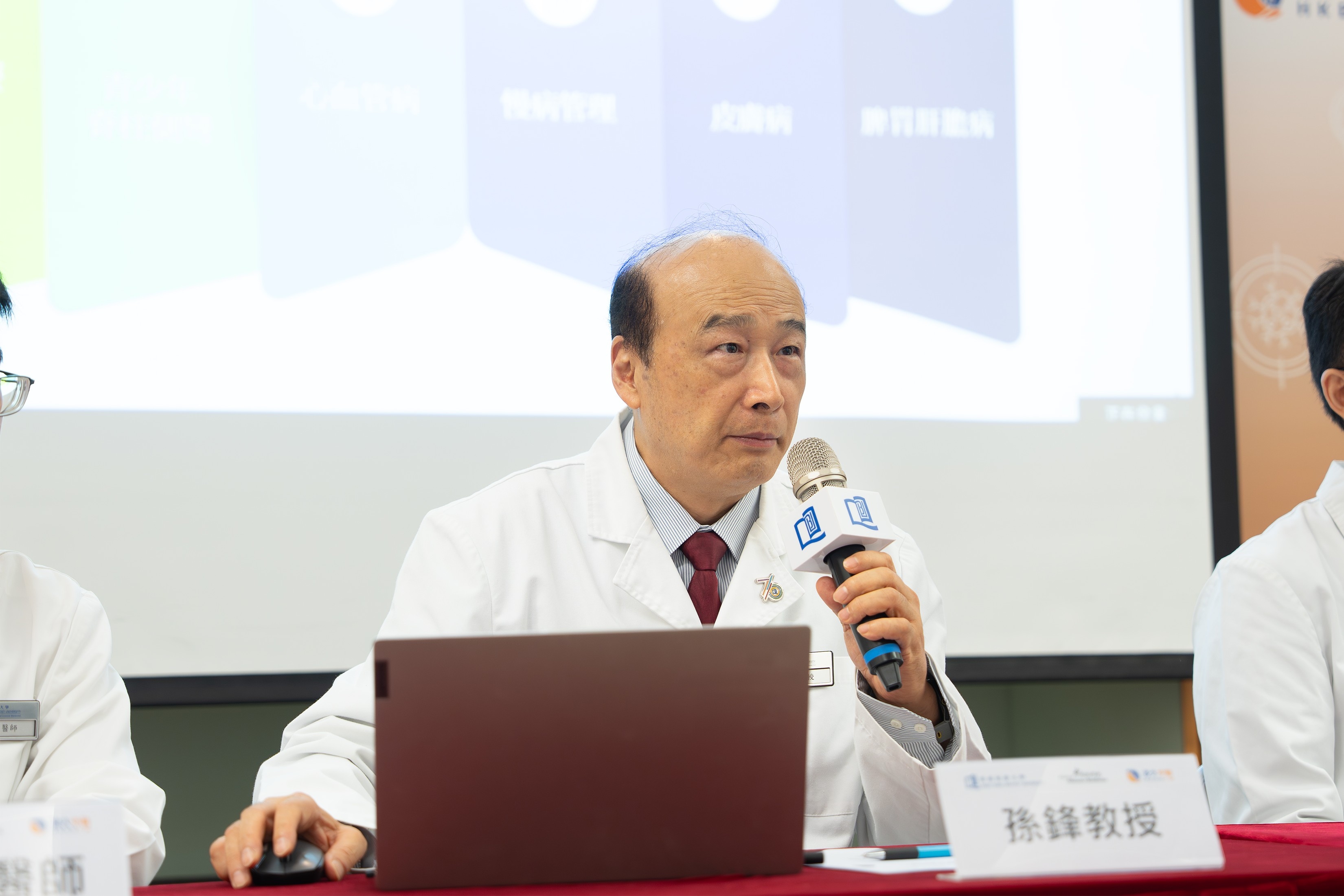
Professor Sun Feng, Director and Professor of Practice of the Clinical Division of SCM at HKBU, said: “We hope to cultivate echelons of Chinese medicine practitioners with expertise and experience in specific areas for Hong Kong through the establishment of the ‘Specialty and Specific Disease Stations’, so that more focused, high-quality Chinese medicine clinical services can be offered to the public. The School will gradually expand the scale of the Stations and include more diseases for which Chinese medicine demonstrates clear advantages in the specialist system in response to society’s demand for quality Chinese medicine services.”
Another core objective of the Stations is the inheritance of knowledge and experience. Each station is led by a Chinese medicine practitioner holding the rank of Associate Professor of Practice or above from HKBU, with over 20 years of extensive experience in clinical service, education and research in Chinese medicine. They will join Chinese medicine practitioners who are dedicated to the development of relevant specialist areas and specific diseases in analysing clinical cases, discuss the treatment plans adopted and share their experience, and provide patients with evidence-based, systematic assessment and follow-up, so that they can pass on the valuable experience in the treatment of the diseases concerned. This approach enables Chinese medicine practitioners interested to develop in certain specialist areas and specific diseases to accumulate clinical knowledge and experience more effectively, thereby raising the professional standard of Chinese medicine practitioners in Hong Kong.
The clinics under the Clinical Division of SCM at HKBU are located across Hong Kong Island, Kowloon, and the New Territories, with the “Specialty and Specific Disease Stations” teams providing services at eight clinics starting today, including those in Kowloon Tong, Tsim Sha Tsui, Mong Kok, Prince Edward, Sheung Wan, Wong Chuk Hang, North Point, and Sha Tin. Members of the public can make appointments using existing channels of calling the clinics directly or booking online.
In addition to the “Specialty and Specific Disease Stations”, SCM has also earlier established the “Renowned Chinese Medicine Practitioners Inheritance Station”. Renowned Chinese medicine experts bestowed with the honours of “National Famous Traditional Chinese Medicine Practitioners”, “Qi Huang Scholars”, or appointed as chief physicians or professors in the Chinese Mainland are invited to visit HKBU, where they pass on academic theories and clinical experience by providing guidance to Chinese medicine practitioners at HKBU dedicated to professional development in the relevant specialist areas or specific diseases. The invited Chinese medicine masters also serve as keynote speakers at HKBU’s academic talks, conduct clinical guidance, exchanges and demonstrations, and participate in case discussions and related activities.
The “Specialty and Specific Disease Stations” and the “Renowned Chinese Medicine Practitioners Inheritance Station” will collect and organise case records, notes, and raw clinical data from senior and renowned Chinese medicine practitioners to establish a literature database and a clinical case database. These resources will be used to develop teaching materials, conduct theoretical research, and enhance clinical treatment protocols, thereby supporting specialist development in Chinese medicine.
-End-