Press Release
HKBU hosts inaugural International Symposium on Innovation and R&D in Traditional Chinese Medicine to promote modernisation, internationalisation and research translation in Chinese medicine
Monday, 31 August 2026
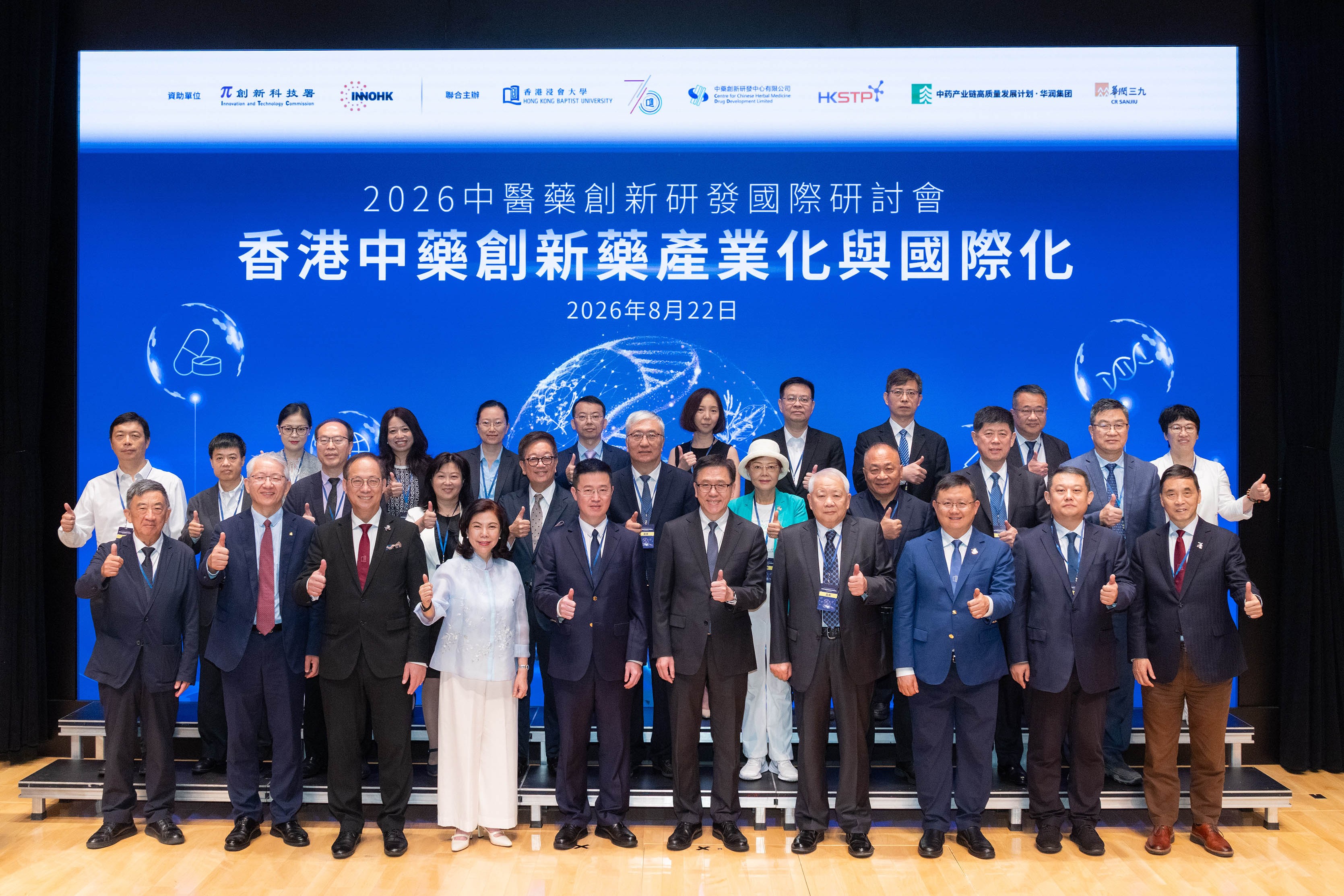
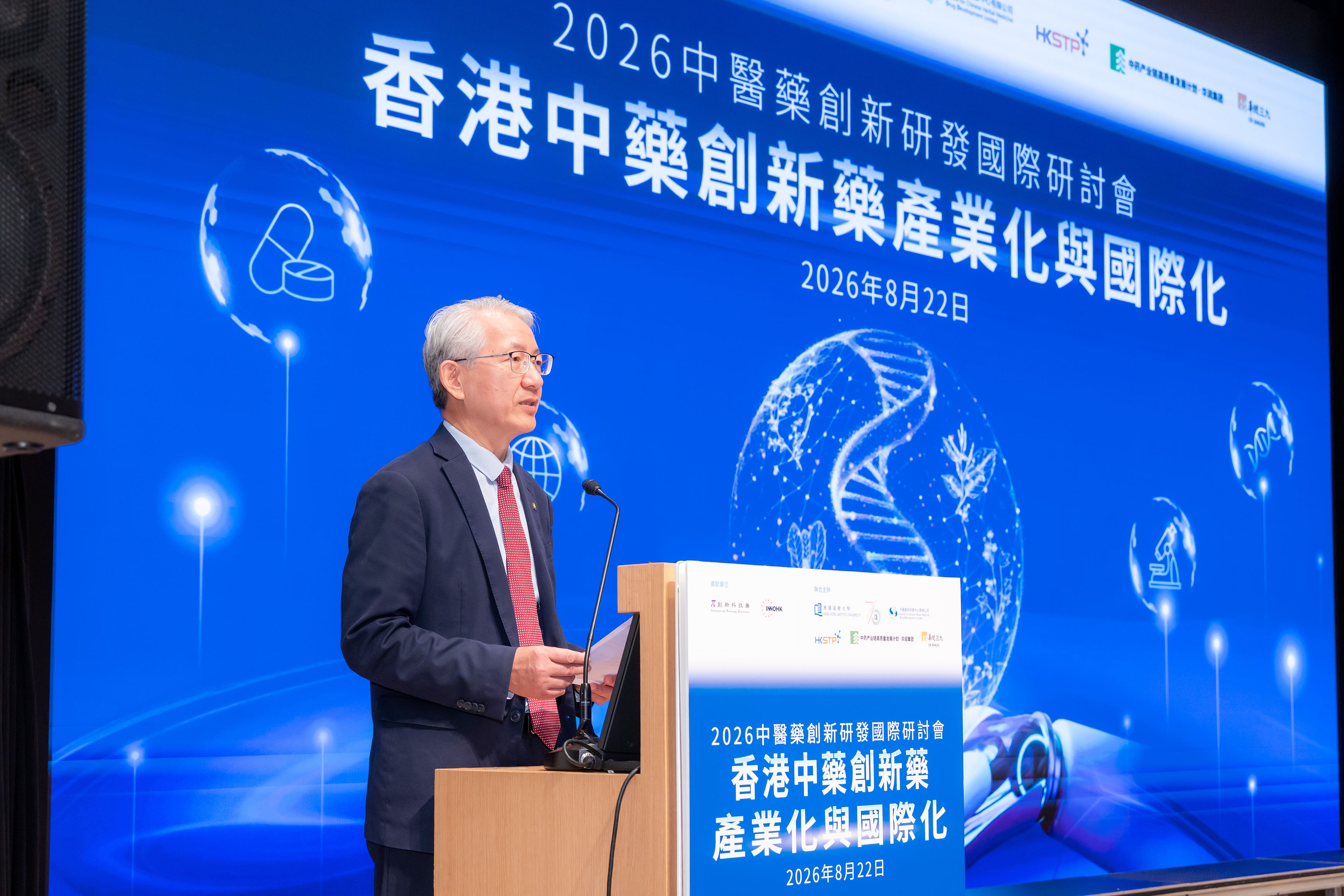
Hong Kong Baptist University (HKBU) InnoHK Centre for Chinese Herbal Medicine Drug Development (CDD) co-organised the inaugural “2026 International Symposium on Innovation and R&D in Traditional Chinese Medicine” on 22 August, in partnership with Hong Kong Science and Technology Parks Corporation (HKSTP) and China Resources Sanjiu Medical & Pharmaceutical Co., Ltd. The symposium brought together leading scholars, industry leaders, and research institution representatives in the field of Chinese medicine to focus on key breakthroughs in the modernisation of Chinese medicine. It also explored how government, industry, academia, research institutions, and the market can collaborate to facilitate the internationalisation and industrialisation of research achievements.
The symposium featured 15 keynote presentations and a roundtable forum. Topics included modern research on classic Chinese medicine formulas, applications of artificial intelligence (AI) in Chinese medicine research, application of multi-omics technologies, the integrated development of Chinese medicine in Hong Kong and Macau as well as strategies for overseas expansion. The symposium aimed to foster industry exchange on the modernisation of Chinese medicine, pioneer new directions for the development of innovative Chinese medicinal products, and promote the translation of scientific research outcomes.
The officiating guests of the symposium included Professor Sun Dong, Secretary for Innovation, Technology and Industry of the Government of the Hong Kong Special Administrative Region (HKSAR); Mr Leo Cheng, Second-Level Inspector of the Education and Youth Department, Liaison Office of the Central People's Government in the HKSAR; Ms Cordelia Chung, Chairman of the Board of Directors of HKSTP; Dr Kennedy Y H Wong, Chairman of the Council and the Court of HKBU; and Professor Alex Wai, President and Vice-Chancellor of HKBU.
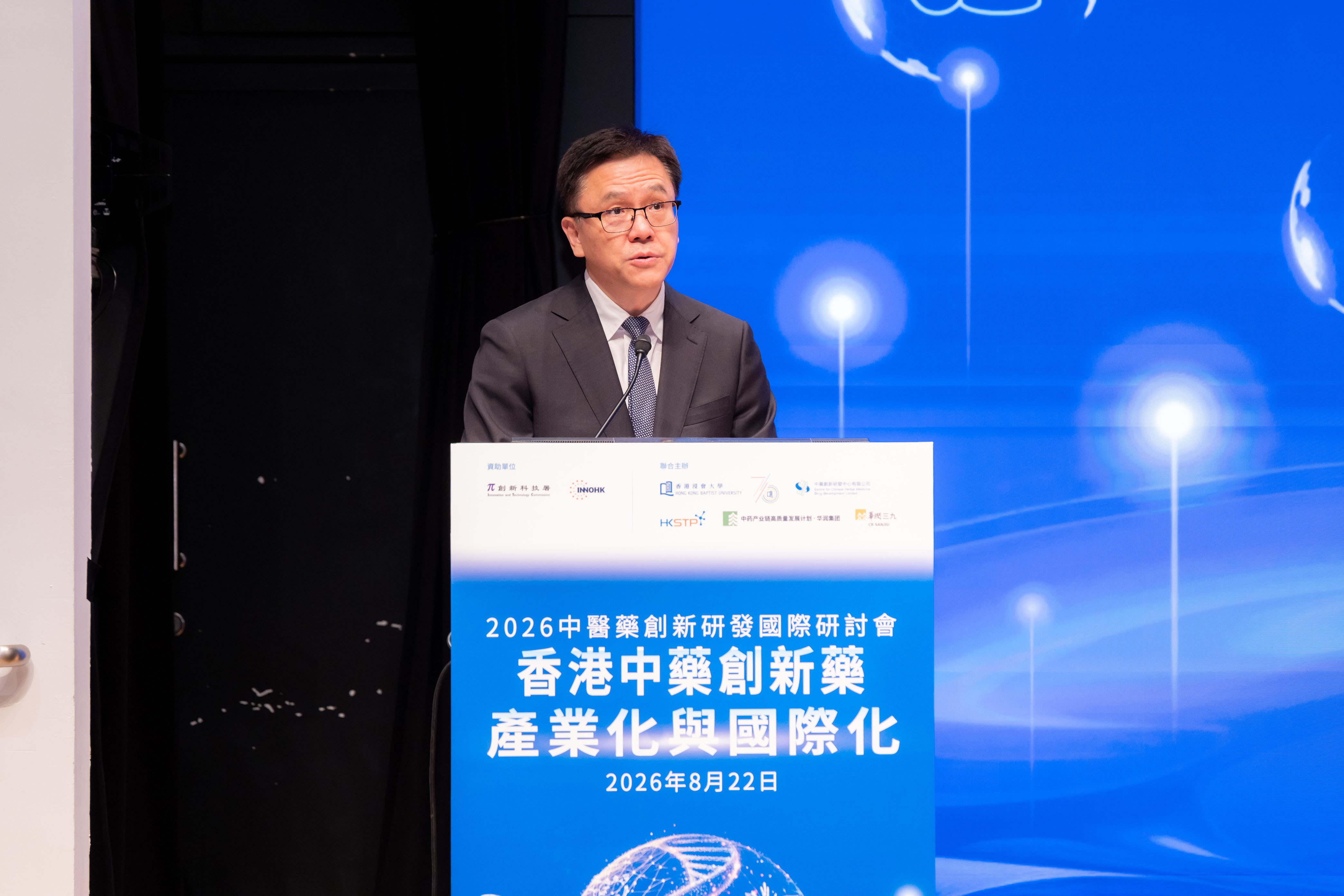
In his address, Professor Sun emphasised Hong Kong’s important role as a bridge between Mainland China and the world. He noted that as the nation is vigorously advancing high-level technological development, the HKSAR Government has also attached great importance to the innovation and technology sector. He believes Hong Kong should seize this opportunity to proactively integrate into the national development agenda, connecting Chinese medicine research outcomes, clinical experience, industrial resources, and the international market to facilitate the translation of more research achievements with clinical value and industrial prospects.
Ms Chung remarked that driven by cutting-edge technologies such as big data, biotechnology and AI, Chinese medicine is entering an unprecedented golden era of development. She pointed out that the HKSAR Government’s Chinese Medicine Development Blueprint offers clear direction for industry growth, and the InnoHK initiative together with CDD at HKBU have achieved outstanding results in recent years, demonstrating Hong Kong’s competitive edge in Chinese medicine innovation. HKSTP will continue to leverage the advantages of its innovation and technology ecosystem, deepen collaboration between industry, academia, and research, and promote more innovative achievements in Chinese medicine to the international market.
Dr Wong highlighted that HKBU has always attached great importance to the scientific and clinical development of Chinese medicine, actively promoting the deep integration of teaching, research, clinical services, and community engagement. He hopes that with the support of the HKSAR Government, CDD at HKBU will continue to focus on both scientific research and practical application, integrating academic excellence with real-world needs, to benefit society and patients alike.
Mr Zhi Zhe, Deputy General Manager, Strategy Management Department, China Resources Group, stated that the development of the Chinese medicine industry depends on research achievements as well as support from enterprises, and emphasised the importance of industry-academia-research collaboration.
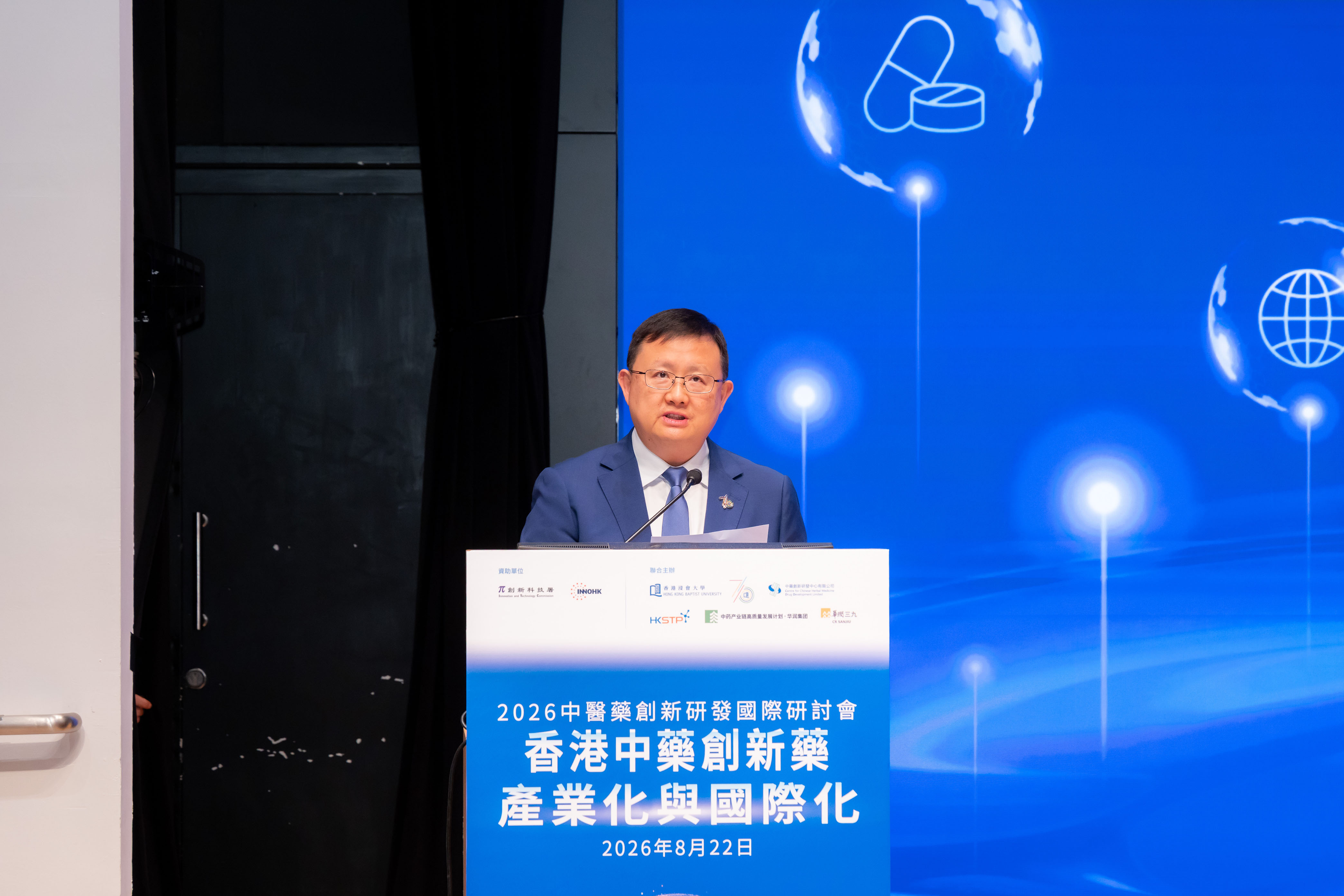
Professor Bian Zhaoxiang, Director of CDD at HKBU, stated that for Chinese medicine to go global, it requires the perseverance to uphold tradition while pursuing innovation, as well as an open and inclusive mindset. The CDD will remain committed to starting from clinical needs, basing its work on scientific research, and adhering to international standards to contribute to the internationalisation of Chinese medicine.
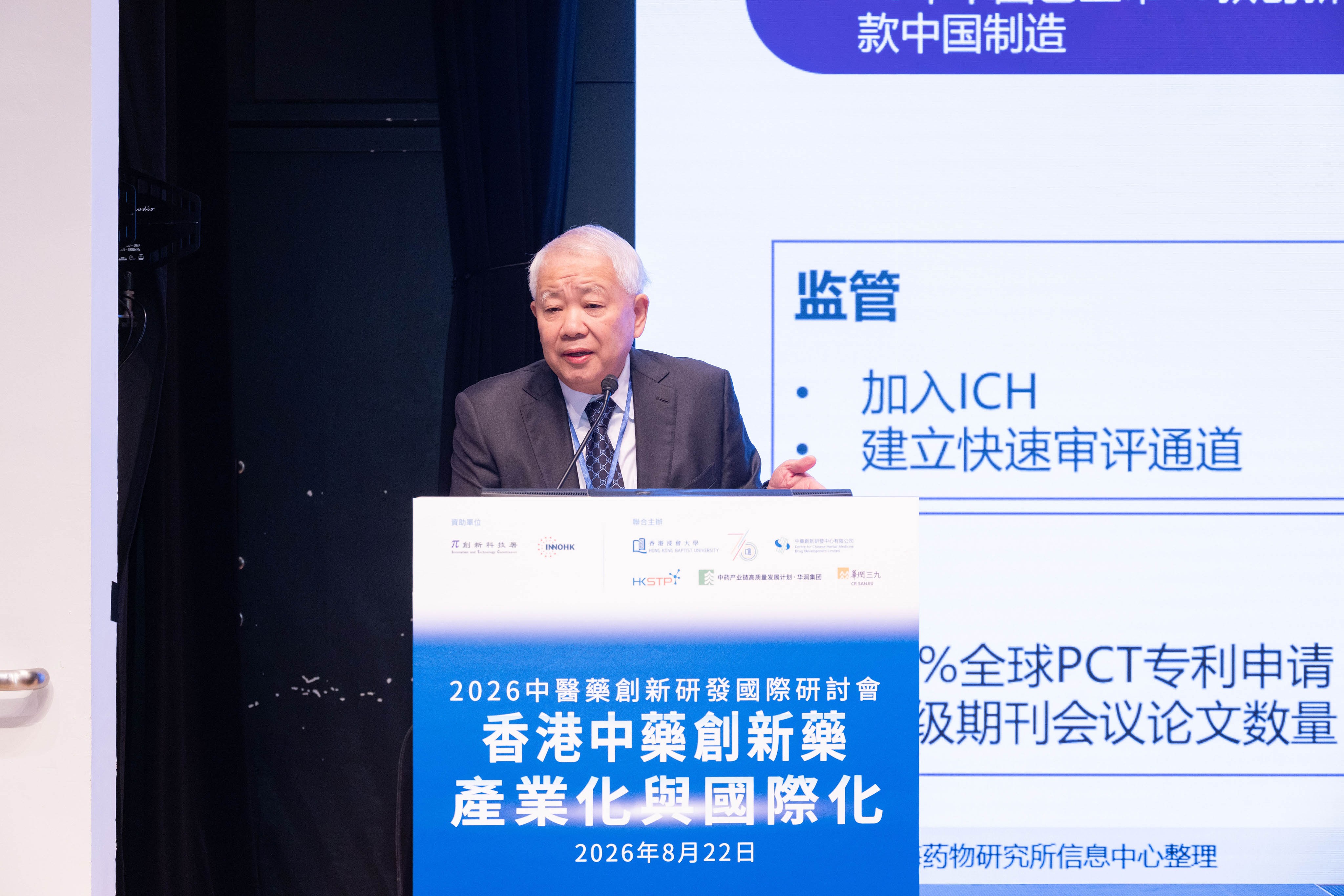
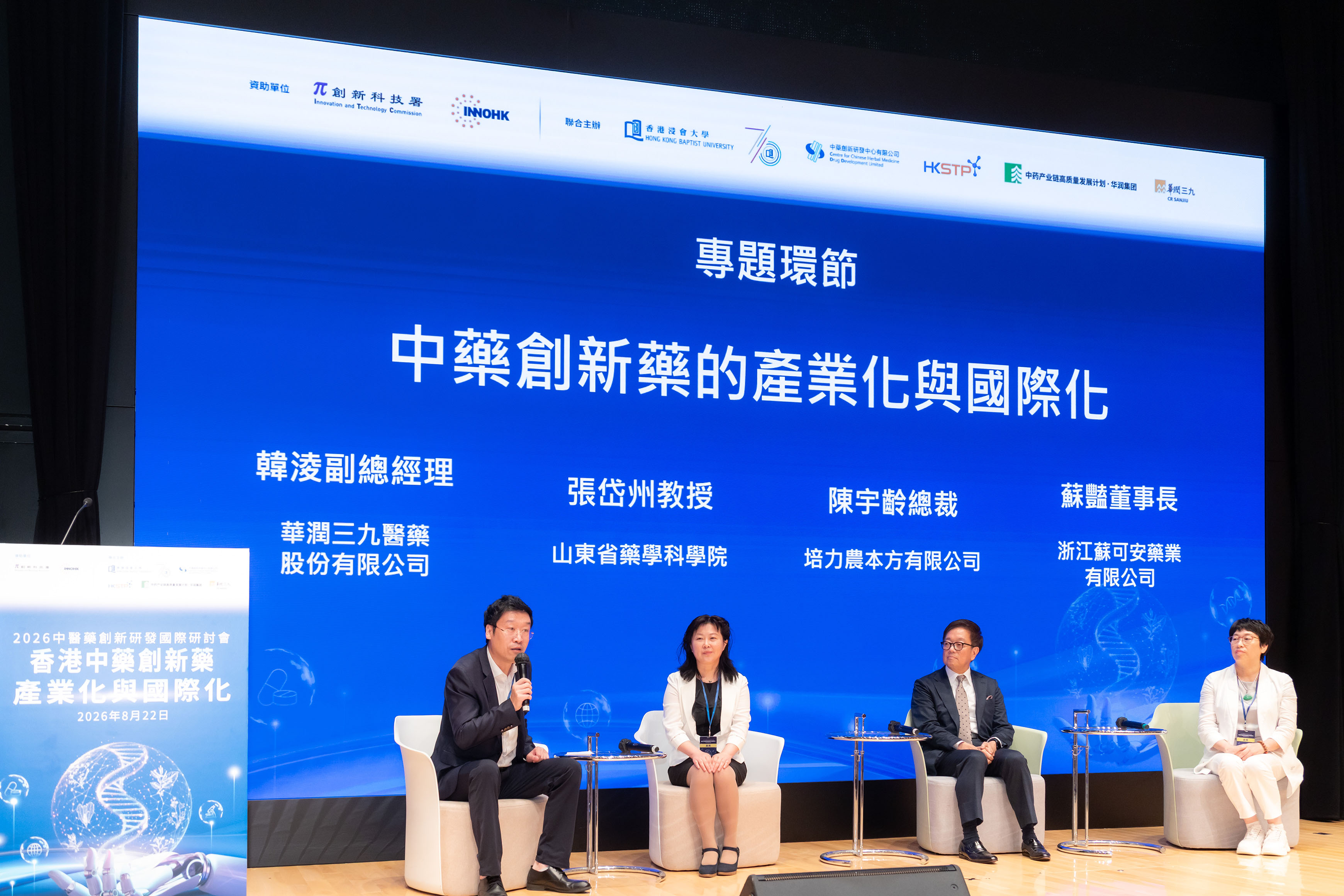
Professor Ding Jian and Professor Xiao Wei, both Academicians of the Chinese Academy of Engineering, were invited to the symposium. They delivered keynote presentations on the current landscape and challenges of innovative medicines in China, and on how AI empowers the research and development system of Chinese medicine respectively. At the roundtable forum, representatives from China Resources Sanjiu Medical & Pharmaceutical Co., Ltd., Shandong Academy of Pharmaceutical Sciences, PuraPharm Co., Ltd., and Zhejiang Sukean Pharmaceutical Co., Ltd. engaged in in-depth discussions on the topic of “The Industrialisation and Internationalisation of Innovative Chinese Medicines”. Participants explored ways to leverage Hong Kong’s unique advantages to develop effective pathways for the transformation of research outcomes from research and development, manufacturing, and registration to overseas marketing.
Founded in 2020, CDD at HKBU is funded by the InnoHK initiative under the Innovation and Technology Commission of the HKSAR Government. The CDD is dedicated to uniting world-class partners to innovatively transform the wisdom of traditional Chinese medicine into modern pharmaceuticals. Looking ahead, the CDD will continue to enhance its clinical research capabilities, strive to translate research outcomes into internationally recognised medical products, nurture local talent, and support Chinese medicine start-ups targeting the global market.