Discover HKBU
Elite student-athletes excel in dual-track journey
27 Feb 2026
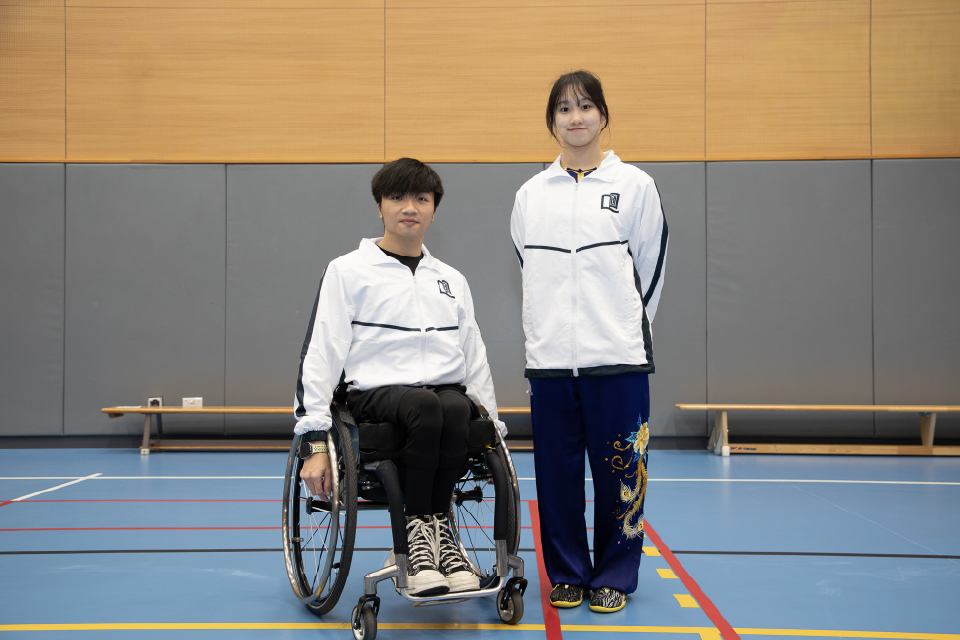
For many student-athletes, striking a balance between academic studies and sports is a continuous challenge. Yet for Tsang Cho-kiu, a Wushu athlete, and Matthew Yu Chun-yin, a para dance sport and wheelchair basketball athlete, the Talented Athletes Direct Admission Scheme (TADAS) has turned this challenge into a journey of growth. Both have found their own balance between study and sports lives thanks to the University’s comprehensive support. They are among the nine elite athletes who joined HKBU through TADAS in the 2025/26 academic year.
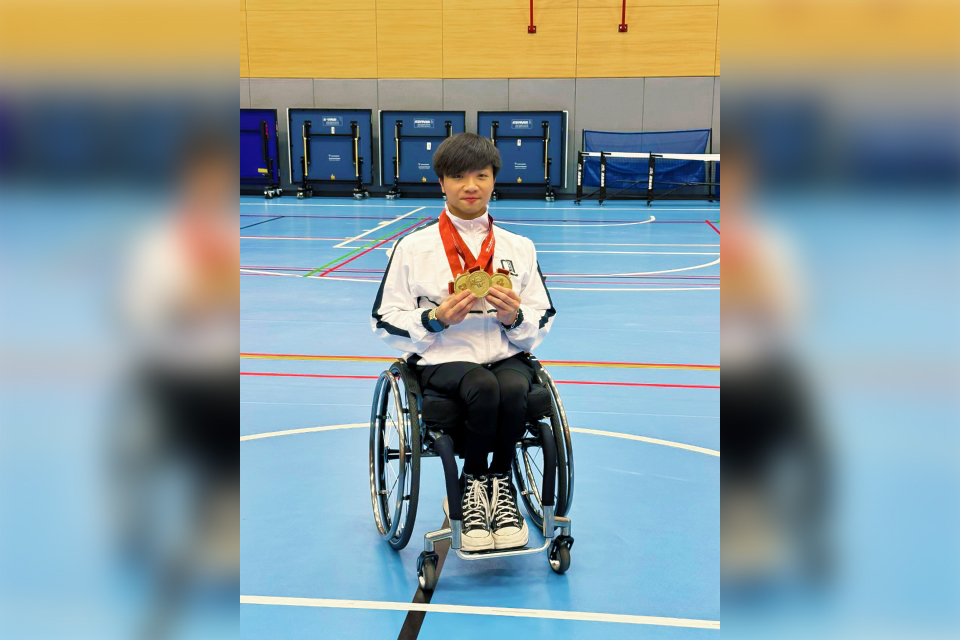
Triple gold medallist’s broader vision
“A wheelchair is like a pair of glasses for people with short-sightedness, a tool that helps me move further and better; it doesn't limit my capabilities at all,” Matthew Yu Chun-yin reflects. Born with spina bifida, Matthew has never regarded his wheelchair as a barrier but as a part of his daily life. Passionate about sports since childhood, his remarkable journey began at just 16, when he won the 3km wheelchair race at the Standard Chartered Hong Kong Marathon. He has since excelled in both wheelchair basketball and para dance sport, winning three gold medals at mass participation events of the 12th National Games for Persons with Disabilities and the 9th National Special Olympic Games.
Matthew is currently studying the Bachelor of Arts in Sports Industry Management programme, aiming to gain a deep understanding of the sports industry from a business management perspective. He hopes to teach at special schools in future and promote sports among people with disabilities. “I wish to inspire more students to engage in sports and demonstrate that physical conditions never define one's potential,” he shares.
To strike a balance between study and training, Matthew credits tailor-made learning support as crucial to his success. “Before the semester began, the student-athlete support coordinator helped me plan my timetable. During overseas competitions, our teachers were incredibly flexible, adjusting assignment deadlines and even allowing me to submit pre-recorded video presentations," he says. These thoughtful arrangements have enabled him to focus wholeheartedly on his competitions without the distraction of academic concerns.
Beyond his studies, Matthew actively broadens his university experience, having recently participated in the Barrier-free Cultural Tour organised by the Office of Student Affairs, experiencing the accessibility environment abroad. This has deepened his understanding of inclusion and reinforced his belief in building an inclusive community.
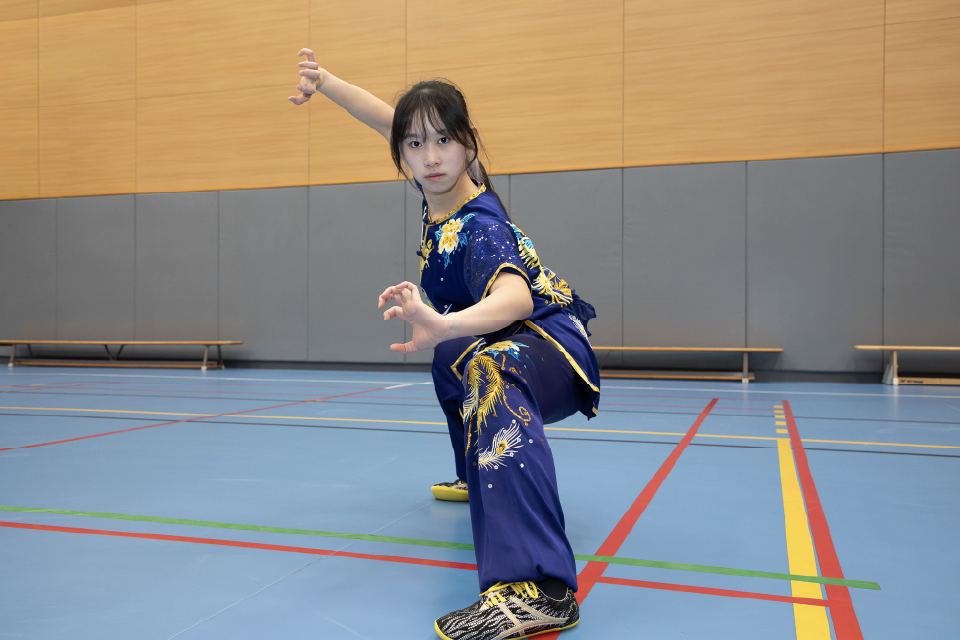
Integrating Wushu with AI
Tsang Cho-kiu, another athlete on dual-track development, began her Wushu journey at the age of seven and became a full-time athlete at 14. Specialising in Nanquan, Nandao and Nangun, she has won numerous medals at the World and Asian Junior Wushu Championships. Inspired by senior athletes who shared their positive experiences with TADAS in balancing academic studies and sports, she decided to enrol in the Bachelor of Science programme.
Cho-kiu’s goal is to integrate artificial intelligence (AI) with sports science into Wushu training and judging. “I envision using AI to enhance the accuracy of Wushu judging and to help coaches identify the fine technical details to enhance athletes’ performance,” she said. Through applying the knowledge acquired, she hopes to support and contribute to the sustainable development of Wushu.
She emphasised that having flexibility in one’s study arrangements is invaluable for student-athletes. “The ability to adjust our timetables to accommodate the training and competition schedules provides us with room for development,” she explains. By effectively managing her time, she has found a harmonious balance between training and study. “Just like practising a Wushu form, I strive to establish my own balance and flow in both learning and training.”
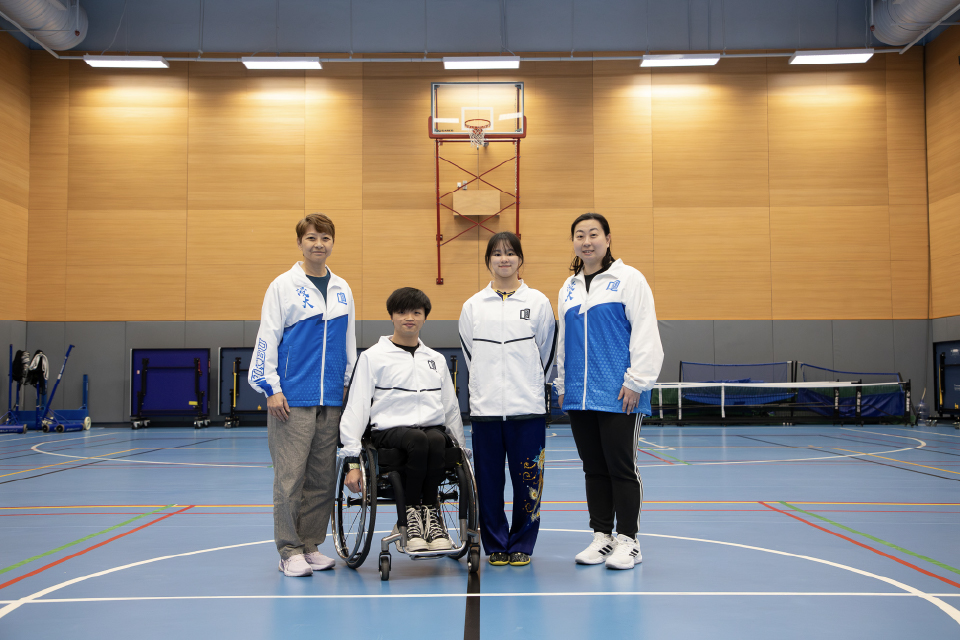
Comprehensive support for dual-track development
TADAS empowers student-athletes to pursue both academic and sporting excellence without compromise, enabling them to realise their dreams in a personalised manner. HKBU provides comprehensive “3S” support, encompassing academic support (Study), sports training (Sport), and support for personal growth (Support), in addition to flexible course scheduling, access to professional facilities, and psychological counseling.
Dr Hon Sze-sze, Senior Lecturer of the Department of Sport and Health Science, says, “Our academic advisors and teaching assistants closely monitor the academic progress and sporting development of student-athletes, assisting them in achieving dual-track development and exploring more possibilities for their future.” Ms Assunta Ng Ka-shun, Lecturer I of the Department of Sport and Health Science and Coordinator of Elite Athletes Support Programme, further adds, “We aim to provide structured yet caring support that enables student-athletes to achieve whole-person development.”