DISCOVER HKBU
HKBU team discovers new soft coral species in Greater Bay Area waters
30 Jan 2026
Though biodiversity in urban areas is often less abundant compared to rural areas, yet urban waters may still be home to undocumented marine life. HKBU marine biologists have discovered two new soft coral species from the waters of Hong Kong Special Administrative Region and Zhuhai, making significant contributions to the records of coral species in the China Seas. The research findings have been published in the international journal Ecology and Evolution.
Unveiling biodiversity in urban waters
Corals are commonly divided into hard corals and soft corals. The latter are flexible, do not build reefs, and often thrive in habitats unsuitable for hard corals. Prior surveys found only 29 species in Hong Kong, with limited genetic data available.
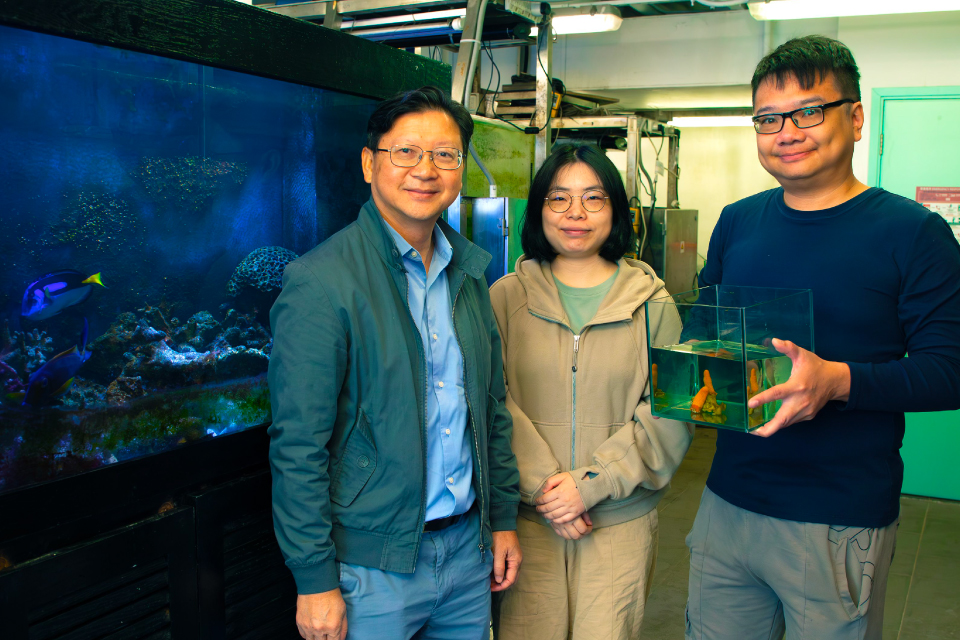
Led by Professor Qiu Jianwen from the Department of Biology of HKBU, the research team collected eight coral colonies at about 15 to 25 metres’ depth from the rocky reefs off Hong Kong’s Sung Kong Island and Zhuhai’s Heizhou Island. Among these colonies, they identified two new species for the first time worldwide. Members of the research team include Dr Li Yixuan, Post-doctoral Research Fellow; Loke Haixin, PhD student; Janice Ng Wing-yan, undergraduate student of the Department of Biology at HKBU; and Professor Liu Lan, Professor of the School of Marine Sciences at Sun Yatsen University.
Professor Qiu says: “The study expands what we know about soft coral diversity in the Guangdong-Hong Kong-Macao Greater Bay Area. It also shows that even in urbanised waters, significant cryptic biodiversity remains to be documented and protected.”
New species found in Hong Kong
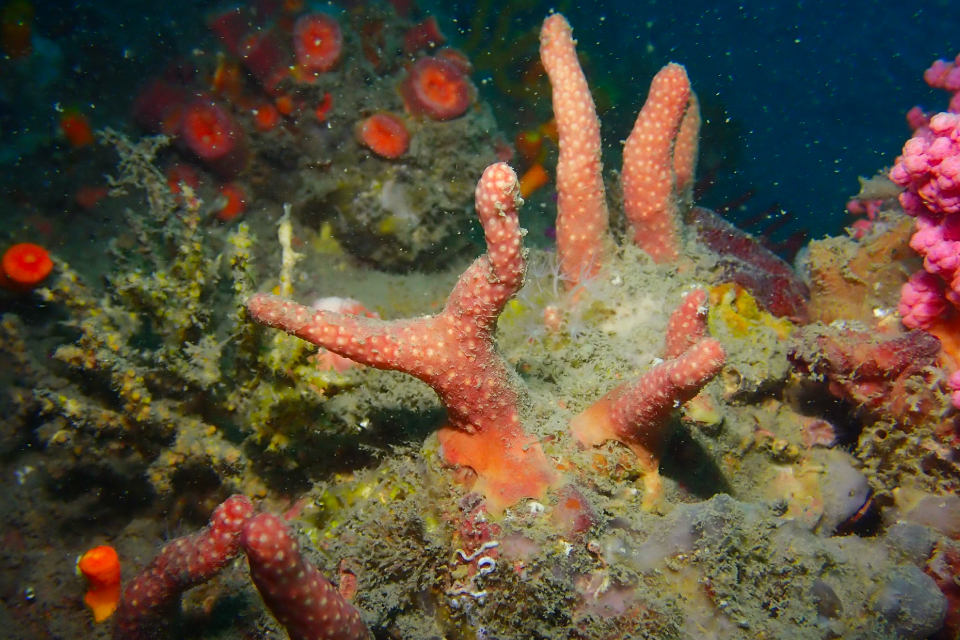
The species Parasphaerasclera dimorpha sp. nov. identified in the waters off Hong Kong’s Sung Kong Island is the first discovery of a Parasphaerasclera species in Hong Kong as well as the first of its kind reported from the China Seas. This species displays bright orange-red colour and forms colonies that are digitiform in shape with a conspicuous stalk and branches. It is usually found scattered on boulders with other coral species, and characterised by the presence of stalk sclerites including spindle-shaped elements such as rare tuberculated spindles. The research revealed that Parasphaerasclera dimorpha sp. nov. is sister to an Australian coral species, but their genetic and morphological distinctions justify the recognition of this new species.
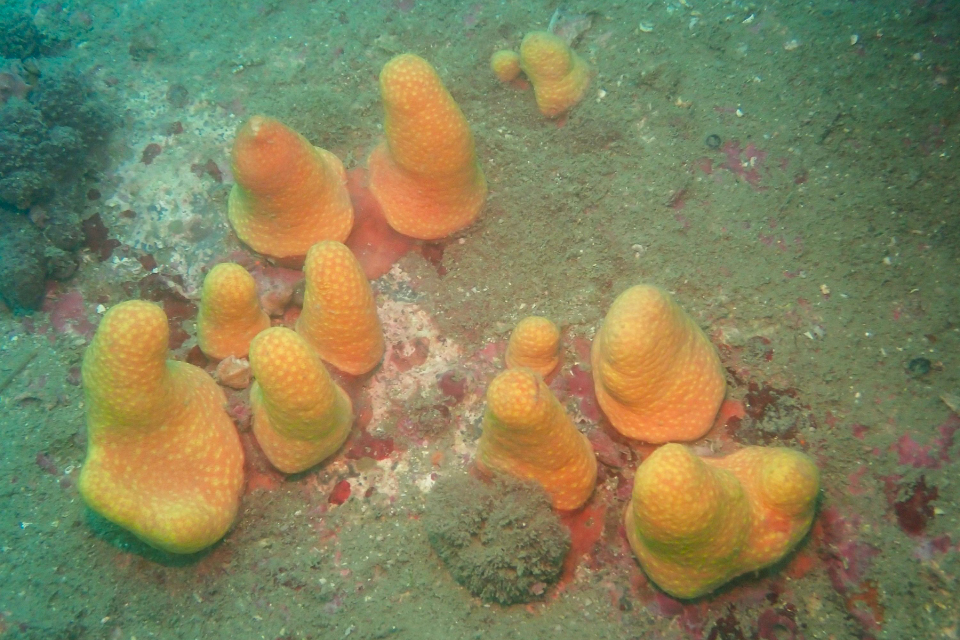
The other new species, Paraminabea inflata sp. nov., was found in the waters of both Hong Kong and Zhuhai. It is the third Paraminabea species discovered in Hong Kong over the past 15 years. Attached to the rock surfaces in the sea, it forms colonies that are yellow or orange in colour with long polyps. It has unique sclerites including tuberculated spheroids, and was misidentified in the past as another coral species. The HKBU research team identified this new coral species using integrative taxonomy.
Advancing research in coral taxonomy
Soft coral taxonomy is challenging because different species can closely resemble one another in appearance, and genetic data are limited. The HKBU research team adopted an approach that combines morphological and genetic data for species delimitation, worked out the DNA sequencing of the species and clarified their evolutionary relationships. In addition, the research team assembled the mitochondrial genomes (mitochondrion is an essential organelle found in cells which generates chemical energy to support cell activities) of the two new species, as well as another species of digitate soft coral (Paraminabea rubeusa) discovered in Hong Kong, providing genetic data to calculate the genetic distances of soft corals.
Professor Qiu says: “Our research highlights the value of integrative taxonomy in identifying soft corals with similar appearance and provides new mitochondrial genomic resources to advance their taxonomy in the Indo-Pacific.”