Press Release
HKBU’s immersive installation eMBody—everybody in motion turns audience into choreographers and pioneers new entertainment experiences for the future
Monday, 20 July 2026
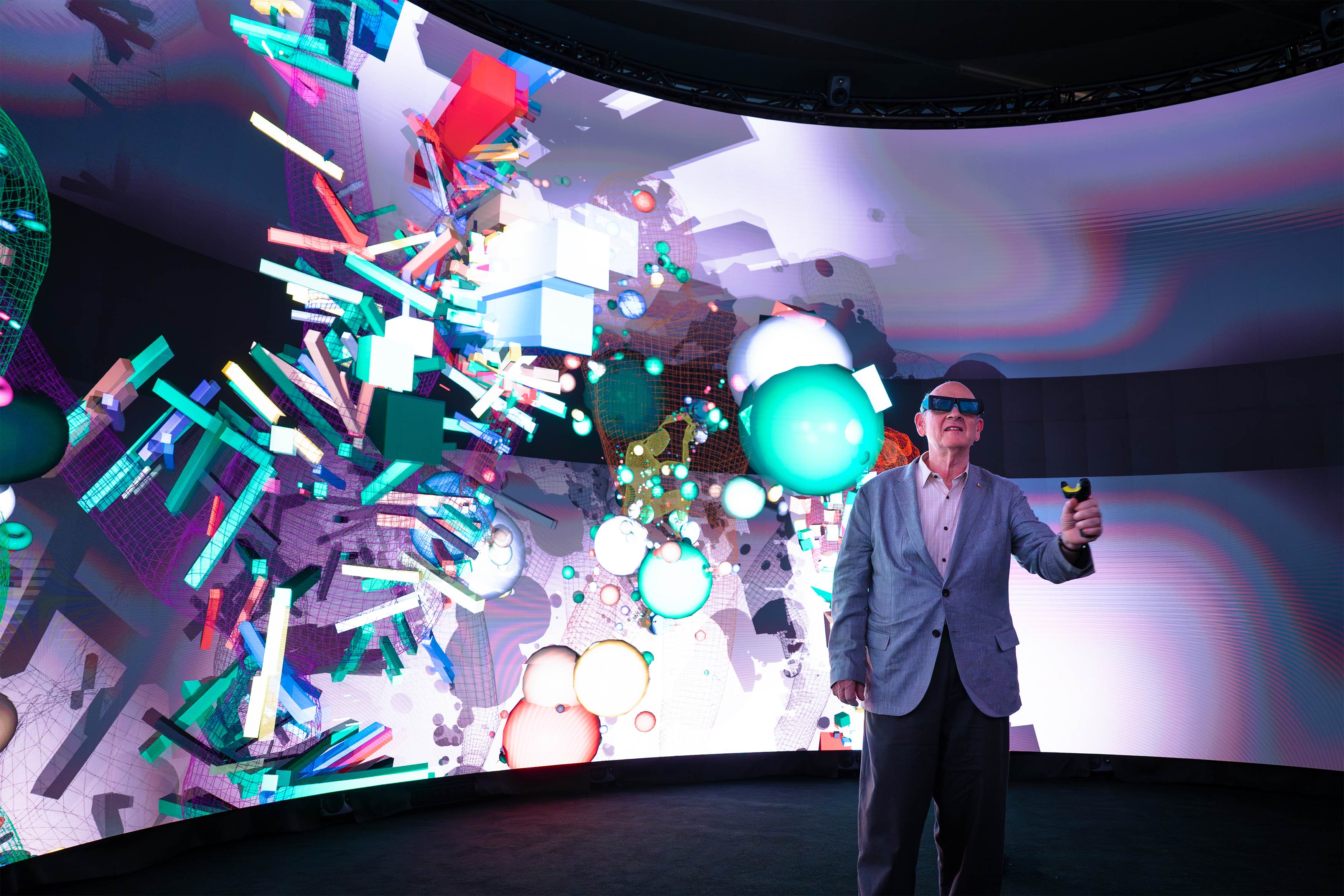
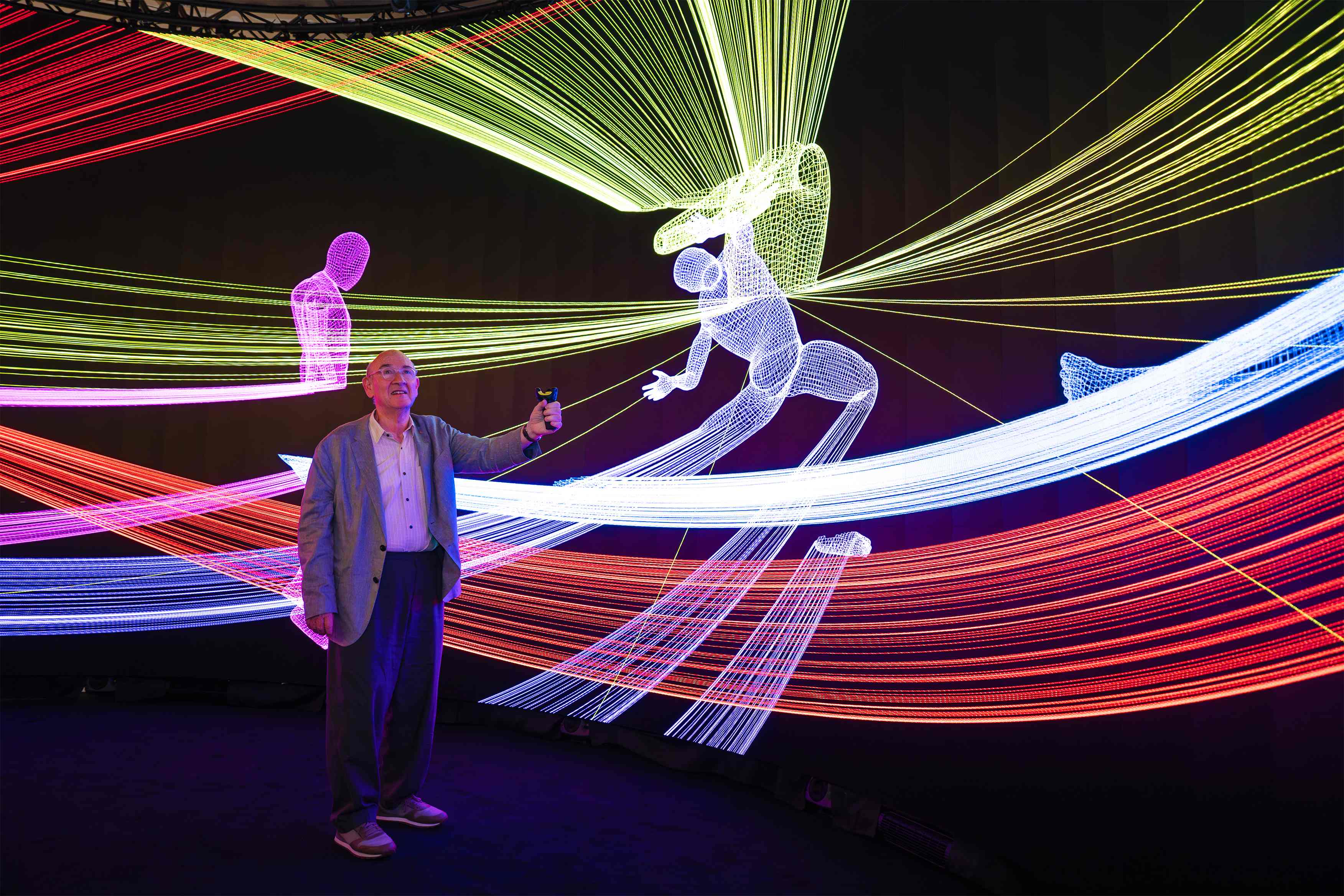
Hong Kong Baptist University (HKBU) and Tai Kwun are currently presenting the immersive installation eMBody—everybody in motion (eMBody) produced by HKBU until 2 August. Combining performing arts, human-computer interaction and advanced computer graphic technologies, the installation allows the audience to become choreographers, and interact with virtual dancers, images and sound to create unique multi-sensory experiences. This marks the first time HKBU’s “nVis 360-degree 3D Immersive Interactive Cinema” (nVis) offers an artistic experience where multiple participants can interact simultaneously, exploring how immersive and interactive environments can reshape relationships among performers, audiences and the public space, thereby redefining the future of entertainment.
eMBody’s interactive experience is presented through nVis, which is an output of the “Future Cinema Systems: Next Generation Art Technology” project co-developed by Professor Jeffrey Shaw, Chair Professor of the Academy of Visual Arts and Director of the Visualization Research Centre at HKBU, and Professor Sarah Kenderdine, Visiting Professor of the Department of Computer Science at HKBU and Professor at the Swiss Federal Technology Institute of Lausanne, in collaboration with City University of Hong Kong. The virtual dancers projected on the 360-degree screen of nVis were modelled from professional dancers of Company Wayne McGregor, a world-renowned troupe. Movements of the dancers were captured by the HKBU Motion Capture and Visualization Laboratory using advanced infrared digital cameras, and then brought to life using the laboratory’s state-of-the-art high-resolution visualisation and spatial tracking technologies.
These cutting-edge technologies were also applied to the immersive installation Wayne McGregor: On The Other Earth co-produced by HKBU, Hong Kong Ballet, and Studio Wayne McGregor, London, which is now making its Asia premiere concurrently at Tai Kwun following critical acclaim in Venice and London.
Professor Shaw said: “Rather than confining dance as a performance with a fixed spectacle, eMBody constructs a co-creative platform where audience become collaborative performers who create movement, atmosphere and meaning together, dissolving the boundary between stage and spectator. It ignites reflection on the role of immersive technologies in contemporary performance culture, laying a foundational form for Future Cinema Systems.”
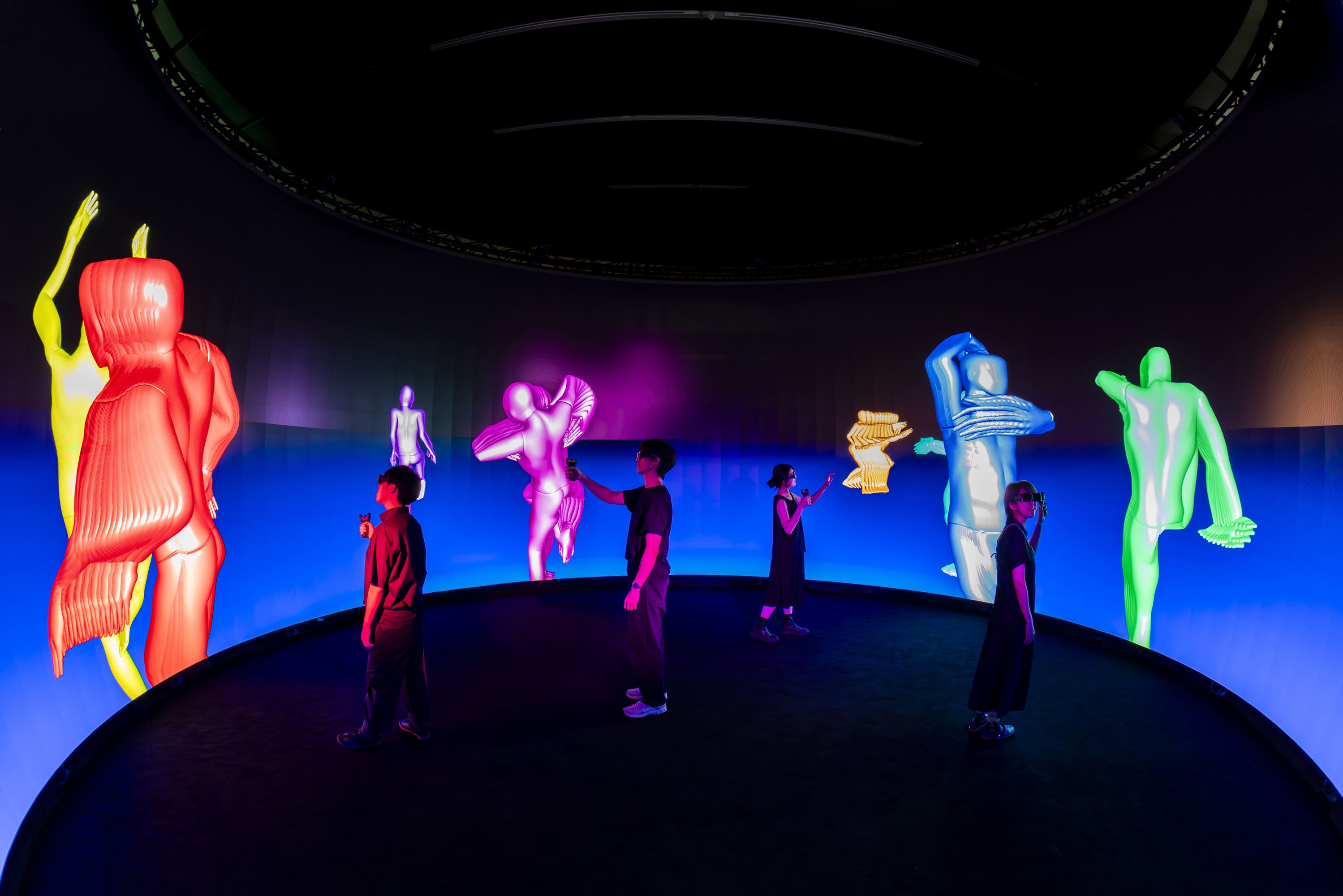
eMBody presents a total of eight scenes projected onto the 360-degree 3D screen of nVis. Each scene features eight virtual dancers in action, who interact with visual elements such as their own silhouettes, geometric patterns, or natural sceneries. By gesturing with a handheld sensor, participants wearing 3D glasses can influence the movements of the virtual dancers, as well as the images of the environment and the spatial sound effects.
Participants can guide the virtual dancers to “step out” from the screen and perform right before their eyes. When approaching the screen, they can hear the unique music and soundtrack composed for each virtual dancer by Professor Eugene Birman and Professor Roberto Alonso Trillo, Associate Professors, and Dr Davor Vincze, Postdoctoral Research Fellow, at HKBU’s Academy of Music, as well as other musicians. Furthermore, as participants move around the installation, the virtual dancers will follow them and interact with their movements.
Professor Terence Lau, Interim Chief Innovation Officer of HKBU remarked, “On The other Earth and eMBody are successful demonstrations of the pioneering art tech project Future Cinema Systems. Powered by HKBU’s achievements across different disciplines, including artificial intelligence, computer vision, virtual reality and other advanced technologies, and enriched by contemporary music, this project has opened up boundless possibilities for the arts and creative industries and redefined the future of entertainment. This knowledge breakthrough at the intersection of art and technology is applied to the real world and set to inspire more innovative ideas, cross-sector, cross-regional collaboration, transcending cultural boundaries and strengthening Hong Kong’s unique role in fostering arts and cultural exchange between the East and the West.”
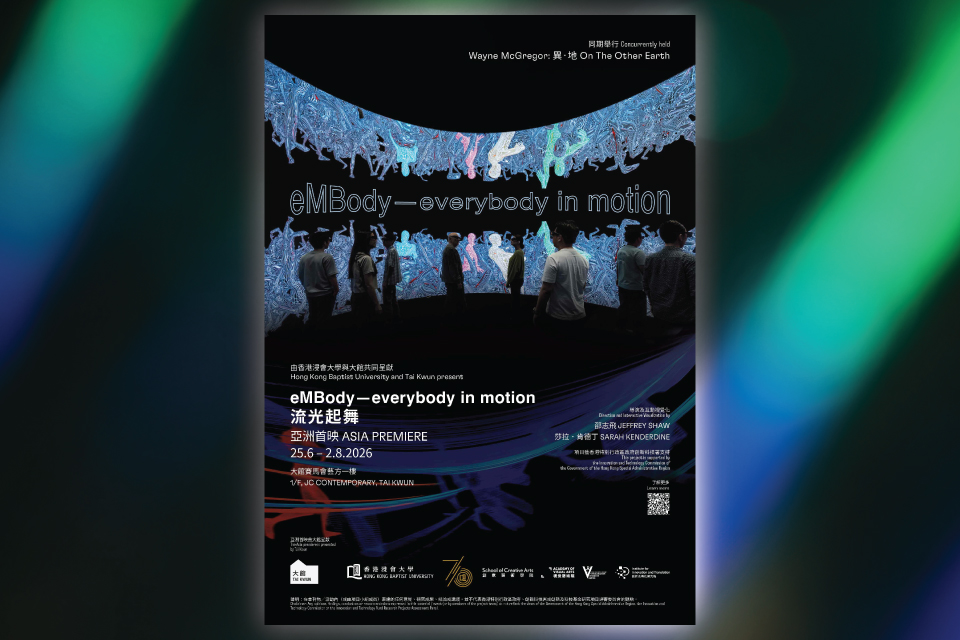
eMBody can accommodate up to 16 participants at a time, including eight interactors who interact with the virtual dancers and eight spectators. The installation is currently open for free entry until 2 August (closed on Mondays), from 10:00 am to 1:00 pm, at 1/F, JC Contemporary, Tai Kwun, 10 Hollywood Road, Central. Please click here for more details of eMBody—everybody in motion.
The “Future Cinema Systems: Next Generation Art Technology” project is supported by the Innovation and Technology Fund in Hong Kong. Since its inception in 2022, nVis has been applied to numerous art projects, including the “Fly Me There” exhibition organised by HKBU in partnership with the Airport Authority Hong Kong in 2024, which allowed visitors to immerse in cultural heritage sites across eight countries, such as China, Cambodia, India, and Turkey, through nVis at the Hong Kong International Airport.
After its exhibition at Tai Kwun, eMBody—everybody in motion will be presented in December at the newly opened Museum of Contemporary Art in Suzhou, and at the ZKM Centre for Art and Media in Karlsruhe, Germany, one of the world’s largest art and tech museums, in 2027.
-End-