Press Release
2026 Guangdong-Hong Kong-Macau Greater Bay Area Pay and Benefits Survey: Salary growth in Hong Kong and Macau slows, companies generally lack formal AI policies
Thursday, 22 October 2026
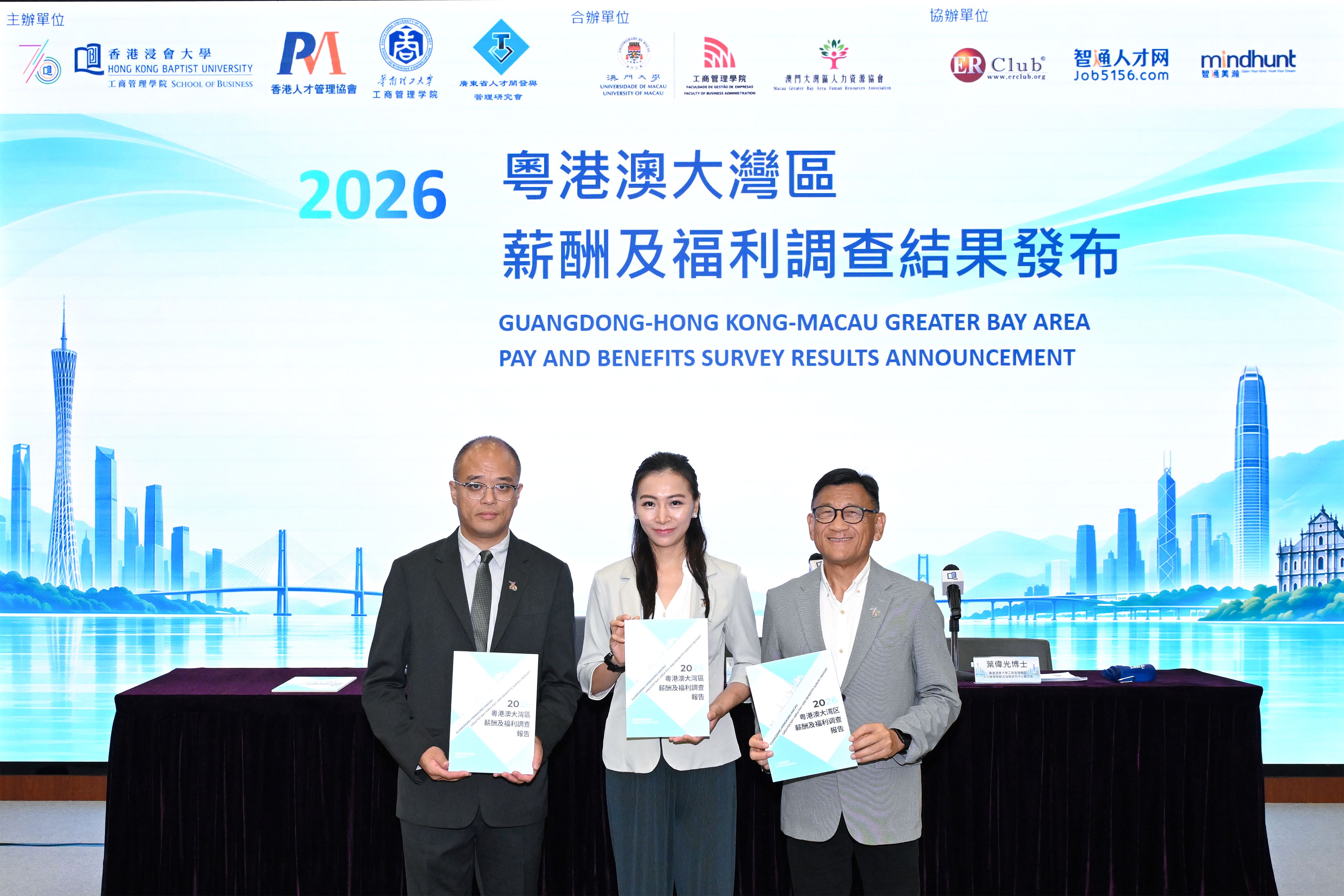
The results of the “2026 Guangdong-Hong Kong-Macau Greater Bay Area Pay and Benefits Survey” were released today (22 October), showing that companies in Hong Kong and Macau slowed their pay rise in 2026. The average pay increase for employees in Hong Kong fell from 2.5% last year to 2.3%, while the average increase at companies in Guangdong Province rose to 2%. Companies across the Greater Bay Area (GBA) expect pay increases to rebound next year.
This year’s survey also included a new study on artificial intelligence (AI). The findings showed that some participating companies have yet to establish formal AI policies or governance frameworks. The report highlights a growing demand for versatile professionals who can combine specialised expertise and business acumen with AI integration capabilities.
The “2026 Guangdong-Hong Kong-Macau Greater Bay Area Pay and Benefits Survey” was conducted by the Centre for Human Resources Strategy and Development of the School of Business at Hong Kong Baptist University (HKBU), the Research Center for Human Resources Management of the School of Business Administration at the South China University of Technology, the Hong Kong People Management Association, and the Talent Development and Management Association of Guangdong. It was co-organised by the Faculty of Business Administration at the University of Macau, and the Macau Greater Bay Area Human Resources Association.
Conducted between July and September this year, the survey received responses from 221 companies. The sample comprised 78 companies in Hong Kong, 38 in Macau, and 105 across nine cities in Guangdong Province (namely Dongguan, Foshan, Guangzhou, Huizhou, Jiangmen, Shenzhen, Zhaoqing, Zhongshan, and Zhuhai), covering more than 270,000 employees.
The survey found that average pay increases at companies in Hong Kong and Macau fell to 2.3% and 1.1%, respectively, from 2.5% and 1.6% last year. Companies in both places forecast an average increase of 3.1% next year. In the nine cities of Guangdong Province, the average increase rose from 1.8% last year to 2% this year, and is forecast to reach 3.8% next year.
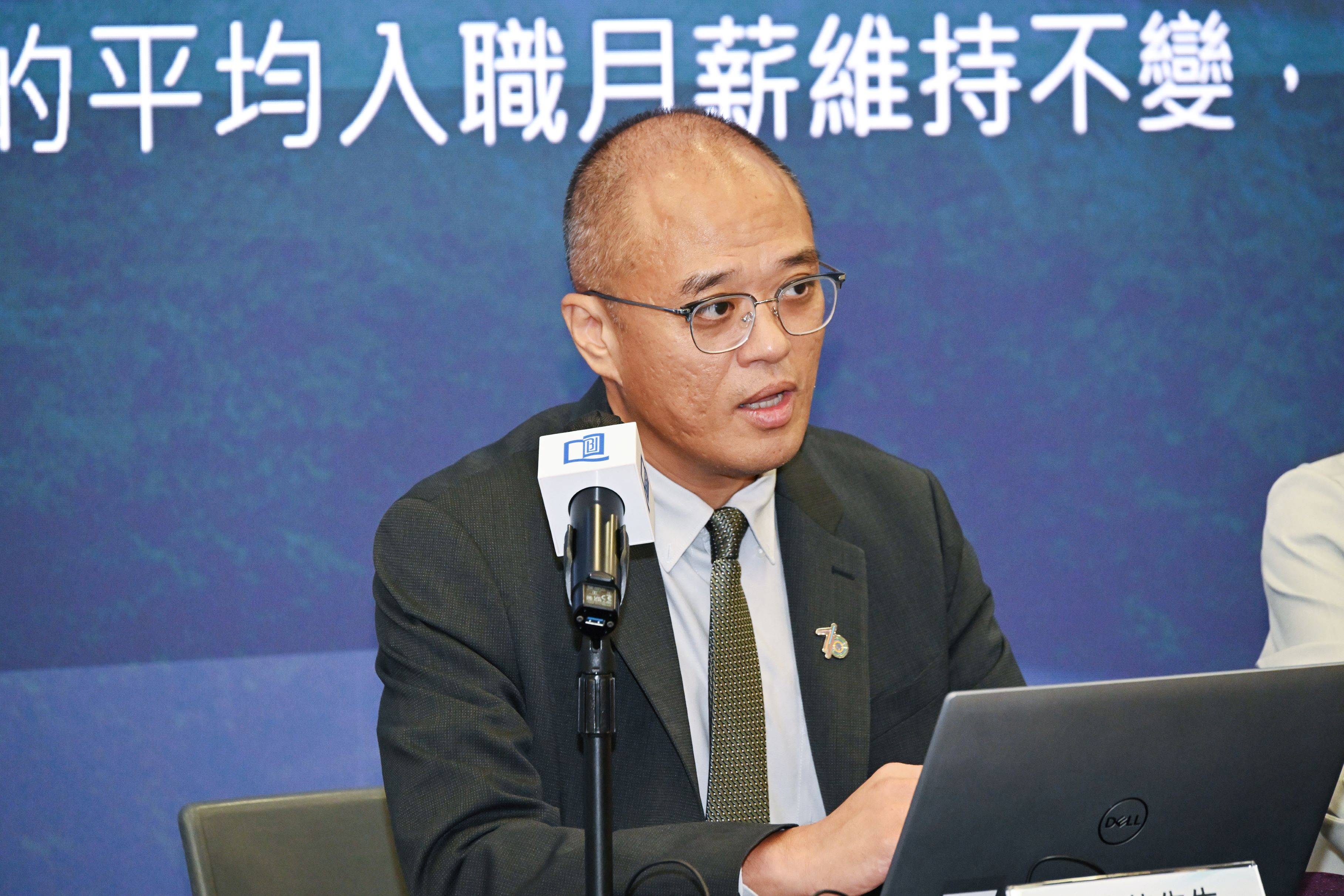
Mr Ray Leung, President of the Hong Kong People Management Association and Chairperson of the Committee of the 2026 Guangdong-Hong Kong-Macau Greater Bay Area Pay and Benefits Survey, said: “Salary increase forecasts for 2027 have rebounded in Hong Kong, Macau and cities across Guangdong Province. This reflects the fact that, although businesses continue to face challenges from the external economic environment and cost pressures, they remain confident about their future development and talent needs.”
The survey also revealed that the average starting salaries for recent bachelor’s degree graduates in Hong Kong edged down to between HK$17,500 to HK$23,000. The gap between their starting salaries and those of sub-degree graduates, which ranged from HK$15,500 to HK$20,500, narrowed from HK$3,000 last year to $2,500 this year.
The survey found that average starting salaries for recent graduates in Hong Kong vary by job function. Among the functions surveyed, engineering roles offered the highest average starting salaries for graduates at every education level, including sub-degree, bachelor’s and master’s. For bachelor’s degree graduates, the average starting salary was HK$23,000, up from 21,500 last year.
The findings further highlighted a marked slowdown in talent mobility across the GBA. Hong Kong’s voluntary turnover rate fell from 19.3% in 2024 to 16.7% in 2026. The rate in Guangdong Province declined from 30.9% to 19.2%, while Macau’s fell from 9.4% to 6.9%.
This year’s new study on AI revealed that while many GBA companies have begun piloting generative AI tools, exploring process automation, and applying AI across various business functions, some companies have yet to establish formal AI policies, governance frameworks, usage guidelines, or risk management systems. Consequently, ensuring the safe, effective, and responsible use of AI has emerged as a key challenge for companies.
The survey also found that companies in Hong Kong place significant value on data interpretation and analysis, process optimisation, and the ability to leverage AI tools and assess their outputs. In essence, companies are seeking talent capable of using AI, analysing data, and translating AI-generated results into business decisions. Demand for versatile professionals with both specialist knowledge and AI skills continues to grow.
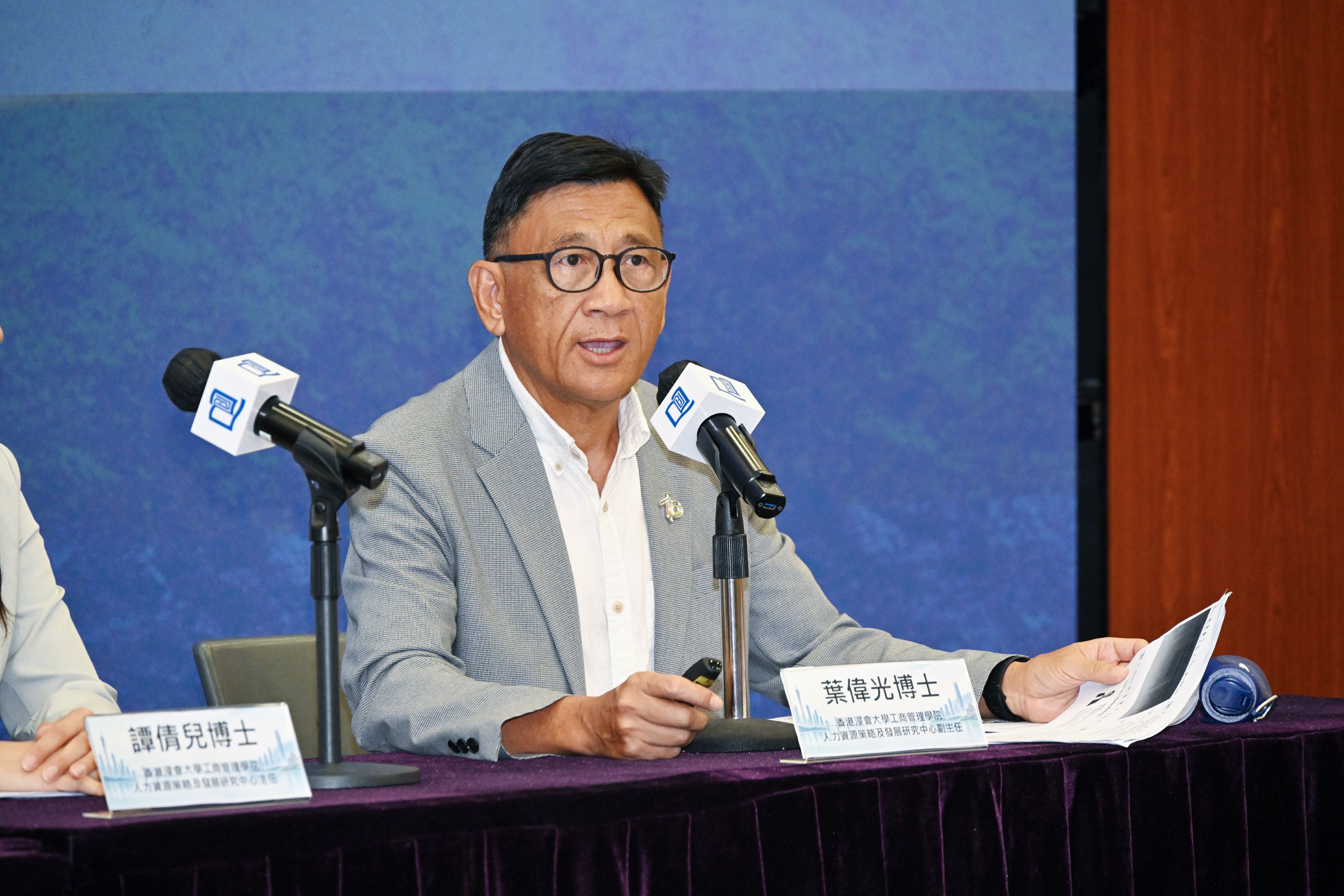
Dr Cecilia Tam, Director of the Centre for Human Resources Strategy and Development of the School of Business at HKBU, said: “Taken together, the survey findings show that companies across the Greater Bay Area recognise that AI will profoundly reshape the future direction of industries. The biggest challenges today, however, stem not from the technology itself, but from talent, governance and organisational readiness. Across graduate employment, talent mobility and corporate transformation, a common trend is emerging: companies increasingly value people who can effectively use AI, understand its capabilities, and can convert it into tangible business value. This implies that future competitiveness will depend not merely on attracting AI specialists, but on empowering every professional with the ability to leverage AI effectively.”