Campus Digest
Language Centre symposium inspires global dialogue on intercultural and transdisciplinary communication education
Tuesday, 18 August 2026
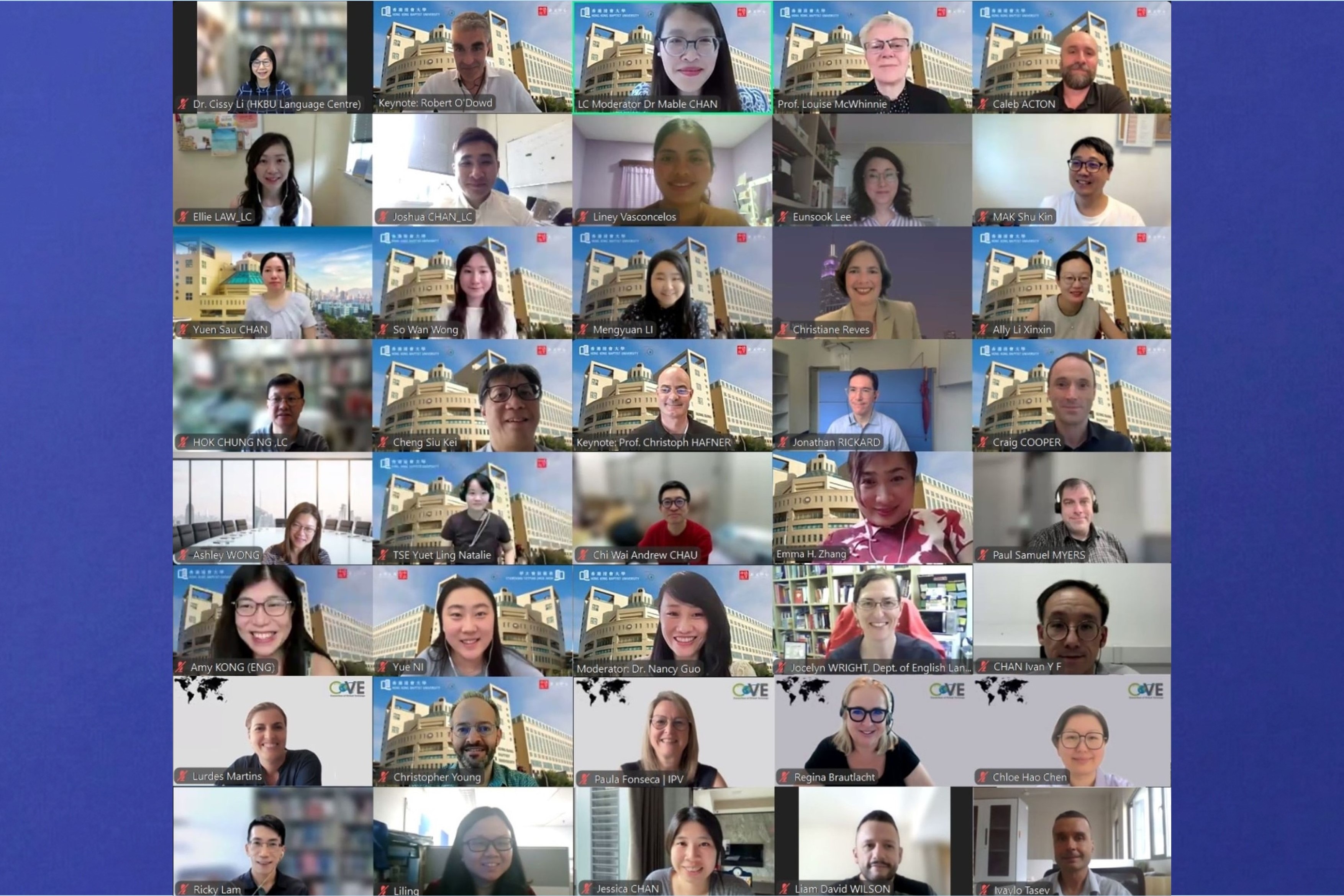
The Language Centre hosted the online symposium “Cultivating Connections: The Future of Intercultural and Transdisciplinary Communication Education” on 25 June. Held in celebration of HKBU’s 70th anniversary, the symposium brought together more than 135 educators and researchers from 19 countries or regions to explore transformative pedagogies for intercultural and transdisciplinary communication. It reinforced HKBU’s commitment to innovative, boundary-crossing education and inspired participants to apply new ideas in teaching and research.
The symposium commenced with opening remarks from Dr Albert Chau, Vice-President (Teaching and Learning), and Dr Cissy Li, Head of the Language Centre. Dr Chau underscored the crucial role of the Language Centre in fostering intercultural and transdisciplinary communication, stating that language acts as “a bridge between different ways of thinking and diverse communities”. Dr Li further emphasised the Centre’s mission, noting that the purpose of language is for human connection and that “language connects minds and hearts”.
The programme featured keynote addresses by three distinguished scholars: Professor Louise McWhinnie, Emeritus Professor of the University of Technology Sydney; Professor Robert O’Dowd, Full Professor for English Studies of the University of León; and Professor Christoph A. Hafner, Head of the Department of English at City University of Hong Kong. Professor McWhinnie’s presentation, “The Aims, Gains, and Challenges of Transdisciplinary University Education”, explored the emergence, scope, and measurement of educational transdisciplinarity while identifying key obstacles to its successful implementation. Professor O’Dowd’s session, “Virtual Exchange and Blended Mobility in Higher Education: Opportunities and Challenges”, offered practical frameworks for integrating digital and collaborative models into existing institutional contexts. Speaking at the presentation titled “Doing Digital Multimodal Projects (DMC) in Transdisciplinary Communication Education: A Focus on Assessment”, Professor Hafner examined the use of rubrics for DMC projects, advocated for a process-based model, and highlighted the impact of teacher expertise on pedagogy and assessment.
The event also featured 20 parallel sessions covering a diverse range of topics, including intercultural collaborative learning, transdisciplinary/interdisciplinary language education, technology-mediated language learning, task-based language learning, transdisciplinary academic literacy, and global citizenship through language education and transdisciplinary assessment.