Discover HKBU
A holistic Chinese Medicine approach to promoting mental wellness
30 Apr 2026
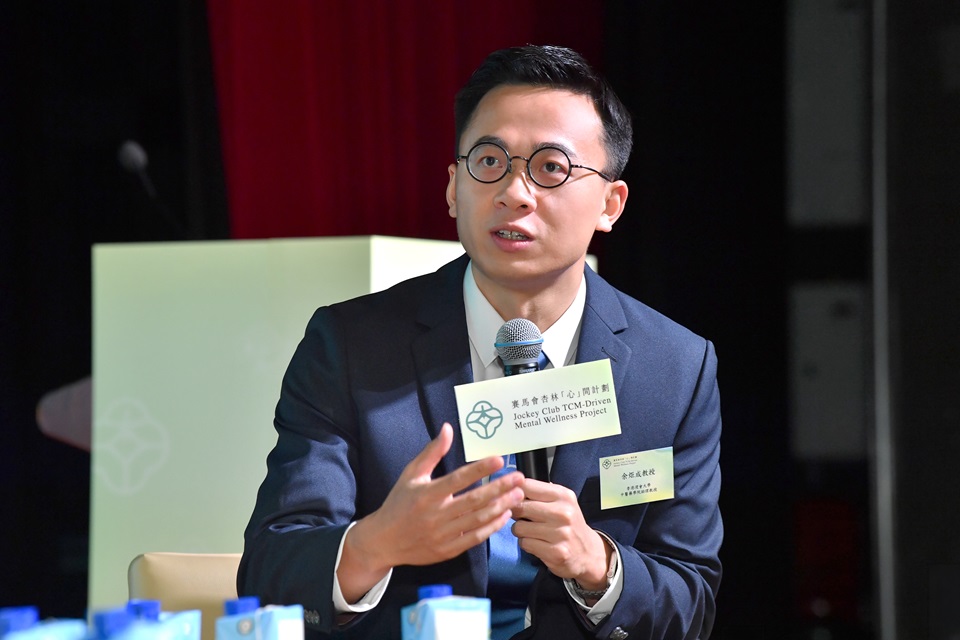
For people struggling with sleep disturbances and symptoms of depression and anxiety, introducing them to Chinese Medicine may be like showing someone the light at the end of the tunnel. While Chinese Medicine is not the panacea, it does offer early intervention for patients with mild-to-moderate symptoms, preventing further deterioration of their symptoms into becoming full-fledged mental health problems.
Professor Danny Yu, Assistant Professor, Teaching and Research Division of the School of Chinese Medicine at Hong Kong Baptist University (HKBU), succinctly sums up the strengths of a Traditional Chinese Medicine (TCM) approach in treating patients suffering from mild-to-moderate symptoms of insomnia, depression and anxiety. “Chinese medicine service is accessible, sparing patients from the relatively longer booking time at the hospitals. It’s comparatively cost effective and the results are encouraging, with few side effects compared to drugs like antidepressants, which may cause nausea, weight gain and emotional numbness for some patients.”
Professor Yu’s insights are based on the findings of the “Jockey Club TCM-Driven Mental Wellness Project”. Led by HKBU, the project adopts an evidence-based approach to educating the public and provides free Chinese medicine and counselling services, with the aim of establishing an innovative and comprehensive mental health service model for Hong Kong. Launched in 2023, the project is the first large-scale community initiative in Hong Kong focused on Chinese medicine that integrates mental health education and clinical services. To date, the project has served nearly 4,000 participants suffering from insomnia, anxiety and depression.
A stigma-free alternative to “self-management”
“Even though the perception in society about mental health has evolved, mental health struggles still carry a certain stigma. During our study, we observed that some of the participants were reluctant to consult Western medicine doctors for fear of being stigmatised. In this regard, the culture of Chinese medicine offers a more palpable alternative with its holistic approach to well-being, especially when framed as a form a self-management,” Professor Yu explains.
Illustrating the relevance and credibility of Chinese Medicine, Professor Yu is quick to point out the concept of insomnia i.e. the inability to sleep well (“不寐”) already existed 2,000 years ago, with documentations of its diagnosis and treatment throughout history.
A patient-centred, evidence-based, and stepped-care model
Another unique proposition of the project is its stepped-care model, providing Chinese medicine services in a progressive manner and integrating services from the New Life Psychiatric Rehabilitation Association (NLPRA). Over the course of the project, based on the severity of their condition, participants would receive six weeks’ TCM treatment and medication. For participants whose condition was deemed severe, they were referred to NLPRA for counselling services. Evaluation results showed significant improvements across all symptom domains: depressive symptoms decreased by 26%, anxiety symptoms by 22%, and insomnia symptoms by nearly 20%.
“The key to tackle mental health problems is to encourage people to seek help. And for those held back by stigma or unsure where to start, Chinese medicine is a promising option to alleviate their emotional stress, especially within pathways that are evidence-based and integrated with professional support. Ultimately, our aspiration is to develop treatment protocols for insomnia, anxiety and depression that can be generalised to a wider community, and help people in need,” Professor Yu concludes.