Discover HKBU
Bridging AI with the humanities: Shaping graduates for a digital future
31 Aug 2026
When artificial intelligence (AI) can write, draw, and code on demand, what should university students learn to equip themselves for the future?
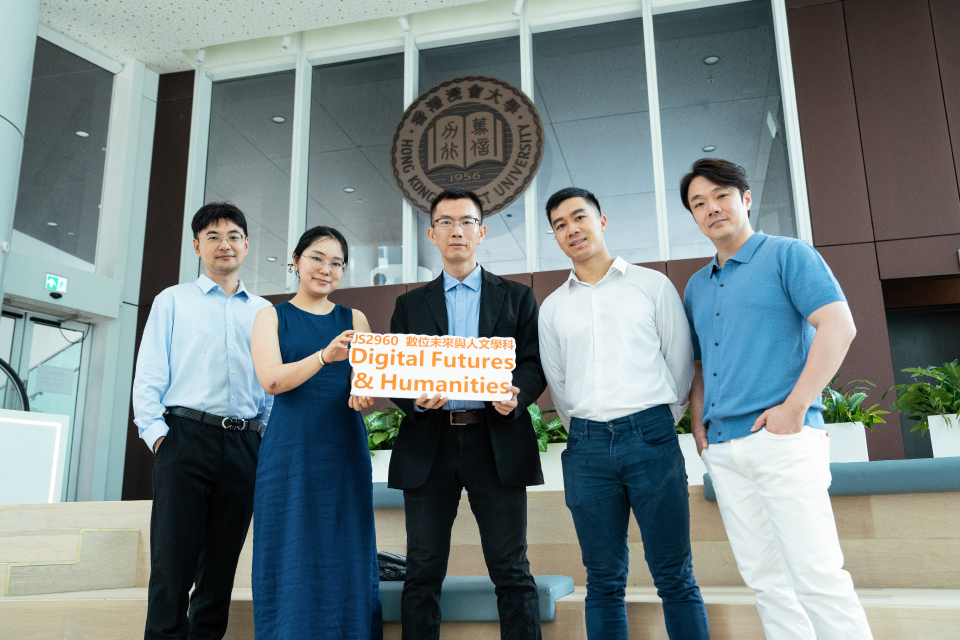
HKBU’s Digital Futures and Humanities (DIFH) programme may offer an inspiring answer. Launched in the 2025-26 academic year, the Bachelor of Arts and Science (Hons) in DIFH combines digital technology and AI with a strong humanities foundation. Developed over two years, the transdisciplinary programme brings together 14 departments across four academic units, including the Faculty of Arts and Social Sciences, the Faculty of Science, the School of Communication and the School of Business. The innovative programme welcomed 114 students in its first two cohorts, seeing a sixfold rise in JUPAS Band A applications between the 2025 and 2026 intakes.
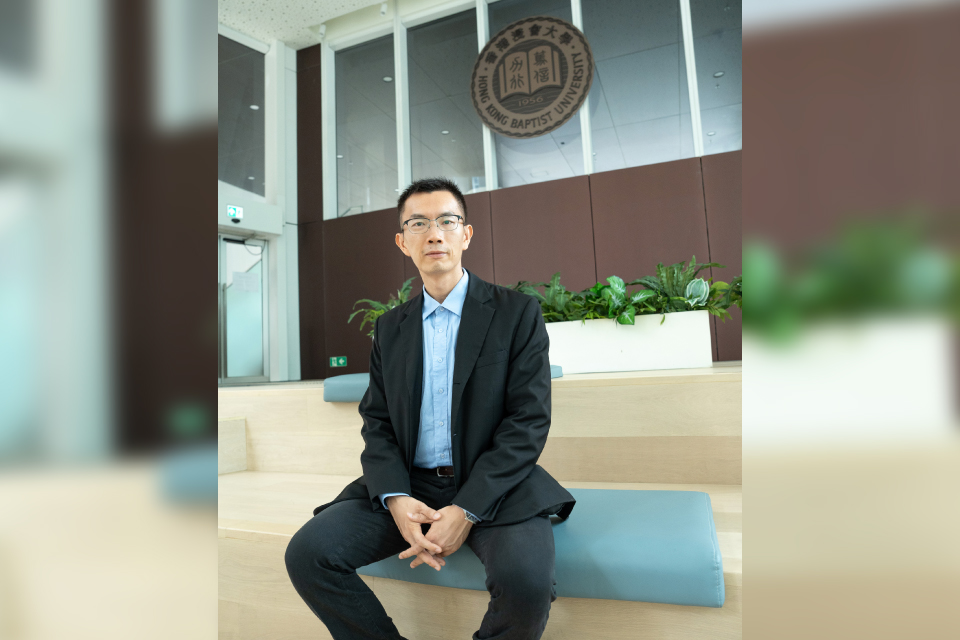
Professor Sammy Li Kin-sum, Programme Director of DIFH and Professor of the Academy of Chinese, History, Religion and Philosophy, points out that the programme addresses rapid technological change while preserving something more enduring: the ability to think critically about people, society and the implications of technology. “Technology may just develop and change substantially and rapidly, but the essence of humanity still remains the same,” Professor Li says.
That idea lies at the heart of the programme. Rather than simply training students to use the latest tools, it asks them to understand what those tools mean, what problems they should address and how they can be used responsibly.
Professor Li recalls that when the programme was being developed, “prompt engineering” was just becoming a popular term. “Technologies and terminology may change quickly, but the underlying need does not,” he explains.
Nurturing critical thinkers in a hybrid learning community
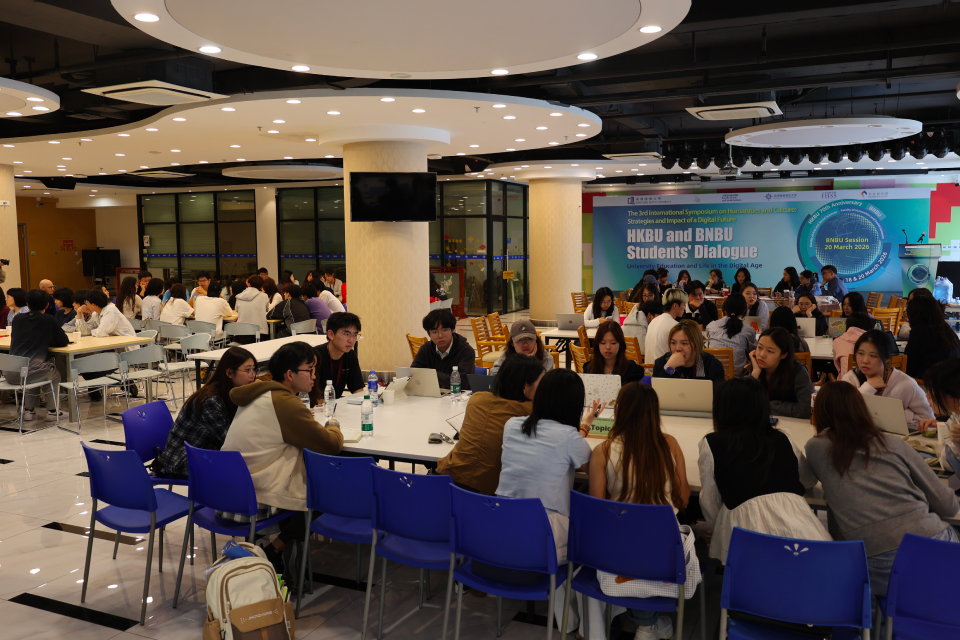
This programme has attracted students from varied academic backgrounds. Some have strong interests in science but are drawn to history or culture; others come from the humanities and want to enhance their digital capacity. Professor Li described it as an “intellectually hybrid” learning community. To support their learning, HKBU assembled a transdisciplinary team of academics spanning history, philosophy, digital humanities, literary studies, AI, neuroscience, industrial design and engineering. Several have recently joined HKBU specifically to contribute to the programme, bringing fresh perspectives and complementary expertise that enrich both teaching and student learning experience.
That hybridity is reflected in the classroom. Professor Song Yao, Assistant Professor of the Academy of Chinese, History, Religion and Philosophy, for instance, challengs students to use generative text, image, music and video AI tools to reinterpret classical Chinese poetry into multimedia works. It is an exercise designed to encourage students to cross disciplinary boundaries with an open mind.
However, technical competence is only part of the goal. Professor Jenny Chun-yi Kwok, Assistant Professor of the Academy of Language and Culture, whose work brings together literary studies and AI to explore how technology is changing the ways we read and interpret, emphasises that students should go beyond learning how a machine works, and develop the ability to question it, critique it and consider its implications for people and society. “Technology is advancing so fast that it’s almost humanly impossible to keep up. We don't just teach students how a machine works—we want them to ask why it works that way, so they can critique the tools they use and engage with them meaningfully,” says Professor Kwok.
This critical perspective also extends to ethics. Professor Adrian Yee, Assistant Professor of the Academy of Chinese, History, Religion and Philosophy, highlights how philosophy provides the framework for students to assess the misuse of AI, and to think carefully about the consequences of their own interactions with technology.
From classroom innovation to real-world impact
For Dr Simon Wong Sai-ming, Lecturer of the Academy of Chinese, History, Religion and Philosophy, who worked in information technology and software development before pursuing philosophy, this balance is deeply practical. Having managed tech projects himself, he points out that technical work has always been about managing human needs, constraints, and requirements, yet engineers rarely receive training in humanities or ethics. By bringing ethical principles and technical application together, the programme prepares graduates to tackle complex, real-world challenges.
The DIFH programme also takes students beyond the classroom. A compulsory third-year internship is built into the curriculum, while a pilot scheme has already placed students in companies this summer. Students have also visited the Hong Kong Palace Museum to see how digital technologies are used in exhibitions and travelled to Zhuhai for non-local digital-humanities learning experiences.