Discover HKBU
Robots meet humans to deliver new customer experiences
30 Jan 2026
Standing over a metre tall and weighing around 40kg, it can deliver meals, return dishes and serve as a receptionist. This is one but many of the service robots employed at restaurants and catering venues across Hong Kong.
In the post-pandemic era, service robots have become increasingly common in the hospitality sector, altering the way customers and firms interact. The rapid expansion of the use of service robots raises questions about whether people can genuinely connect with robots. An HKBU study revealed that while some customers form a social connection with service robots designed to look and act like humans, others find them mechanical and unsettling.
“My research shows that pairing a human-like robot with a human employee can improve customers’ perceptions of the team’s creativity and the quality of service,” says Professor Kimmy Chan of the Department of Management, Marketing and Information Systems. “However, these benefits can only be realised if the teams are cohesive, the robots are appropriately humanised, and customer context is taken into account.”

Which customers connect better with robots?
Professor Chan’s research on frontline anthropomorphised robots, published in the Journal of Service Research, reveals that solo customers often develop a strong sense of rapport with service robots, but customers in groups are often less receptive and may even react negatively to services that are fully automated.
To enhance the customers’ experience when interacting with frontline service robots, Professor Chan suggests that firms can tailor the experiences for solo and joint customers. “For example, service robots can be programmed to speak the local language and incorporate sensory elements such as inviting lighting and music to create a welcoming setting. These strategies are especially effective for solo customers, who are more open to social interaction with robots,” she says. “For customers in groups, it is important to ensure that human support is readily available as these customers may prefer service the traditional way.”
In addition, customers who seek enjoyment and business travellers who value efficiency may have different attitudes towards interactions with service robots. By understanding the customers’ different needs and expectations, firms can create compelling experiences by humanising service robots and fostering positive perceptions of human-robot teams.
Integrating robots into frontline services
The key to the successful use of robots in frontline services is the human employees’ experience. “Our research shows that it is important for employees to have a clear understanding of their roles alongside robots and to be actively involved in the service design process. This helps employees maintain a sense of control over their work, and reduces the anxiety they may have about the integration of robots in the workplace,” says Professor Chan.
The findings also reveal that assigning robots with skills different from those of the human employees—such as pairing a competent human with a social robot or matching a friendly employee with a more analytical robot—can improve the employees’ performance. Professor Chan says: “Firms should ensure that robots are presented as tools that support and enhance employees’ work, not as replacements.”
She notes that adopting service robots is not a simple “plug-and-play” process, suggesting that firms should carefully consider how the introduction of robots would fit with their customers’ needs and the structure of their service teams.
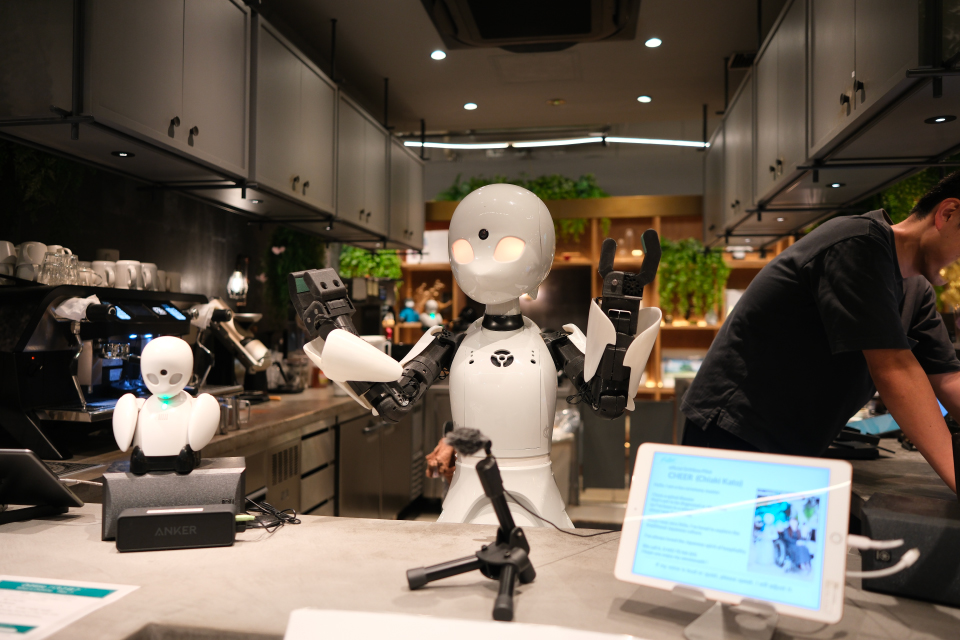
How the service industry may look like in the future
With the solo economy growing fast, it is likely for service robots to be increasingly used to enhance efficiency, as well as to provide companionship, creative support, and personalised service. According to Professor Chan, the use of humanlike robots in frontline services in the future will focus on creating seamless, intelligent partnerships between robots and human employees.
“Robots will be treated as valuable team members that are integrated into both the operational and emotional aspects of service delivery,” she says. “For solo customers, their satisfaction will depend not only on speed and convenience, but also on how comfortable, engaged, and valued they feel when interacting with robot servers.”
She believes that humans and robots working side by side will eventually become more common. “The future is about smarter, more humanised, and emotionally aware collaboration between humans and robots, forming partnerships that can enrich the entire customer journey and create new standards for exceptional service.”