Press Release
2025 Guangdong–Hong Kong–Macau Greater Bay Area Pay and Benefits Survey:
Wage growth in the region slows, while Hong Kong reports pay rise of 2.5%
Thursday, 23 October 2025
The results of the “2025 Guangdong–Hong Kong–Macau Greater Bay Area Pay and Benefits Survey” were released today (23 October), showing that companies across Guangdong–Hong Kong–Macau Greater Bay Area (GBA) cities have slowed their pay rise this year (2025). The average salary increase for Hong Kong employees is 2.5%, down from 3.5% last year, exceeding those in other Guangdong cities and Macau. One-third of surveyed Hong Kong companies forecast an average pay rise of 2.8% next year.
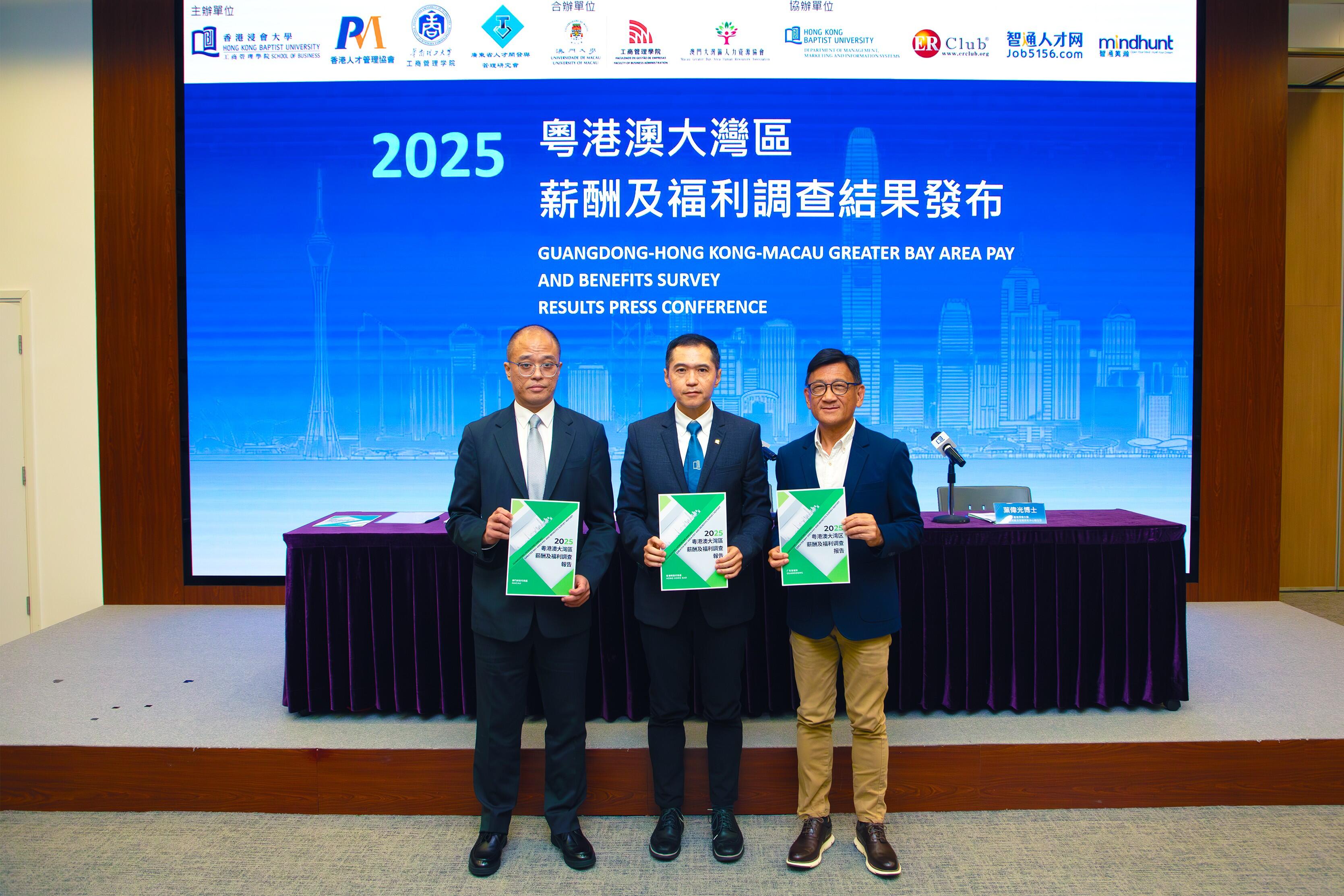
The “2025 Guangdong–Hong Kong–Macau Greater Bay Area Pay and Benefits Survey” was conducted by the Centre for Human Resources Strategy and Development of the School of Business at Hong Kong Baptist University (HKBU), the Research Center for Human Resources Management of the School of Business Administration at the South China University of Technology, the Hong Kong People Management Association, and the Talent Development and Management Association of Guangdong. It was co-organised by the Faculty of Business Administration at the University of Macau, and the Macau Greater Bay Area Human Resources Association. The survey aims to help companies and government bodies in the GBA keep abreast of the latest information on pay, benefits, and talent mobility across different cities, industries, and job positions in the region.
This year’s survey was conducted from July to September. There was a total of 258 participating companies, comprising 78 from Hong Kong, 39 from Macau, and 141 from nine cities in Guangdong Province (namely Dongguan, Foshan, Guangzhou, Huizhou, Jiangmen, Shenzhen, Zhaoqing, Zhongshan, and Zhuhai), and covering more than 240,000 employees. Participating companies provided employee pay data for the period from July 2024 to June 2025 via an online questionnaire and offered forecasts for next year’s pay trends.
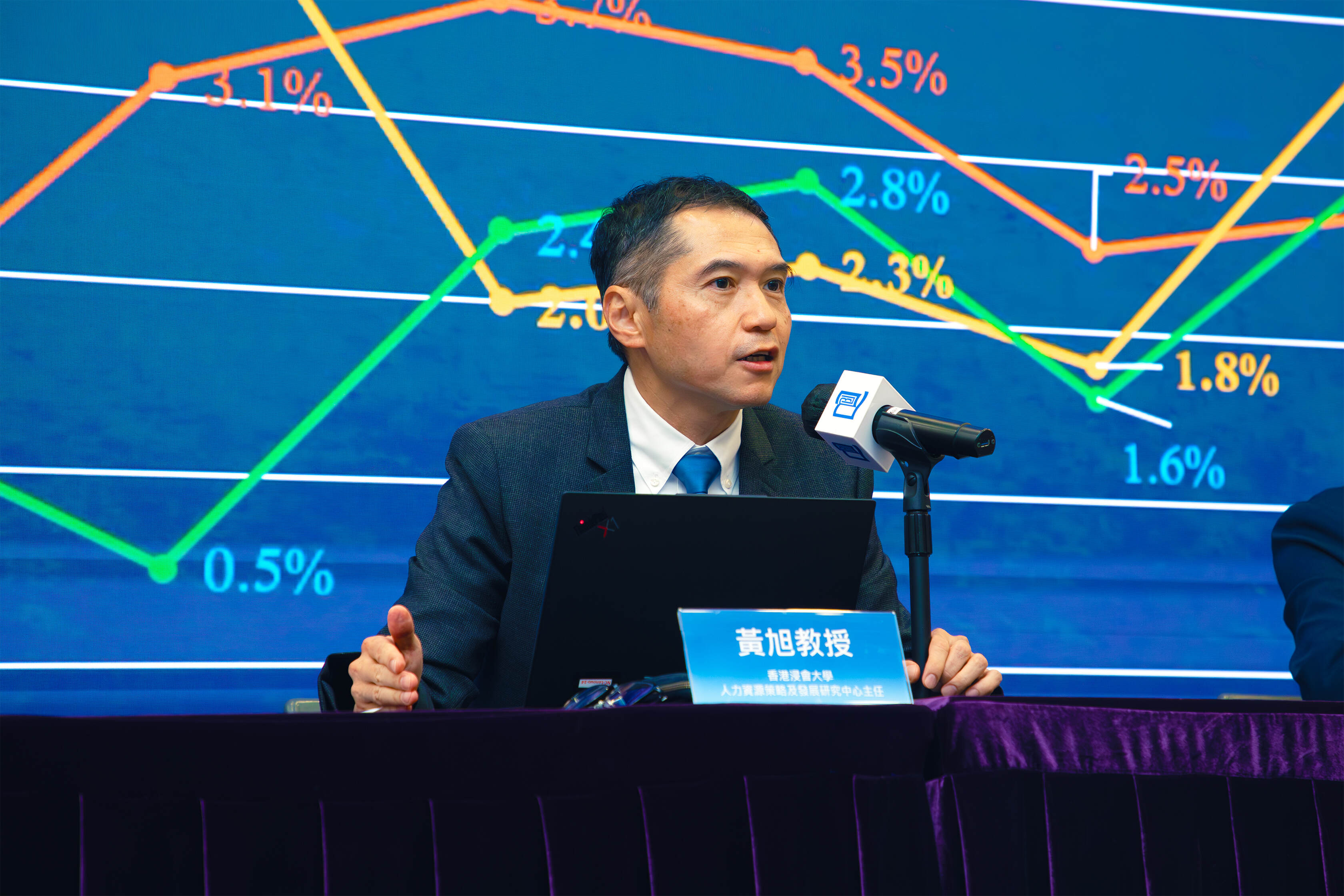
The survey found that companies across the GBA cities have given lower pay rises this year compared to last year. The average increase is 2.5% in Hong Kong, 1.6% in Macau, and 1.8% across the nine Guangdong cities, down from last year’s 3.5%, 2.7%, and 2.3% respectively.
Although pay rises across the GBA cities have generally declined this year, 15% of the participating companies still reported salary increases of more than 4.5%, indicating that high-performing firms can continue to attract talent with higher pay even during an economic slowdown.
Professor Huang Xu, Director of the Centre for Human Resources Strategy and Development of the School of Business at HKBU, said: “The survey found that the average pay rise among Hong Kong companies has been higher than that in the nine Guangdong cities for three consecutive years. Over the past 31 years, these are the only three occasions when Guangdong’s pay increases have lagged behind Hong Kong’s. Meanwhile, the nine Guangdong cities’ average pay rise this year is higher than Macau’s, reversing the pattern of the past two years.”
Looking ahead to next year, one-third of the Hong Kong companies surveyed forecast an overall average salary adjustment of 2.8%; one company forecasts a pay freeze, and the remaining respondents have yet to make a forecast.
The survey also found that the average starting salary for Hong Kong university bachelor’s graduates has remained unchanged at HK$19,500 this year, ending a five-year upward trend. Average starting salaries fall in sectors such as engineering, production, marketing, sales, human resources, administration, research and development, and customer service, while information technology, and finance and accounting recorded slight increases. Sectors with higher average starting salaries include engineering (HK$21,500), information technology (HK$20,500), finance and accounting, and research and development (HK$20,000).
Over the past year, the turnover rates for “middle level/supervisory/professional staff” and “senior/managerial staff” and above in Hong Kong companies fell from 12.5% and 9.1% last year, to 9.8% and 8.3% this year respectively. These figures suggest that the impact of the emigration wave in recent years on mid- to senior-level executive departures in Hong Kong companies has eased for the first time since 2018.
Although the overall salary increases across cities in Guangdong Province have slowed, industries such as pharmaceutical manufacturing, electronic equipment manufacturing, and leasing and business services still recorded relatively higher wage growth. Looking ahead to next year, aggregate data indicate that pay rises in pharmaceutical manufacturing, electronic equipment manufacturing, leasing and business services, information transmission, software and information technology services, logistics, transportation, warehousing and postal services, as well as wholesale, retail and trade, are expected to show a more pronounced uptrend.
Additionally, the third-generation smart research platform “AI Remuneration Consultant” developed by HKBU’s Centre for Human Resources Strategy and Development will be available to the survey’s participating enterprises free of charge starting end October. Companies can use the platform to benchmark pay levels for employees of all tiers against more than 40,000 companies across different regions and industries in the GBA. The platform also leverages artificial intelligence (AI) to assess companies’ compensation policies and provide optimisation recommendations, helping them reduce costs and improve efficiency.
-End-