Discover HKBU
Reimagining learning with AI and Metaverse technologies
31 Jul 2026
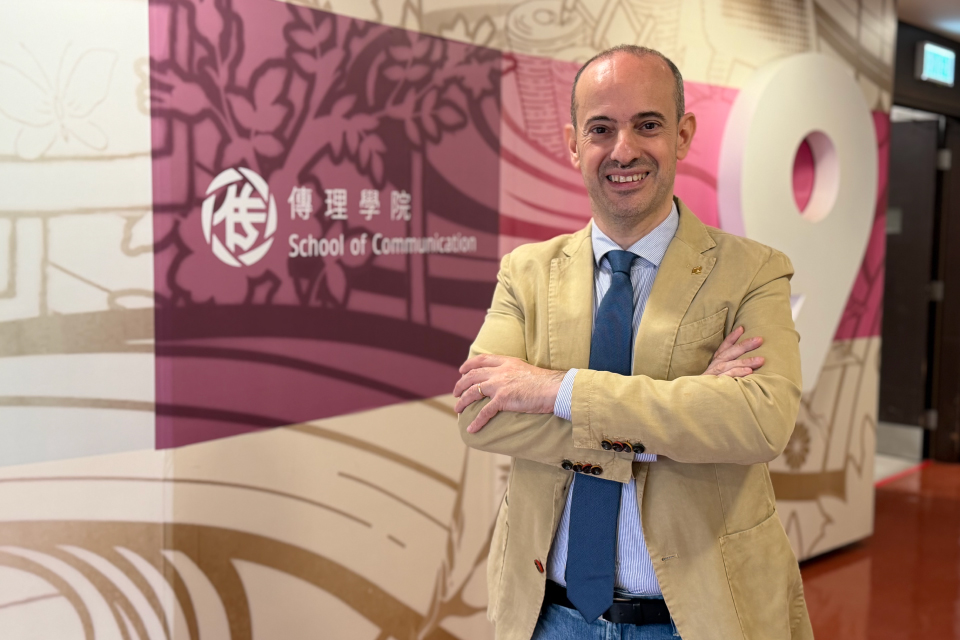
“Generative AI (GenAI) is a tool. Use it wisely and for a purpose,” says Dr Paolo Mengoni, Senior Lecturer in the Department of Interactive Media and recipient of the President’s Award for Outstanding Performance 2025-2026 in Teaching (Individual), setting the tone at the outset. Dr Mengoni’s words ring true inside and outside of the classroom, where he teaches students not only how to use artificial intelligence (AI) to search, verify and organise information, but also how to question it critically and use it ethically.
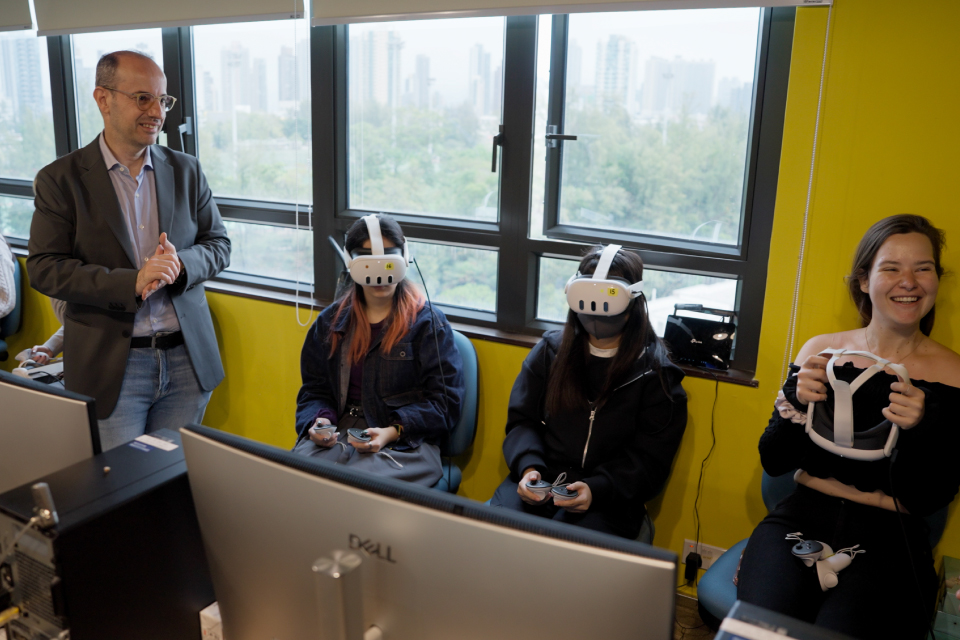
In Dr Mengoni’s view, students must see the relevance of technology in their studies. Recognising that topics related to AI and other emerging technologies can feel intimidating to students from non-technical backgrounds, he developed an AI-powered metaverse environment that transforms lessons into immersive, interactive experiences. An example of such immersive learning scenarios is letting students understand how search engines store, index, and retrieve data, much like how a library categorises books and places them on shelves.
Empowering students with immersive learning
Dr Mengoni’s immersive learning approach extends beyond AI-focused modules. It can be applied to topics ranging from philosophy to chemistry to electrical engineering. Once students understand the underlying logic, they can apply it in any context. For those who start with little confidence in technical work, they can now confidently develop meaningful coding and prototyping skills in just under two weeks.
The results are reflected in the positive feedback and in what his students go on to achieve. A PhD candidate from the School of Communication credits Dr Mengoni for supporting her academic ambitions and helping transform her coursework into a publication. A Journalism and Digital Media student also began with a class assignment, conducting research and using AI-assisted analysis to examine fake news, before that work evolved into a paper that got presented at an international conference. And the impact continues beyond graduation. A Masters’ student and founder of a digital marketing company gained the technical knowledge and confidence to shape and drive his own company’s AI strategy and transformation.
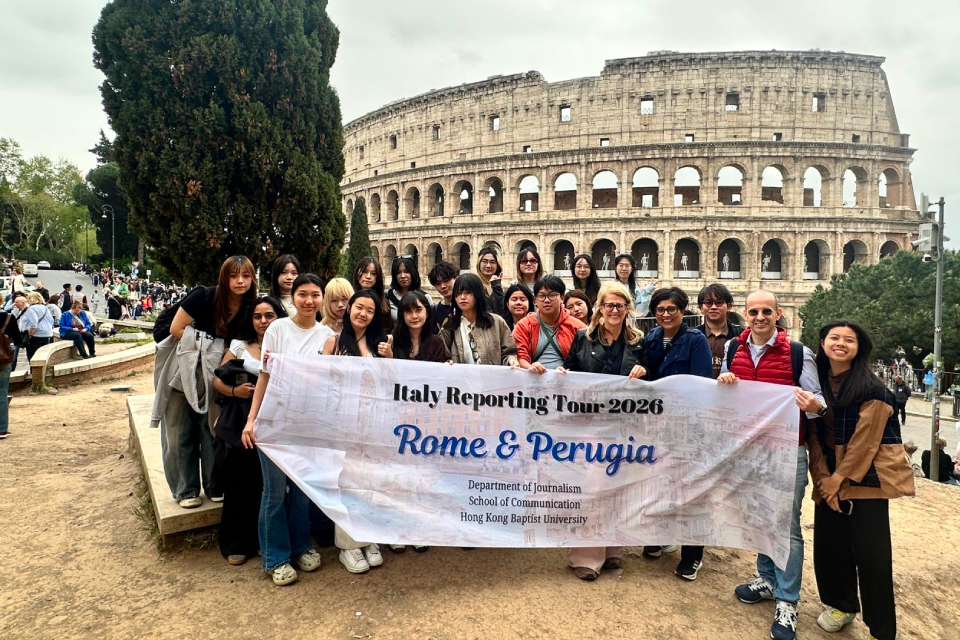
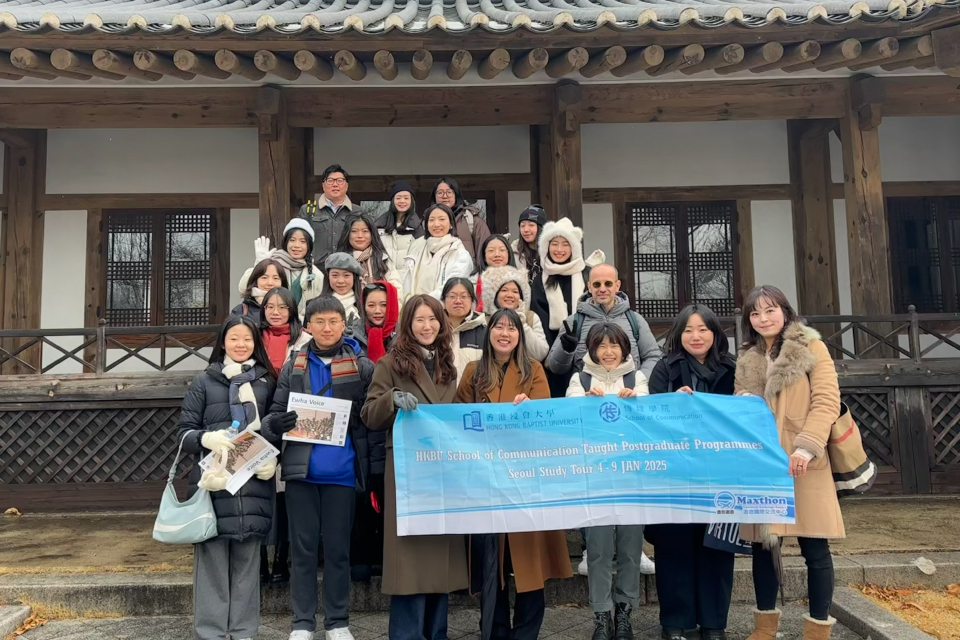
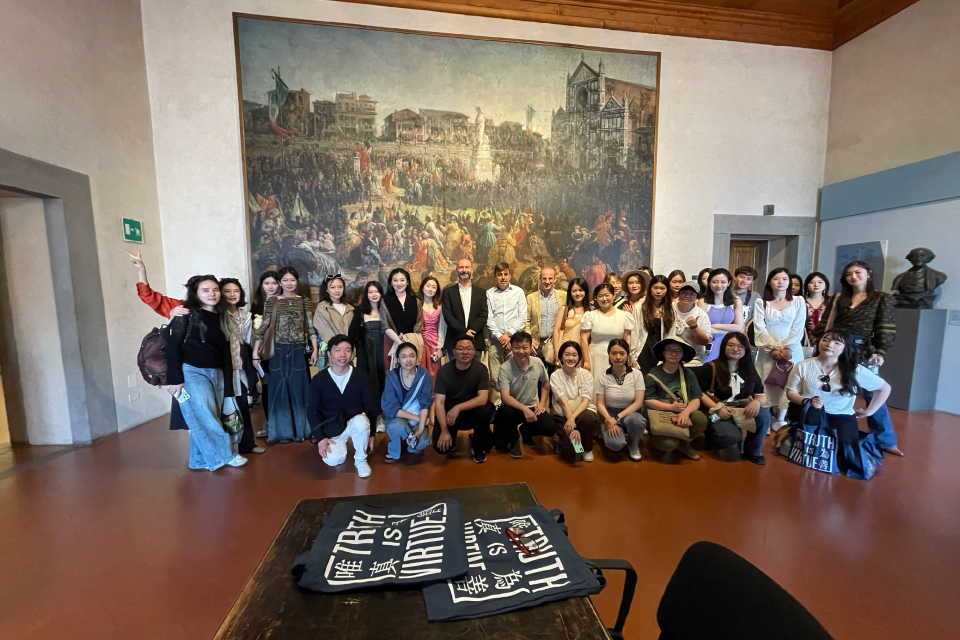
Keeping human discernment at the core
Lest people assume AI is a panacea, Dr Mengoni acknowledges that GenAI can produce plausible answers and support tasks like drafting and programming, but he is quick to reiterate that creativity and judgement remain ultimately human strengths.
“Students should always critically evaluate the answers generated by AI and stay in charge of their final decisions. Never delegate your judgment to AI,” he emphasises. He further argues that in creative work, such as developing brand strategies, the most valuable insights still originate from human creators.
No stranger to accolades and industry recognition, Dr Mengoni’s inter-institutional collaborative project “Generative AI-enabled Metaverse” has received funding from the University Grant Committee’s Fund for Innovative Technology-in-Education. This innovative project sees students donning on Virtual Reality visors and interacting with AI avatars, transforming abstract concepts into engaging and personalised learning experiences. As of November 2025, the project has engaged more than 2,000 students across six local tertiary institutions and three universities outside of Hong Kong. Dr Mengoni has also secured HK$2 million in competitive grants for 10 innovative teaching projects. In 2026, he has been awarded the Senior Fellowship (SFHEA) by Advance Higher Education in the UK in recognition of his impact on educational leadership, teaching, and professional practice.
Teaching technology with a human-centric approach
At the heart of Dr Mengoni’s teaching philosophy is a commitment to being a human-centric and empathetic educator, one who values the learning process as much as the outcomes. Under his guidance, technology feels accessible even to the most non-technical learners.
To ensure his teaching stays relevant, Dr Mengoni regularly reviews and refines his course objectives and instructional methods, so that they remain interesting without becoming overly technical. “I always make time for my students. Being accessible is very important to me, especially when they feel stuck or need extra time to digest what we’ve covered. As an educator, there is nothing more important or fulfilling than helping your students learn and grow.”